Está viendo la página Spain versión del sitio.
Le gustaría cambiar a su sitio local?
General Interest


Free Sample Issue
Pruebe una muestra GRATIS de Astronomy Now
Pruebe una muestra GRATIS de

Astronomy Now Magazine

12 números al año   |  English
0 Reseñas   •  English   •   General Interest (Astronomy)
From €4,50 por número
The wonders of the Universe explained for everyone to understand.
read more read less
Astronomy Now Preview Pages Astronomy Now Preview Pages Astronomy Now Preview Pages Astronomy Now Preview Pages Astronomy Now Preview Pages Astronomy Now Preview Pages Astronomy Now Preview Pages Astronomy Now Preview Pages

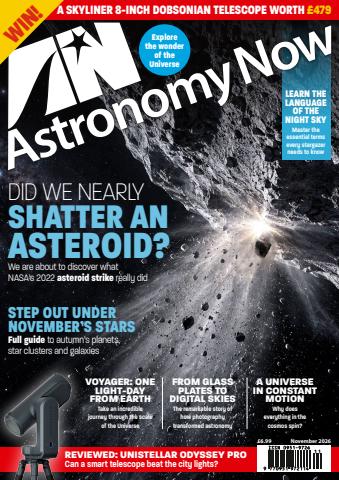
Astronomy Now

September 2026 The September issue of Astronomy Now looks to the future of astronomy, beginning with NASA’s next great space observatory. The Nancy Grace Roman Space Telescope will survey the Universe with Hubble-like sharpness across a field of view around 100 times larger, opening a new window on dark energy, exoplanets and the changing sky. We meet Roman and explore why astronomers expect it to become a remarkable discovery machine. Closer to home, we ask what Britain stands to lose if Jodrell Bank’s e-MERLIN radio telescope network falls silent, and talk to the new President of the Royal Astronomical Society about the opportunities and challenges facing UK astronomy. Elsewhere, we venture into the Galaxy in search of rogue planets, mysterious worlds that wander through space without a star and may even outnumber the stars themselves. We also rediscover the forgotten constellations that once populated the night sky, and ask what the latest evidence can tell us about one of astronomy’s oldest mysteries: how the Moon was born. For observers, September brings some of the finest deep-sky sights of late summer, while our Night Sky section provides everything you need to make the most of the month ahead. We also explore how apps can help you understand observing conditions and explain why day and night are not actually equal on the equinox. Plus, we put the Starquest DX127MC Maksutov-Cassegrain through its paces to find out whether it makes a capable first telescope, alongside our regular coverage of astronomy news, equipment, imaging, books and the observing community. Order your copy of the September 2026 issue of Astronomy Now today.


SELECCIONAR FORMATO:
Acceso instantáneo

Ofertas digitales disponibles:

Edición digital única September 2026
 
7,99 / issue
Anual Suscripción digital €53,99 facturado anualmente
AHORRA
44%
€4,50 / edición
Mensualmente Suscripción digital €5,99 facturado mensualmente
AHORRA
25%
€5,99 / edición
Disponible con
Pocketmags Plus
Suscripción de lectura ilimitada
 
Obtenga acceso ilimitado a Astronomy Now y más de 600 grandes títulos. Se renueva en €11,99 / mes después de 30 días. Cancele en cualquier momento. Más información
Los ahorros se calculan sobre la compra comparable de números sueltos durante un periodo de suscripción anualizado y pueden variar respecto a los importes anunciados. Los cálculos son meramente ilustrativos. Las suscripciones digitales incluyen el último número y todos los números regulares publicados durante su suscripción, a menos que se indique lo contrario. El periodo elegido se renovará automáticamente a menos que se cancele en el área Mi cuenta hasta 24 horas antes del final de la suscripción actual.

Astronomy Now issue September 2026

Astronomy Now  |  September 2026  


The September issue of Astronomy Now looks to the future of astronomy, beginning with NASA’s next great space observatory. The Nancy Grace Roman Space Telescope will survey the Universe with Hubble-like sharpness across a field of view around 100 times larger, opening a new window on dark energy, exoplanets and the changing sky. We meet Roman and explore why astronomers expect it to become a remarkable discovery machine.

Closer to home, we ask what Britain stands to lose if Jodrell Bank’s e-MERLIN radio telescope network falls silent, and talk to the new President of the Royal Astronomical Society about the opportunities and challenges facing UK astronomy.

Elsewhere, we venture into the Galaxy in search of rogue planets, mysterious worlds that wander through space without a star and may even outnumber the stars themselves. We also rediscover the forgotten constellations that once populated the night sky, and ask what the latest evidence can tell us about one of astronomy’s oldest mysteries: how the Moon was born.

For observers, September brings some of the finest deep-sky sights of late summer, while our Night Sky section provides everything you need to make the most of the month ahead. We also explore how apps can help you understand observing conditions and explain why day and night are not actually equal on the equinox.

Plus, we put the Starquest DX127MC Maksutov-Cassegrain through its paces to find out whether it makes a capable first telescope, alongside our regular coverage of astronomy news, equipment, imaging, books and the observing community.

Order your copy of the September 2026 issue of Astronomy Now today.
Seguir leyendo leer menos
The wonders of the Universe explained for everyone to understand.

omo abonado recibirá las siguientes ventajas:


•  Un descuento sobre el PVP de su revista
•  Las nuevas ediciones se envían a tu dispositivo el día de su lanzamiento
•  Nunca te perderás un número
•  Estás protegido de las subidas de precios que puedan producirse más adelante en el año

Recibirás 12 problemas durante un año Astronomy Now suscripción a la revista.

Nota: Las ediciones digitales no incluyen los artículos de portada ni los suplementos que encontraría en los ejemplares impresos.

Su compra aquí en Pocketmags.com puede leerse en cualquiera de las siguientes plataformas.


Puedes leer aquí en el sitio web o descargar la aplicación para tu plataforma, sólo recuerda iniciar sesión con tu nombre de usuario y contraseña de Pocketmags.

Apple Pocketmags Online Pocketmags Google Pocketmags
La aplicación Pocketmags funciona en todos los dispositivos iPad y iPhone con iOS 15.6 o superior, Android 8.0 o superior y tabletas Amazon Fire de 2018 en adelante, aunque los propietarios de modelos Fire anteriores pueden consultar la Amazon Appstore directamente en su dispositivo para confirmar la compatibilidad. Para los usuarios de iOS, recomendamos utilizar un dispositivo capaz de ejecutar la última versión de iOS para un rendimiento y estabilidad óptimos, ya que el hardware más antiguo con menor potencia de procesamiento y memoria RAM puede experimentar una renderización de páginas más lenta o problemas ocasionales de estabilidad debido a las limitaciones de memoria del dispositivo. Alternativamente, nuestro lector web funciona con cualquier navegador moderno compatible con HTML5, aunque recomendamos Chrome o Firefox para disfrutar de la mejor experiencia en PC y Mac.
N/A
Basado en 0 Opiniones de los clientes
5
0
4
0
3
0
2
0
1
0
Ver comentarios

Artículos de este número


A continuación encontrará una selección de artículos en Astronomy Now September 2026.

Free Sample Issue
Pruebe una muestra GRATIS de Astronomy Now
Chat
X
Soporte Pocketmags