Está atualmente a visualizar o Portugal versão do sítio.
Gostaria de mudar para o seu sítio local?
General Interest


Free Sample Issue
Experimente uma amostra GRATUITA de Astronomy Now
Experimente uma amostra GRATUITA

Astronomy Now Magazine

12 edições por ano   |  English
0 Comentários   •  English   •   General Interest (Astronomy)
From €3,08 por edição
The wonders of the Universe explained for everyone to understand.
read more read less
Astronomy Now Preview Pages Astronomy Now Preview Pages Astronomy Now Preview Pages Astronomy Now Preview Pages Astronomy Now Preview Pages Astronomy Now Preview Pages Astronomy Now Preview Pages Astronomy Now Preview Pages

Astronomy Now

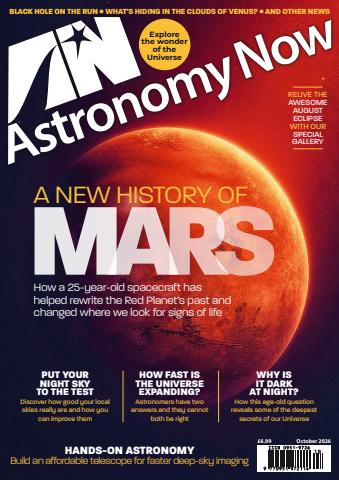
August 2026 The August 2026 issue of Astronomy Now is led by the biggest UK solar-eclipse event for many years. On 12 August, a deep partial eclipse of the Sun crosses the country, with much of the UK seeing around 90 percent of the Sun covered by the Moon. Our full guide explains when to look, where the eclipse will be best seen, what to expect from your location and, most importantly, how to view it safely. And that is only the beginning of a remarkable month for skywatchers. Two weeks later comes a dramatic partial eclipse of the Moon, while the annual Perseid meteor shower enjoys especially favourable conditions, with no moonlight to spoil the show. Also in this issue, we mark 20 years since Pluto’s demotion and ask what really makes a planet. Should a world’s status be decided by its orbit and gravitational dominance, or by its geology and character as a world? It is a debate that reaches far beyond Pluto itself. We also look to the Moon’s future and ask whether lunar astronomy can survive the human return. The lunar far side could be astronomy’s greatest refuge from Earth’s radio noise, but as landers, bases, satellites and rocket debris begin to crowd the Moon, astronomers are racing to protect its most precious observing sites. In the news pages, discover evidence that Mars once hid a vast underground magma system, why the Bullet Cluster still matters in the dark-matter debate, how SETI researchers are updating the rulebook for first contact, and why two newly confirmed planets are lighter than candy floss. Plus, Colin Stuart explains how stars form, Martin Howe shows how to take astrophotos on holiday with a digital camera, Jamie Gregory-Macdougall tests Acuter’s Solarus 80 and Sky-Watcher’s SolarQuest, Nik Szymanek reviews new AI-assisted noise-reduction software, and our observing section guides you through the August night sky, from Vulpecula’s Dumbbell Nebula to the month’s eclipses, planets, comets and deep-sky highlights.


SELECCIONAR FORMATO:
Acesso imediato

Ofertas digitais disponíveis:

Edição digital única August 2026
 
7,99 / issue
Anual Assinatura digital OFERTA ESPECIAL: Agora €36,99 Foi €53,99 facturado anualmente
Guardar
61%
€3,08 / edição
Mensal Assinatura digital €5,99 facturado mensalmente
Guardar
25%
€5,99 / edição
Disponível com
Pocketmags Plus
Assinatura de leitura ilimitada
 
Obter acesso ilimitado a Astronomy Now e mais de 600 outros grandes títulos. Renova em €11,99 / mês após 30 dias. Cancele a qualquer momento. Saiba mais
As poupanças são calculadas com base na compra comparável de edições únicas durante um período de subscrição anual e podem variar em relação aos montantes anunciados. Os cálculos destinam-se apenas a fins ilustrativos. As assinaturas digitais incluem a última edição e todas as edições regulares lançadas durante a sua assinatura, salvo indicação em contrário. O período escolhido será renovado automaticamente, exceto se for cancelado na área A minha conta até 24 horas antes do fim da assinatura atual.

Astronomy Now issue August 2026

Astronomy Now  |  August 2026  


The August 2026 issue of Astronomy Now is led by the biggest UK solar-eclipse event for many years. On 12 August, a deep partial eclipse of the Sun crosses the country, with much of the UK seeing around 90 percent of the Sun covered by the Moon. Our full guide explains when to look, where the eclipse will be best seen, what to expect from your location and, most importantly, how to view it safely.

And that is only the beginning of a remarkable month for skywatchers. Two weeks later comes a dramatic partial eclipse of the Moon, while the annual Perseid meteor shower enjoys especially favourable conditions, with no moonlight to spoil the show.

Also in this issue, we mark 20 years since Pluto’s demotion and ask what really makes a planet. Should a world’s status be decided by its orbit and gravitational dominance, or by its geology and character as a world? It is a debate that reaches far beyond Pluto itself.

We also look to the Moon’s future and ask whether lunar astronomy can survive the human return. The lunar far side could be astronomy’s greatest refuge from Earth’s radio noise, but as landers, bases, satellites and rocket debris begin to crowd the Moon, astronomers are racing to protect its most precious observing sites.

In the news pages, discover evidence that Mars once hid a vast underground magma system, why the Bullet Cluster still matters in the dark-matter debate, how SETI researchers are updating the rulebook for first contact, and why two newly confirmed planets are lighter than candy floss.

Plus, Colin Stuart explains how stars form, Martin Howe shows how to take astrophotos on holiday with a digital camera, Jamie Gregory-Macdougall tests Acuter’s Solarus 80 and Sky-Watcher’s SolarQuest, Nik Szymanek reviews new AI-assisted noise-reduction software, and our observing section guides you through the August night sky, from Vulpecula’s Dumbbell Nebula to the month’s eclipses, planets, comets and deep-sky highlights.
ler mais ler menos
The wonders of the Universe explained for everyone to understand.

Como subscritor, receberá as seguintes vantagens


•  Um desconto no PVP da sua revista
•  Novas edições entregues no seu dispositivo no dia do lançamento
•  Nunca perderá uma edição
•  Está protegido contra aumentos de preços que possam ocorrer no final do ano

Receberá 12 edições durante um ano Astronomy Now assinatura da revista.

Nota: As edições digitais não incluem os artigos de capa ou os suplementos que se encontram nos exemplares impressos.

Sua compra aqui no Pocketmags.com pode ser lida em qualquer uma das seguintes plataformas.


Pode ler aqui no sítio Web ou descarregar a aplicação para a sua plataforma, mas não se esqueça de iniciar sessão com o seu nome de utilizador e palavra-passe Pocketmags.

Apple Pocketmags Online Pocketmags Google Pocketmags
O aplicativo Pocketmags funciona em todos os dispositivos iPad e iPhone com iOS 15.6 ou superior, Android 8.0 ou superior e tablets Amazon Fire de 2018 em diante, embora os proprietários de modelos Fire anteriores possam verificar a Amazon Appstore diretamente em seus dispositivos para confirmar a compatibilidade. Para usuários de iOS, recomendamos o uso de um dispositivo capaz de executar a versão mais recente do iOS para obter melhor desempenho e estabilidade, pois hardwares mais antigos com menor capacidade de processamento e memória RAM podem apresentar renderização de páginas mais lenta ou problemas ocasionais de estabilidade devido a limitações de memória do dispositivo. Como alternativa, nosso leitor web funciona com qualquer navegador moderno compatível com HTML5, embora recomendemos o Chrome ou o Firefox para a melhor experiência no PC e Mac.
N/A
Com base em 0 Comentários de clientes
5
0
4
0
3
0
2
0
1
0
Ver críticas

Artigos desta edição


Segue-se uma seleção de artigos em Astronomy Now August 2026.

Free Sample Issue
Experimente uma amostra GRATUITA de Astronomy Now
Conversa
X
Suporte Pocketmags