ADVICE…
With our experts Chris Paton, Emma Jolly, Jayne Shrimpton, David Frost, Rebecca Probert, Mary Evans and Christine Wibberley
YOUR Q&A
HOW TO GET IN TOUCH…
FACEBOOK/TWITTER
We welcome your family history queries, and try to answer as many as we can, but we do have a considerable backlog at the moment, so, if possible, we recommend in the first instance posting your query on facebook.com/familytreemaguk or tweet us @familytreemaguk and we’ll aim to help you there
EMAIL
If those options don’t suit, please email helen.t@family-tree.co.uk and we’ll be as quick as possible
Early 20th century ancestors
Q I am especially interested in the oldest picture portraying a seated lady and gentleman, who I believe may have been photographed in the 1860s and may be ancestors from Lanteglos by Fowey in Cornwall. On the back of the postcard mount is a dividing line with ‘Communication’ written on the left-hand side and ‘Address Only’ on the right. As for the second photo, I assume the lady is the mother of the three girls, two of whom I believe to be twins. On the back the photographer’s details are printed down the centre, instead of a line. Thank you very much for your time.
Vi Saunders
fcs468@aol.com
A We have not seen reverse views of your photographs but you describe them as dividedback postcards – the most common photographic format of the early-mid 20th century. Following the authorisation of new-style postcards offering separate spaces for the address and a written message for postal communication in 1902, studio photographers began to use postcard stock for their portraits. Becoming well-established by 1906/1907, ‘real photo postcards’ (as these were often called) rapidly superseded traditional carte de visite and cabinet prints, enjoying their height of popularity between the 1910s and 1930s.
Millions were produced by studio and professional outdoor photographers, many amateur photographers also using postcard mounts for their snapshots until these died out after WW2. Sometimes real photo postcards were posted by the subject of the picture to friends and relatives, or they might simply be kept for the image, a modern form of photograph.
With a certain 20th-century date for both of your photographs, we must narrow their time frames from the appearance of their subjects.
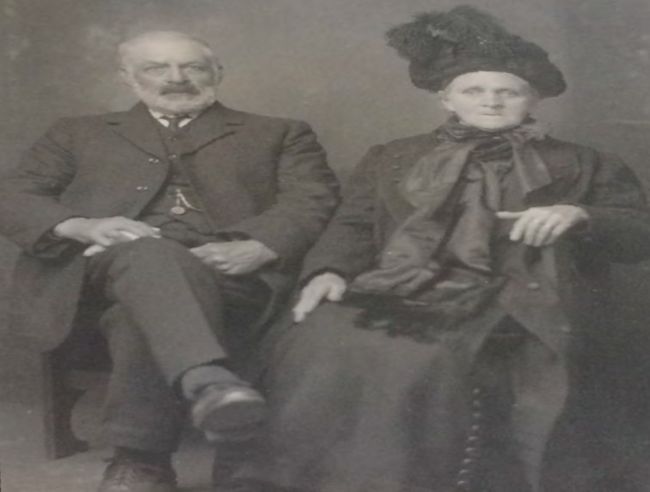
Photo 1 This photo is thought to show ancestors from the late Edwardian or early First World War years
Photo 1
I’m afraid that Photo 1, thought to represent Cornish ancestors in the 1860s, must portray family members from a later generation. The style of the gentleman’s smart three-piece suit, of narrow-moderate cut and featuring short jacket lapels, is typical of the early 1900s, as is the neat clipped style of his beard.
The lady is also well-dressed in keeping with her years, her costume confirming a late-Edwardian/pre- or early-WW1 date. Particularly significant are the large buttons ornamenting her coat and skirt and her elaborate befeathered toque (brimless hat), typical of this era. Considering all dress-related details, along with the advanced years of these ancestors, I estimate that they were pictured between about 1909 and 1915.
Photo 2
The other photo, also a postcard, is later and dates to the 1920s. This is demonstrated especially by the short, loose shiftlike dress of the school-aged girl (on the left), by the scooped necklines worn by the young women centre-back and right and by the latter’s straight dress with dropped waistline. These two older girls also wear the short bobbed hairstyles fashionable with the younger generation by the 1920s, while the older lady may still be wearing traditional long hair, pinned back. Her jersey suit refiects the simpler, more comfortable lines of 1920s fashion, but is a more conservative choice, in keeping with her age.
Photographed c1922-1928, like you I suspect this family group comprises a mother and her ‘teenage’/20-something daughters, but probably not including twins. The lady displays her ring and is, or was, married.
I often query who is not present in a studio photograph and we notice the absence of a male husband/father figure here – unusual for a regular family group scene. Perhaps he had died some time previously, or was no longer living at home; alternatively a separate photograph might possibly survive, portraying the lady’s husband and sons. JS