PLANTATION QUAIL
The Duke of Northumberland’s son-in-law, Floridabased Remy W. Trafelet, is an avid wild quail shooter. Here, he explains how an American plantation is not dissimilar to a grouse moor or grey partridge estate
Photographer
ELLIOT CONWAY
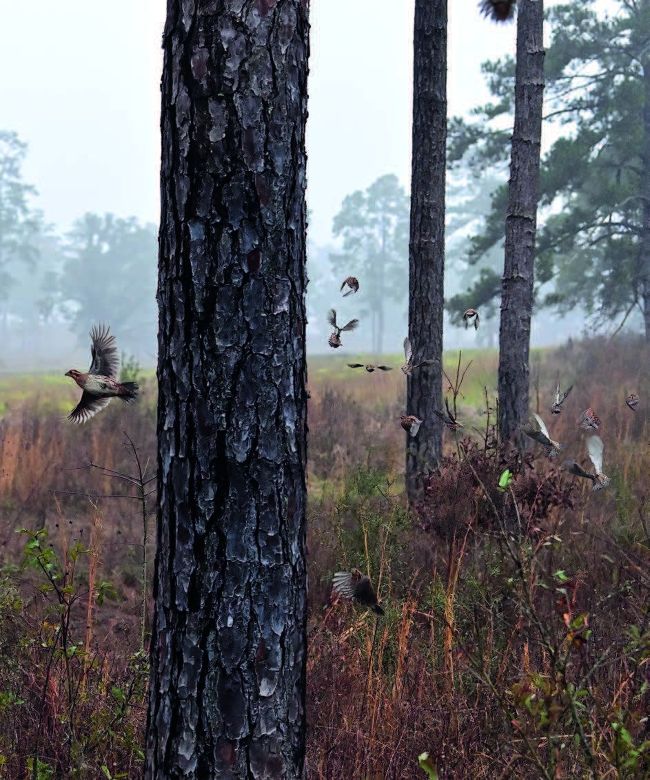
Conservation, habitat management, and humbling sport are all brought together at an American wild quail plantation. A symphony of pointers, retrievers, horses, mules, and guns produces a magical sport steeped in tradition. There are familiar aspects of grouse and grey partridge, but as many differences to create a truly unique experience.
Wild quail plantations are primarily located in south west Georgia and northern Florida, where the hunting season runs from mid-November until the end of February. The region’s sandy, fast-draining soil and towering pines permit plenty of sunlight penetration. It’s the ideal quail environment. Land conservation preoccupies the thinking of southern quail plantations, where over half a million acres of natural habitat are protected, much of it in perpetuity through conservation easements. Like the impact that shooting has on England and Scotland’s countryside, quail plantations inject tremendous economic benefits into their local communities.
A typical day starts with a full English breakfast mixed with some southern staples of cheese grits, banana bread, and thick-cut American bacon. After being assigned shooting partners and a wagon, the Guns depart for a day in the field. The preferred shotgun for the impatient, small yet hearty bobwhite quail is a shorter-barreled 20- or 28-bore overand-under or side-by-side. A traditional plantation quail hunt is on horseback. Known for their stability and a flat, brisk walk, Tennessee walking horses allow the rider to cover an abundance of ground and comfortably spend the day in the saddle. Outside of the Guns, the hunting party includes a dog handler and assistants, scouts, grooms, and other nonshooting participants. A mule-drawn wagon, outfitted with four to six dog boxes and a platform next to the mule driver for the retrievers, carries the additional dogs and passengers. During the morning hunt, there is a break for elevenses. It’s a time to dismount and stretch one’s legs with consommé and local sausages. The morning hunt ends around noon with leisurely refreshments and a chat around the bonfire. As on any shoot, the importance of lunch is not overlooked, and a long lunch in the field precedes heading out for the afternoon hunt.