GB
  
You are currently viewing the United Kingdom version of the site.
Would you like to switch to your local site?
12 MIN READ TIME

HEART DISEASE

GET HEART SMART

NEW STUDIES HAVE SHOWN THAT SEVERAL SMALL LIFESTYLE CHANGES CAN DRASTICALLY IMPROVE YOUR HEART HEALTH

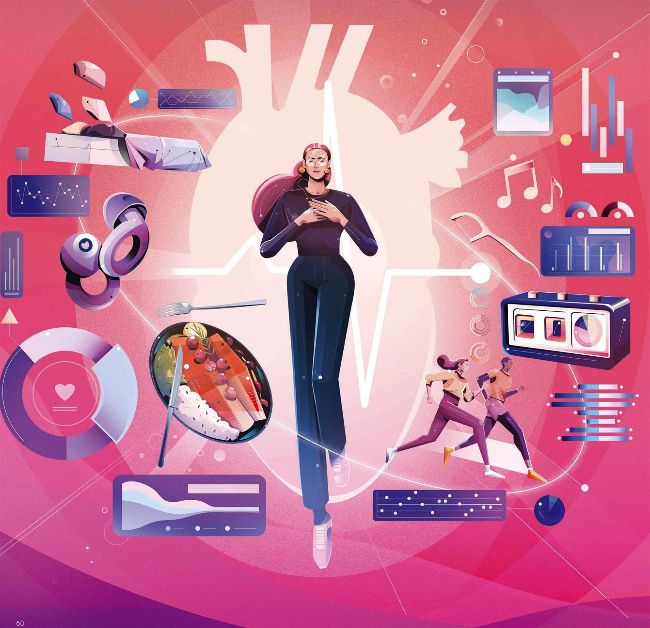
ILLUSTRATION: JOE WALDRON

Modern life isn’t doing our hearts any favours. We sit too much (over nine hours a day, on average), are regularly overwhelmed by stress (now linked to chronic inflammation – a key risk for heart disease) and fill more than half of our plates with ultra-processed foods (shown to drastically increase stroke risk). It’s little wonder heart disease is now the world’s number one killer, accounting for 13 per cent of all deaths on Earth, according to the World Health Organization.

It gets worse. Research suggests that heart disease risk is now rising with each new generation: a University of Oxford study found that people in their 50s and 60s today are up to 1.5 times more likely than their grandparents to develop heart disease at the same age.

Rising obesity rates, as you’d guess, play a role here. But worrying recent research from Harvard Medical School suggests that even people with a normal body mass index could be at risk due to hidden ‘fatty muscles’. After studying 700 people admitted to hospital with shortness of breath (but whose arteries weren’t clogged), the scientists found that those with more fat lodged in their muscles were more likely to have damage to the tiny blood vessels supplying the heart. Six years later, these people were more likely to be hospitalised for heart disease and had a much higher risk of premature death.

New hidden risks to your heart seem to appear every month. But, reassuringly, so does new evidence for the benefits of keeping your body’s hardest working muscle healthy. One intriguing study by University College London, for example, has found that having a healthy heart at age 50 can lower your overall risk of developing dementia, even if you’re already experiencing cognitive decline.

Recent research has also suggested better heart health can improve your mental resilience, increase your overall life satisfaction and may even slow ageing. According to the Journal of the American Heart Association, adopting ‘heart healthy’ habits could keep your body biologically young – as measured by DNA methylation (changes in your DNA that occur over time) – while the number of candles on your birthday cake increases.

Unlock this article and much more with
You can enjoy:
Enjoy this edition in full
Instant access to 600+ titles
Thousands of back issues
No contract or commitment
Try for 99p
SUBSCRIBE NOW
30 day trial, then just £9.99 / month. Cancel anytime. New subscribers only.


Learn more
Pocketmags Plus
Pocketmags Plus

This article is from...


View Issues
BBC Science Focus Magazine
March 2025
VIEW IN STORE

Other Articles in this Issue


EDITORIAL
FROM THE EDITOR
COVER: JOE WALDRON THIS PAGE: GETTY IMAGES X2,
REGULARS
Hitch a ride
DERBYSHIRE, UK
A helping hand
INTERNATIONAL SPACE STATION
The aftermath
ALTADENA, CALIFORNIA
FEEDBACK
YOUR OPINIONS ON SCIENCE, TECHNOLOGY AND OUR MAGAZINE
DON’T JUST READ THIS MAGAZINE… LISTEN TO IT TOO
Discover the podcast from the team behind BBC
Energy companies shift blame to consumers
Study finds top polluters weave ‘eco-hero’ narratives
Earth’s inner core may be changing its spin and its shape
Changes to seismic waves travelling through the planet could reveal unusual activity in Earth’s core
Prioritise regular sleep patterns over total hours, says study
HEALTH
Turtles dance when they get near feeding sites
The adorable behaviour may unlock the secrets to their powers of navigation
Crowds of people act like liquids
Researchers observe human ‘ripples’
Bennu asteroid could spark a global winter if it hits Earth
SPACE
Omega-3might slow your biological clock
HEALTH
Breakthrough in genetic engineering creates mice with two dads
BIOLOGY
A glimpse into the future of space-born surveillance
New mapping by ESA satellites could track everything from natural disasters to illegal activity
The map that may lead to a new obesity treatment
A better understanding of the pathways in the human hypothalamus has huge possibilities for medicine
The simple recipe for making powerful astrophysical jets
You need just three ingredients to make these truly colossal ‘double-sided lightsabers’
We can learn valuable lessons from the ‘polar bear capital of the world’
As the climate crisis pushes humans and animals closer together, it’s crucial that we coexist with kindness
‘Brain rot’: is TikTok causing brain abnormalities?
A new study seems to prove what we've all suspected: bingeing on short-form videos is bad for our brains. But not all experts are convinced…
Is creating a ‘woolly mammoth mouse’ a step too far for biotechnology?
Are scientists so preoccupied with whether or not they could bring back mammoths, that they’re not concerned with whether they should?
GOING DEEP
An advanced new research station is being developed to explore the potential for a human settlement under the ocean
FIVE OF THE BEST NOISE-CANCELLING HEADPHONES
The outside world is noisy. But you can stop it from interfering with your choice of tunes with a good pair of noise-cancelling headphones. Here’s our pick of the top five…
IDEAS WE LIKE…
Our pick of the month’s smartest tech
Fast radio bursts: Are these mysterious signals from deep space getting even stranger?
New discoveries are shaking up what little we thought we knew about fast radio bursts
DOES YOUR NAME AFFECT YOUR PHYSICAL APPEARANCE?
LUKE GILLESPIE, SUNDERLAND
DOES ANYTHING EXCRETE GOLD?
Scientists have identified several bacteria that consume metal
HOW OLD IS JUPITER’S GREAT RED SPOT, REALLY?
Recent research suggests the age of the Great
THE ASIAN PALM CIVET
The world might have paid little attention to
ARE SATELLITES BURNING UP IN THE ATMOSPHERE BAD FOR THE ENVIRONMENT?
About 13,000 satellites currently orbit Earth, roughly 10,000
HOW EASILY COULD AI CREATE A DIGITAL DOPPELGÄNGER OF ME?
All too easily. Generative artificial intelligence (AI) tools
WHAT IS THE HEADACHE BONE AND CAN YOU REALLY ‘WORK IT’ TO REDUCE HEADACHES?
You might have heard people talk about the
ASTRONOMY FOR BEGINNERS
HOW TO SAFELY VIEW THE PARTIAL SOLAR ECLIPSE
WHEN: 29 MARCH 2025 A partial solar eclipse
WHY DO I FIND IT SO DIFFICULT TO SWITCH BETWEEN TASKS?
First, the good news is you’re not alone
WHAT’S THE CRAZIEST THING EVER STOLEN?
Most robberies involve the sort of goods you
QUESTION OF THE MONTH
DILEEP BAGNALL VIA EMAIL WHAT ARE EARLOBES FOR?
CROSSWORD
PENCILS AT THE READY!
THE SURVIVOR’S SHOPPING LIST
What you really need in a doomsday bunker
HOPE PREVAILS
Optimism trumps mindfulness when things get tough, says the science
FEATURES
A HITCHHIKER’S GUIDE TO THE QUANTUM WORLD
Quantum physics is confusing. Really confusing. You just won’t believe how vastly, hugely, mindbogglingly confusing it is. Fortunately, scientists have been exploring it for years now and are, finally, beginning to make some sense of it all
BEHIND DEATH’S DOOR
They leave their bodies, witness a bright light and return forever changed. But do survivors of near-death experiences truly glimpse the great beyond? New research into the brain’s final moments could decode these visions at life’s edge
ECHOES OF ATLANTIS
OVER HALF A MILLION PEOPLE MAY HAVE LIVED IN THE LOST LANDSCAPES NORTH OF AUSTRALIA… BEFORE THEY WERE CONSUMED BY THE OCEAN
Chat
X
Pocketmags Support