ABLETON LIVE at 20
It wouldn’t be too hyperbolic to liken the influence Ableton Live has had on electronic music in the 21st century to that of Roland’s grooveboxes in the 1980s. Live is far from the only software tool around – for every track created in Ableton’s DAW, there are countless others made in the likes of Logic, Cubase or Reason – but just as the TR-808 and TR-909 laid down the blueprint for both the tone and sequencing style of modern electronic drums, so has Ableton Live defined a specific style of music software; one that bridges the gap between recording workspace and instrument in its own right.
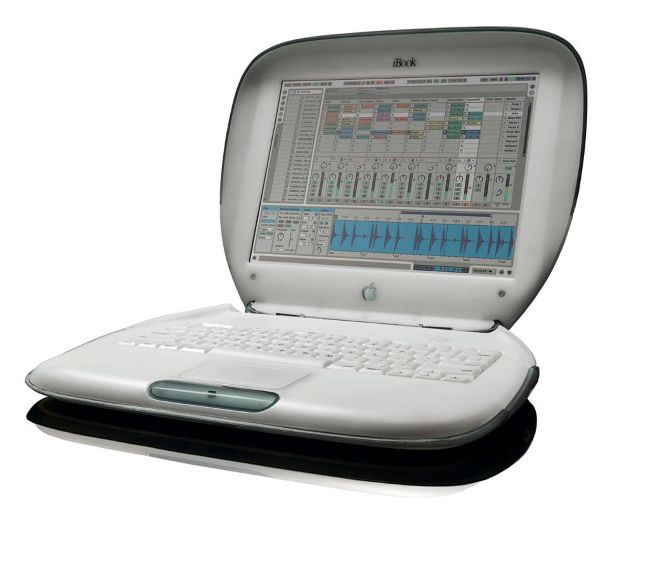
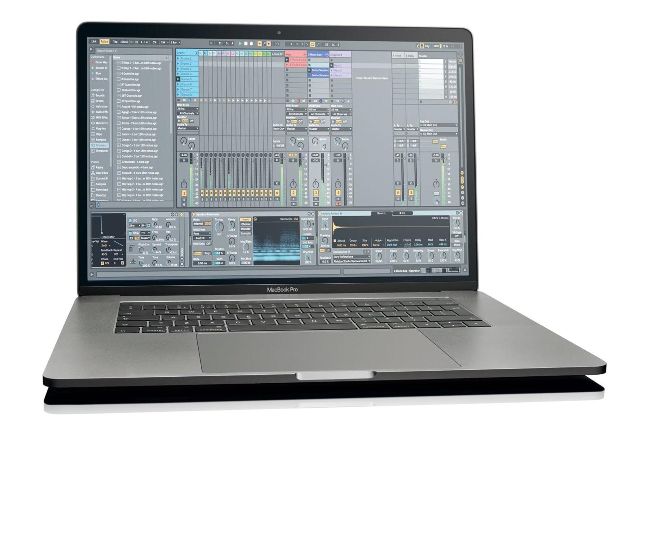
Live launched on 30 October 2001, at a time when processing power was just making the concept of laptop-based live performance realistic for electronic musicians. The design of Live 1 wasn’t entirely without precedent, Sonic Foundry’s Acid already allowed musicians to play with time-stretched loops, and Propellerhead’s Rebirth had cemented the idea of computer-asinstrument. Still, the majority of recording software at the time was built around a ‘digital tape machine’ paradigm, focused on replicating the workflow of traditional studio recording systems.
It’s significant that the creators of Ableton were forward-thinking musicians first. While Ableton is hardly the only music-making brand with a musician at the helm, its design is undoubtedly a product of its originators’ DIY ethos and the adventurous spirit of Berlin’s 1990s music scene. Ableton Live co-creators Gerhard Behles and Robert Henke originally gained recognition with Monolake, their minimal techno project signed to the influential Chain Reaction label owned by Basic Channel’s Moritz Von Oswald and Mark Ernestus. Having first met each other at the Munich branch of the legendary Synthesizerstudio Bonn, Monolake was formed when Behles and Henke reconnected in Berlin, where they had both relocated to study Computer Science. In those early years the pair released a string of cult classic releases including the albums Hongkong and Interstate, both of which hold up remarkably well over 20 years later.
ONCE UPON A TIME…
The Berlin scene in the ’90s was evidently fertile ground for forward-looking music-making. As well as birthing the genre-bending dub techno of Basic Channel and classic albums like Porter Ricks’ Biokinetics, it also provided the roots of several big music tech brands, including Native Instruments, launched in Berlin in 1996, and Ableton, which Behles founded with fellow developer Bernd Roggendorf in ’99.
“You have to imagine, the place was in a total state of limbo because the wall had just come down,” Behles tells us. “In hindsight it was much less stable than one thought, being in it. The whole political situation was fragile, there was so much uncertainty and unclarity, but in that openness a lot could happen. Large parts of the city were vacated or so run down that nobody could live there, but it was intact enough that you could set up an illegal club – and that happened all over the place. There was always a way to play, have a gig, and always an audience. It was very exciting.”
“THE GOAL WAS A SYSTEM TO ALLOW US TO IMPROVISE”
ROBERT HENKE
The original concept for Live has its roots in the way Behles and Henke were making music. By the late ’90s the pair were already making use of self-created software tools. Henke came from an engineering background, and had previously modified hardware synths such as his Roland Juno-6. Behles then introduced him to the programming environment Max, developed by Cycling ‘74. The pair used Max to design creative tools to facilitate their own music making, many of which provided the basic ideas behind version 1 of Live.