FM | CLASSIC ALBUM
Seefeel Succour
Warp Records, 1995
Words by Roy Spencer
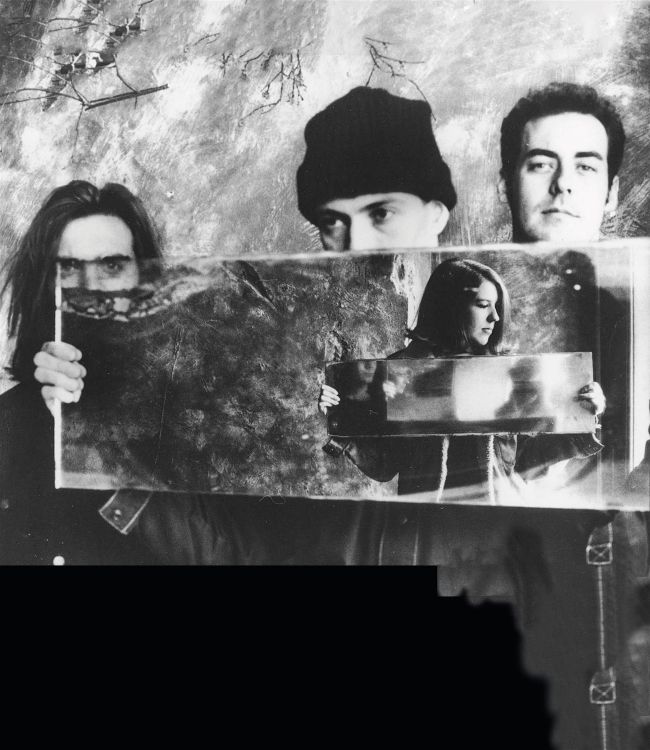
© Stefan de Batselier
For their second album, the shoegazing post-rock guitar experimentalists, Seefeel, took a doomier turn.
Disembodying vocals to haunted snatches, and embracing a more claustrophobic and electronic tone and tension.
On their debut, 1993’s Quique, a fusion of guitars and machines was there. But a diet of post-production partying gave the music a dreamier pulse.
“On the first album we were going to clubs and doing pills. And everything was like a hands-in-the-air honeymoon period,” says guitarist and programmer, Mark Clifford. “Then it got darker.”
Alongside Daren Seymour on bass, Justin Fletcher on drums, and vocalist Sarah Peacock, Clifford channelled the comedown mood, soundtracking it with dense sonic textures, and swashes of twisted sound and noise manipulation.
“I spent a lot of time on the [Ensoniq] ASR-10, just feeling it out and sampling,” says Clifford. “I never read the manual. I don’t like to learn like that, because then you’re not controlled by the way you should do things.
“That was always how we did things in Seefeel. When we used studios, engineers would look at us like, ‘What are they doing?’ Because we’d do things that weren’t in their rulebook. To me that’s how interesting music is made, always has been.”
The resulting album, recorded largely between their basement flat in South East London and the Cocteau Twins’ September Sound studio, was also the band’s first on Warp.
“Not that we suddenly went out and bought synthesisers to fit in,” says Clifford. “We liked all that stuff before. It wasn’t like, ‘Oh yeah, we’ve moved to Warp, so we’ve got permission to sound like it’ [laughs]. There are no synths on Succour. We were still a very guitar-orientated band.”
Working late into the night, tracks would be built from the rhythm upwards, dictating the guitar noise, washed through effect pedals. Any vocals would be added last by Peacock, riffing and repeating undecipherable phrases.
“Full lyrics just didn’t work in that context,” she says. “There was no verse/chorus or traditional vocals. That doesn’t really work with that music. Everything was really transitional, then. We were at a turning point. It was all a new direction.”