Rock of ages
Jeff Beck
His inventive guitar techniques and use of effects established the template for hard-rock virtuosity and tone.
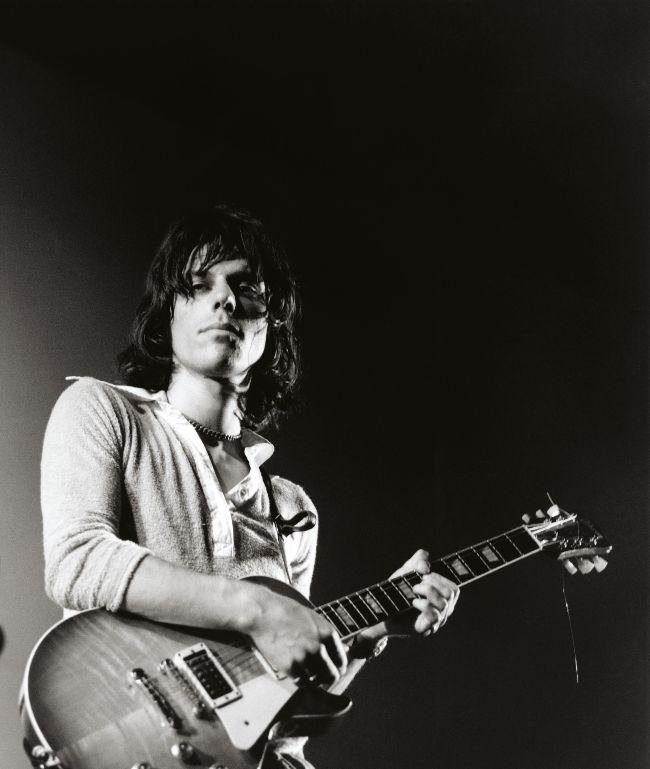
The progenitors of hard rock gave sound and shape to a divergent and ultimately diverse strain of rock and roll.
DAVID REDFERNS/REDFERNS/GETTY IMAGES
READERS POLL RESULTS!
L
IKE ROCK AND ROLL itself, it’s not easy to pinpoint the origin of hard rock, its louder, noisier and more provocative offshoot. Driven by strong rhythms and dominated by loud guitars playing aggressive riffs with distortion, hard rock grew from the stylistic and tonal preferences of electric blues players like Willie Johnson and Pat Hare, and rock and roll guitarists such as Link Wray and Dick Dale. The first blossoming of a hard-rock scene occurred in the late 1950s and early ’60s in Texas, Southern California and, especially, the Pacific Northwest, where garage-rock bands — including the prototypical hard-rock act, the Kingsmen — churned out three-chord tunes like “Louie Louie.” In this primitive state of its evolution, hard rock was a germ looking for a healthy host to help it thrive.