Perfect picking!
Many players are reconnecting with their classical guitars right now so we decided to revisit Bridget Mermikides’ super lesson which focuses on perfecting your fingerstyle technique.
Bridget Mermikides
ABILITY RATING
Moderate Rated 5 out of 5 stars
Info
Key Various
Tempo Various
Will improve your…
Picking hand stability Rest and free stroke Tremolo and rasgueado
Any fingerstyle player knows how crucial it is to develop good technique in their picking hand. Once in full flow this hand relies almost exclusively on touch and feel. Unlike the fretting hand, which gets plenty of visual attention, the picking hand is rarely glanced at.
This feature focuses mainly on classical techniques with some basic flamenco elements thrown in. And although everything here can be translated to steel-string, I am addressing tone and touch in a way that’s more relevant to nylon strings so this should make a great companion article to my regular column on classical guitar arrangements.
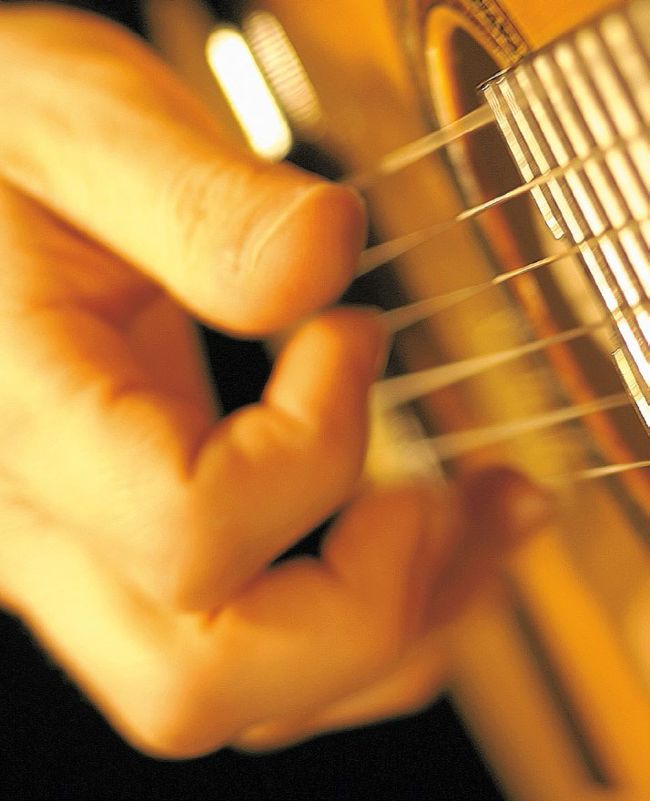
Good technique helps in obtaining great tone too
The techniques will include ‘apoyando’ and ‘tirando’. Apoyando is the Spanish term for rest stroke; apoyar, meaning to rest or to lean, refers to the stroke of the finger or thumb pushing through the string and landing (resting/leaning) on an adjacent string. Tirando or ‘free stroke’, from tirar; to throw, is the term used when the finger plucks the string by curling it inside the hand, missing the adjacent string completely. Rest stroke has the stronger, warmer tone and is used for single line melodies, for occasional emphasis and for scales. Free stroke is used for everything else.
The majority of teachers begin with rest stroke because the movement is easier, more natural, and produces a warm, full tone. This tone becomes the aim for the naturally quieter, thinner sounding free stroke. In the words of virtuoso guitarist and teaching guru Pepe Romero: “The rest stroke is the teacher of the free stroke”. So the free stroke has the same intrinsic movement as rest stroke in that the string is ‘pushed’ by the finger, and causes the string to vibrate as similarly as possible. A common mistake in free stroke is for the fingers to become claw-like and pull the strings outwards. Although this can feel like a natural way to pluck, it hampers the resonance and will not produce the best possible tone on nylon strings.