PAGE TURNER
HOT ON THE HEELS OF HIS AMAZING NEW BOOK, JIMMY PAGE DISCUSSES HIS EVOLUTION AS A GUITARIST, HIS LEGENDARY GEAR, THE CREATIVE PROCESS THAT WENT INTO THE HOLY TRINITY OF LED ZEPPELIN SONGS — “WHOLE LOTTA LOVE,” “KASHMIR” AND “STAIRWAY TO HEAVEN” — AND THE TIME HE PLAYED AT “FULL ACCELERATION” WITH THE ROLLING STONES
WRITTEN BY CHRIS BIRD
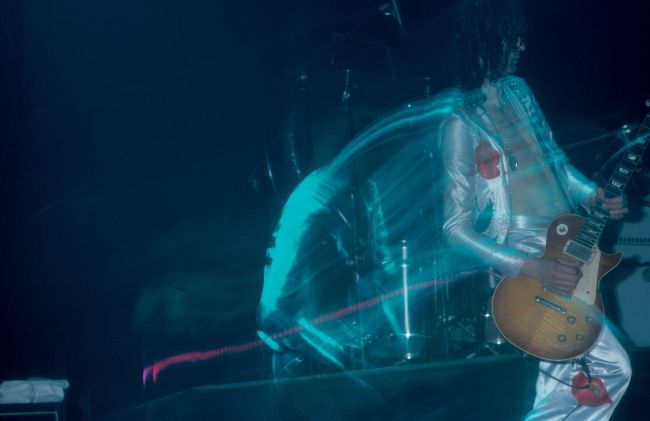
Jimmy Page performs with Led Zeppelin at New York’s Madison Square Garden in June 1977
COPYRIGHT © THE JIMMY PAGE COLLECTION
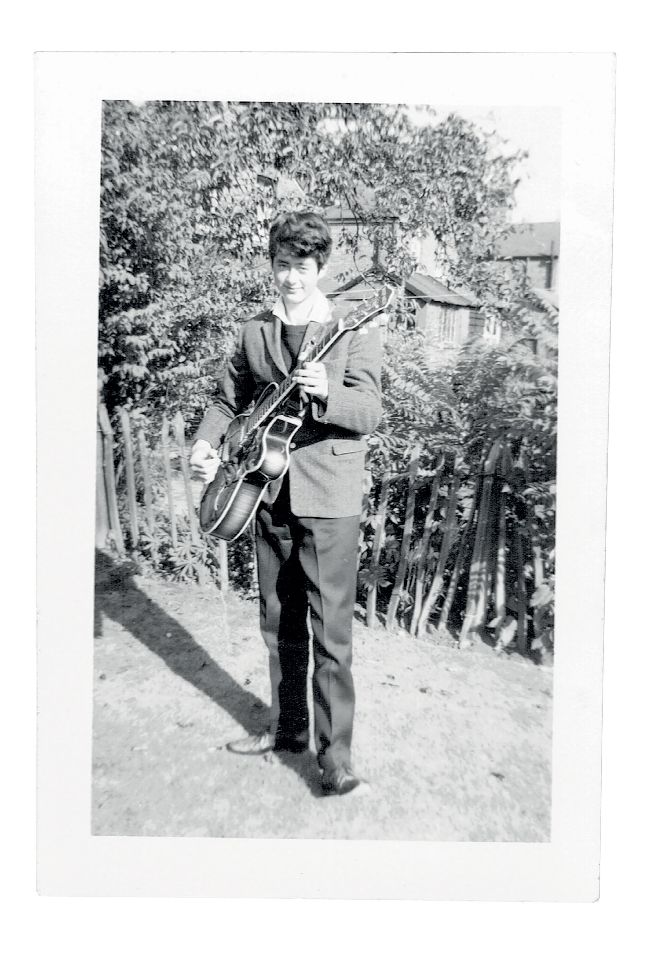
A young Jimmy Page at home in Epsom with his first guitar, a circa-1958 Höfner President
COPYRIGHT © THE JIMMY PAGE COLLECTION
IT IS AN EXTRAORDINARY STORY, and as Jimmy Page puts it, quietly but firmly, only he is qualified to tell it. He has a new book from Genesis Publications, titled simply Jimmy Page: The Anthology. It is what he calls “an autobiography with photographs,” and a “companion volume” to 2010’s Jimmy Page by Jimmy Page. The focus is on his music and guitars, his artistry and evolution as a player. But there is also the sense, as he explains it, that Page is setting the record straight, in answer to the many unauthorized biographies of himself and his band, Led Zeppelin.
“There’s so much mythology about me,” Page says. “In all those other books, because people don’t have all of the information — they make things up. So at least with my book I could be really authoritative, because I was the one who knew what happened. So, let’s do it. Let’s start telling the stories as they really are.”
Speaking to us from his home in London, where he has remained since the outset of the global pandemic, Page is in a relaxed mood, happy to talk about every aspect of his life’s work: the groundbreaking music he made, first with the Yardbirds and then with Led Zeppelin; and the tools of his trade, iconic guitars such as the Black Beauty (more on that later), and the amps and effects with which he explored new sounds. Born January 9, 1944, in Heston, Middlesex, England, James Patrick Page began playing guitar at age 12. Inspired by pioneering rock ’n’ roll guitarists including Scotty Moore and James Burton, he performed in various groups while attending art school before establishing himself as a session player and producer, working on a number of hit records for major artists, among them the Who, the Kinks, Van Morrison and the Rolling Stones.
In 1966, Page joined the Yardbirds, one of the leading bands of the British blues-rock explosion — originally as bassist, and later as lead guitarist alongside his friend Jeff Beck. Following Beck’s departure, Page continued with the Yardbirds until 1968, when, after two members of the band exited, he put a new lineup together with singer Robert Plant, drummer John Bonham and bassist John Paul Jones. Initially billed as the New Yardbirds, the band was subsequently renamed Led Zeppelin.
With Page as architect-in-chief, a series of classic albums, beginning in 1969, defined Led Zeppelin as the dominant hard rock band of the Seventies, with the guitarist’s mastery of blues and folk combining with heavy riffs to achieve a perfect balance, what he called “light and shade.” The fourth album — officially untitled, but known variously as “Led Zeppelin IV” or “Four Symbols” — was arguably the band’s masterpiece, featuring that most sacred of all rock anthems, “Stairway to Heaven.” On stage, the band’s prowess, in which improvisation was the hallmark of marathon shows, made them the biggest-grossing live act in the world.
Led Zeppelin’s reign ended with the death of John Bonham on September 25, 1980. In the wake of this tragedy, Page made a soundtrack album for Death Wish II and formed a supergroup, the Firm, with ex-Free/Bad Company singer Paul Rodgers.
In 1985, there was the first Zeppelin reunion, for Live Aid, with Page, Plant and Jones backed by two drummers, Phil Collins and Tony Thompson. In 1988 there was Outrider, Page’s only solo album to date. And in the Nineties, another short-lived supergroup, Coverdale/Page, with Whitesnake leader David Coverdale, before Page and Plant reunited, not using the Led Zeppelin name, but performing mostly Zeppelin music on the live album No Quarter. The duo then made an album of new songs, Walking Into Clarksdale, released in 1998, which still stands as Page’s last album of original material. At the turn of the millennium, Page dug back into his past once again by performing Zeppelin classics with the Black Crowes.
It was on December 10, 2007, that Page, Plant, Jones and drummer Jason Bonham, the son of John Bonham, performed as Led Zeppelin for a one-off show at the 02 Arena in London. Twenty million people applied for tickets for what was a momentous show, but with Plant unwilling to commit to a fullscale reunion tour, this proved to be Zeppelin’s last stand.
In all the years since, Page has busied himself curating the Zeppelin catalog — a body of work shaped by his genius as a guitarist, writer, arranger and producer. What he reveals in Jimmy Page: The Anthology are the secrets of his art, the inner-workings of Led Zeppelin, how he chose and modified the guitars with which he created the band’s definitive songs. In this interview, he addresses all of that and more.
Jimmy Page: The Anthology is a beautiful book — and so full of detail. Yes, it was an interesting thing to do, to put in all the information that you couldn’t put into the first book. Anthology gave me the opportunity to do the detail behind the detail of everything pertaining to my career, whether it was the guitars or the costumes or whatever. To be able to get close up, personal and even invasive — so you could see the mechanism of things like the string bender, the circuitry, or the fine detail of the costumes. And, of course, there are a lot of stories behind the guitars.
Jimmy Page: The Anthology
by Jimmy Page is published by Genesis Publications. Order from jimmypageanthology.com
One guitar in particular — your 1960 Gibson Les Paul Black Beauty Custom — has an amazing story.
The first time I played it, I had such a connection with it. I thought, “This is it. After all this searching and going through guitar shops, this is the one.” I got it before I went to art college, so when I started doing studio work as a session player, that’s the electric that’s used on pretty much all of that work.
You also played it during Led Zeppelin’s famous concert at London’s Royal Albert Hall in January 1970.