TITANIC MYTHS
TRUTH OR MYTH?
Since its sinking in 1912, dozens of myths and conspiracy theories have circulated about Titanic – from the actions of crew and passengers, to how the tragedy could have been avoided. Titanic expert Tim Maltin separates fact from fiction
Tim Maltin
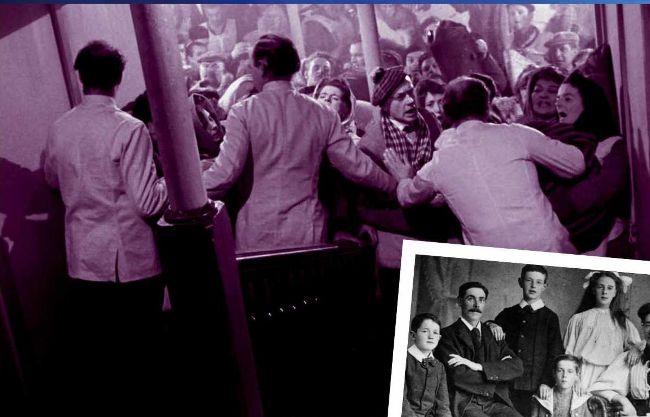
Stewards prevent third-class passengers rushing to the boat deck in the 1958 film A Night to Remember
GETTY IMAGES X2, ALAMY X4
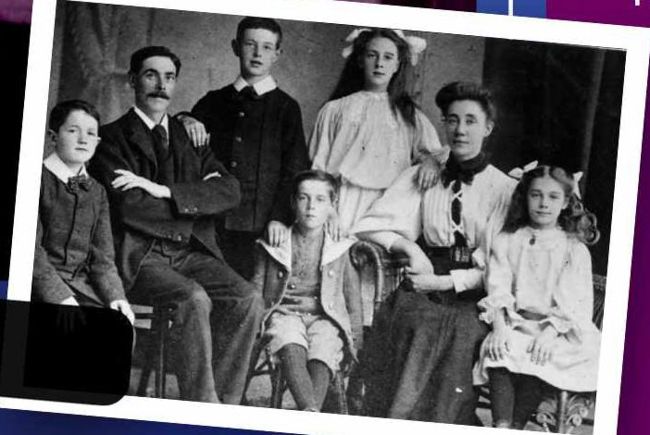
The Goodwin family chose to face death together rather than leave male family members behind
THIRD-CLASS PASSENGERS WERE PREVENTED FROM BOARDING LIFEBOATS
Several films of the disaster – including the 1958 film A Night to Remember and the 1997 blockbuster Titanic – famously depict stewards locking third-class passengers below deck to stop them rushing to the lifeboats. But were those travelling in steerage really prevented from leaving the ship?
“This is one of many myths about Titanic that is simply not true,” explains Tim Maltin, author of several books on the sinking. “First and second-class stewards were actually sent to help third-class stewards direct steerage passengers to the boat deck from around midnight – and Titanic didn’t sink until 2.20am. There are several reasons why around three-quarters of those travelling third class (an estimated 537 of roughly 709 people) tragically died. One of these is that first and second-class passengers had better access to the lifeboats simply because they were physically nearer to them. There were no lifeboats on the third-class deck, so steerage passengers had to make their way up to the boat deck, and they did get assistance with that.
“But the main reason why so many third-class travellers drowned,” continues Maltin, “is because so many families were emigrating to America, often with lots of children. In 1912, boys were technically classed as adults from the age of 13 and would therefore have had to wait to board a lifeboat, after women and children. Many mothers would not have wanted to part from their 13-year-old sons and leave them on board a doomed ship while they set o in a lifeboat, so many third-class families chose to stay together. Frederick and Augusta Goodwin, for example, boarded Titanic in Southampton with their six children – two of whom were boys aged 13 and 14. Like so many families with teenage boys, the entire family (pictured above) was lost in the sinking.”