PROFESSOR FEDOR ŠIMKOVIC
At the bleeding edge of physics research, studying some of the smallest particles in the universe, professor Šimkovic’s day-to-day work is stranger than you can imagine
INTERVIEWED BY DAISY DOBRIJEVIC
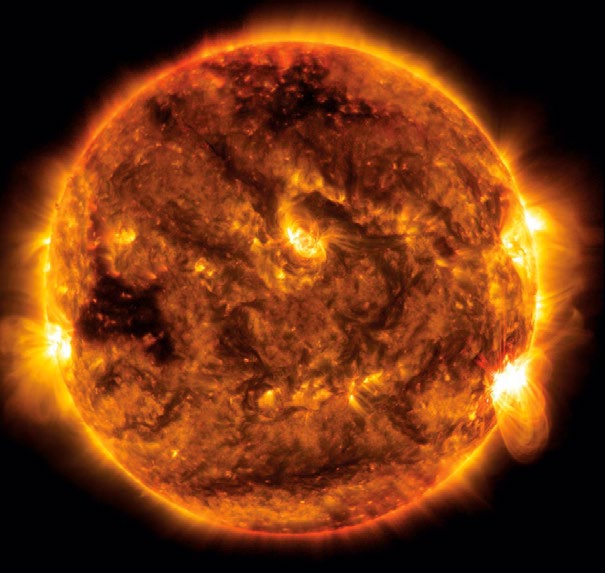
Low-energy neutrinos are produced in the Sun during nuclear fusion
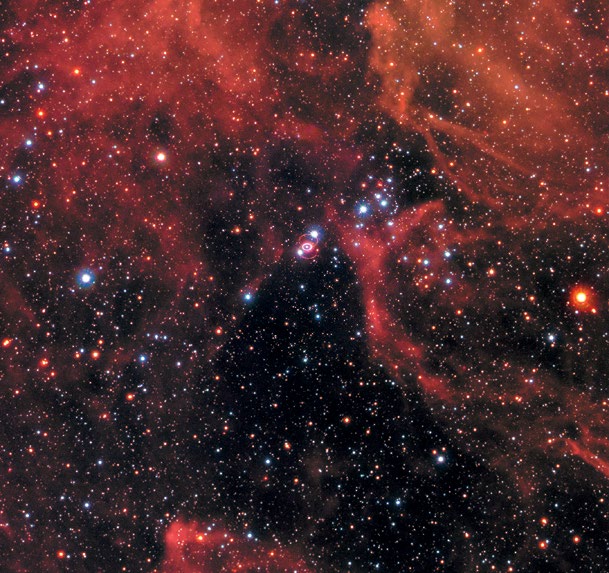
Supernovae are a source of extraterrestrial neutrinos. In this image, SN 1987A was captured by Hubble within the Large Magellanic Cloud
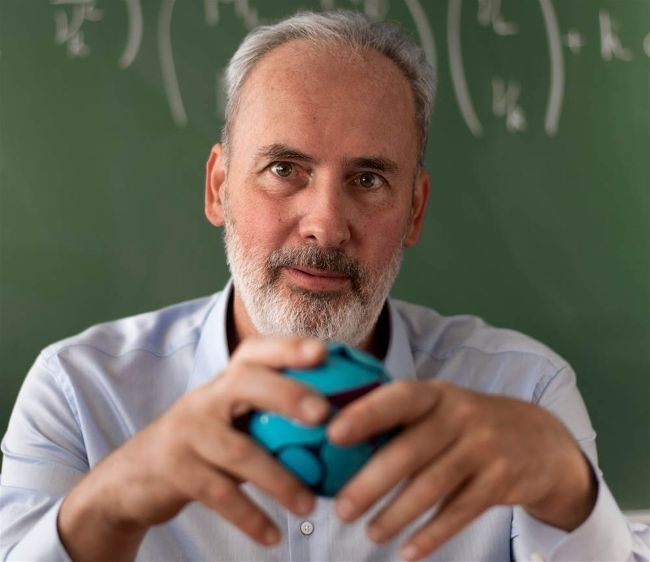
Šimkovic won the award for his work studying neutrinos
Nuclear and subnuclear physicist Šimkovic works at the Department of Nuclear Physics and Biophysics at Comenius University in Bratislava. He leads a team of young scientists and doctoral students in studying the fundamental properties of neutrinos – the most widespread elementary particles in the universe. His research covers various scientific fields of atomic physics, nuclear physics, particle physics and astrophysics. Šimkovic is an ESET Science Award laureate, winning the Outstanding Individual Contributor to Slovak Science award in 2020.
What are neutrinos?
Neutrinos are one of the most abundant fundamental particles in the universe. They come in three types, or flavours: electron neutrinos, muon neutrinos and tau neutrinos. A neutrino is similar to an electron but has no electrical charge and a tiny mass. Neutrinos are not part of an atom, unlike protons, neutrons and electrons. Like other constituents of the Standard Model of particle physics, they are assumed to be point-like objects – they aren’t made of any smaller pieces that we know of. According to the Standard Model, there exist 12 fundamental particles, namely three families of leptons – electron, muon and tau and corresponding neutrinos – up quarks and down quarks and their antimatter versions. The most abundant are neutrinos, created in the universe’s first second just after the Big Bang. Theory predicts that there are 340 Big Bang neutrinos in every cubic centimetre in the universe. Due to very low energy, they’ve not been confirmed yet. They form a cosmic neutrino background with a very low temperature of about -271 degrees Celsius. Nowadays, neutrinos remain a mystery for physicists.