THE GOLDILOCKS ZONE
Journey into a star’s habitable zone, where planetary temperatures allow liquid water to exist
WORDS ANDREW MAY
DID YOU KNOW? Special conditions, such as Europa’s subsurface ocean, can allow water to exist outside the habitable zone
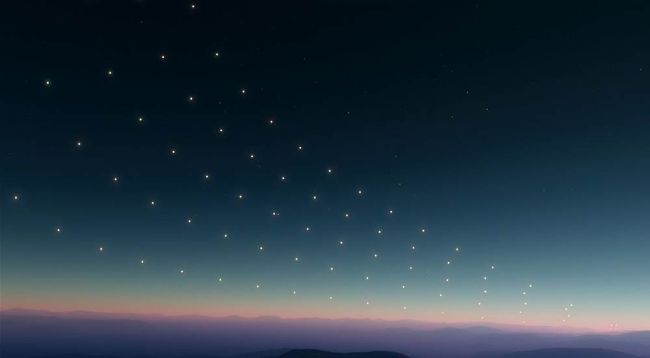
Computer-generated view from one of the 416 planets in the hypothetical ‘Ultimate Engineered Solar System’
© Space Engine
In the fairy tale, Goldilocks is a fussy little girl whose porridge has to be just right, neither too hot nor too cold. It’s the same with life itself – or at least the kind of water-based life we’re familiar with on Earth. A planet has to be just right: neither so cold that water only exists as frozen ice, nor so hot that it all boils away. That’s not going to be true of all the planets orbiting a star, just those within a certain range of orbits dubbed the ‘Goldilocks zone’, or more formally the ‘habitable zone’. If a planet’s orbit takes it too close to its parent star then it will be too hot for liquid water to exist, and if it’s too far out it will be too cold. That’s obvious enough, but the actual distances involved, which define the boundaries of the habitable zone, will vary from star to star.
Our Sun is a G-type yellow dwarf, and there’s no doubt where its habitable zone lies because Earth – orbiting around 93 million miles away – is within it. But for M-type red dwarfs, which are smaller and cooler than the Sun, the habitable zone lies much closer to the star. And for a larger, hotter, A-type star like Sirius, the Goldilocks zone is further out.