WEIRD SCIENCE
Discover the strange scientific studies that answer the questions you didn’t know needed answering
WORDS SCOTT DUTFIELD
DID YOU KNOW?
A half-pint glass of beer produces up to 2 million bubbles, twice as many as Champagne
WALKING LIKE A DINOSAUR
How do you figure out how dinosaurs walked? For a group ofresearchers at the University of Chile and the University of Illinois, the answer came from artificially changing the anatomy of a distant living cousin: the chicken. Birds are the descendants of giant bipedal dinosaurs called theropods that roamed Earth millions of years ago. Some of the closest living avian relatives to the T. rex are chickens. But the two don’t have quite the same anatomy, such as a chicken’s lack of a heavy tail. It was thought that moving a living bird’s centre of mass would recreate the posture of extinct dinosaurs, so a plunger-like tail was added to chicken test subjects to redistribute their centre of mass in a similar way to the T. rex.
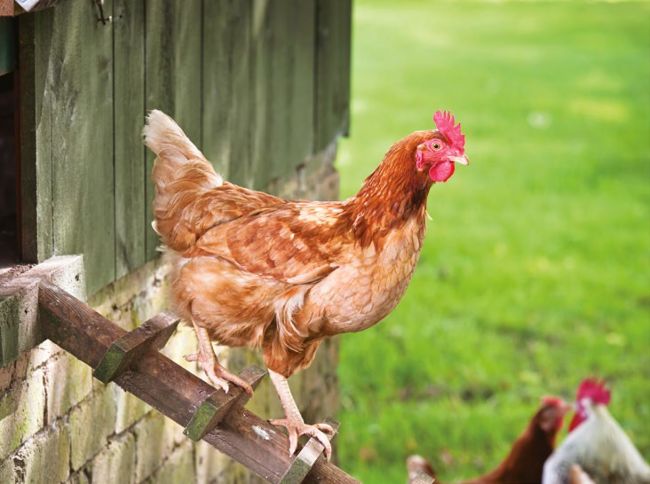
Given the right anatomy, chickens will walk like dinosaurs
In this study, researchers raised 12 domestic chicks for 12 weeks, split into three groups of four. One group of chickens was left alone as the control group, the second was given a weight to carry around on their backs and the third group was fitted with an experimental tail that weighed around 15 per cent of the chicken’s overall mass. Over the 12-week period, the tail-wearing chickens had a more posteriorly located centre of mass than the other chickens, along with a more vertically orientated femur and elongated gait. The new chicken strut resembled that of a velociraptor walking through Jurassic Park.
Did you know?
A T. rex could run at around 12 miles per hour
RECREATING THE DINOSAUR WALK
How
a
chicken’s
body
changes
when
you
give
it
a
tail
1 UNADAPTED CHICKENS
One group of chickens was reared without modifications as a control group.
2 WEIGHTED CHICKEN
A group was reared with extra back weight but no tail to see if weight over the pelvis alone changed their posture.
3 NEW TAIL
The experimental tail was made from wooden sticks inserted into a solid modelling clay base.
4 CENTRE
In chickens equipped with a new tail, the centre of mass moved from in front of the hindlimbs to the base of the tail.
5 POSTURE
Among the tail-enhanced chickens, the orientation of the femur became more vertical and the knee joint was more extended.
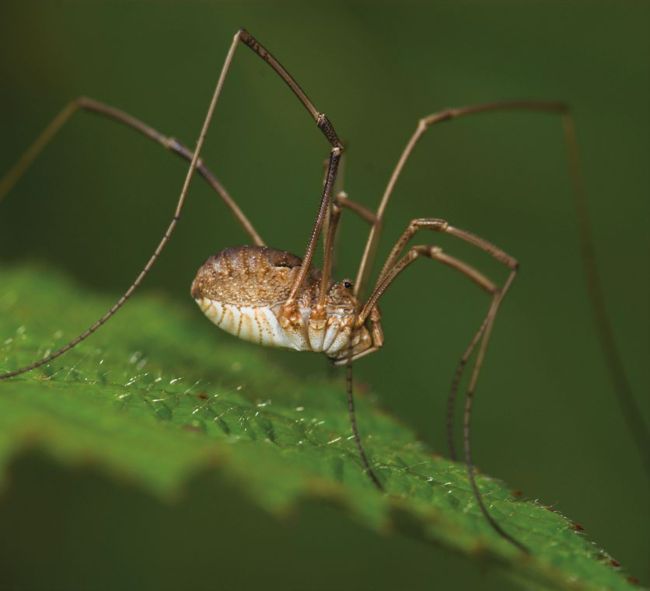
Harvestmen have elongated legs that scientists wanted to understand better by making them shorter
© Getty / Alamy / Illustration by Adrian Mann
MAKING DADDY SHORTLEGS
Harvestmen are small invertebrates that are often mistaken for spiders, with gangly legs to scale walls and ceilings. But what would they look like if they were shorter? Researchers at the University of Wisconsin isolated the genes linked to the growth of a harvestman with long flexible legs and turned them off in developing embryos. Over two years, researchers mapped out 580 million base pairs of a species of harvestman called Phalangium opilio. Comparing those base codes to those of another species, the fruit fly, helped pinpoint which portion of their genes were encoded for the growth of their legs. Using a process called RNA interference, they were able to disrupt the expression of the leg-growing genes. The results were newborn harvestmen with shorter and deformed legs. The newly stunted harvestman wasn’t created just for the sake of it; the researchers will use the data to further understand arachnid development and their evolutionary journey.
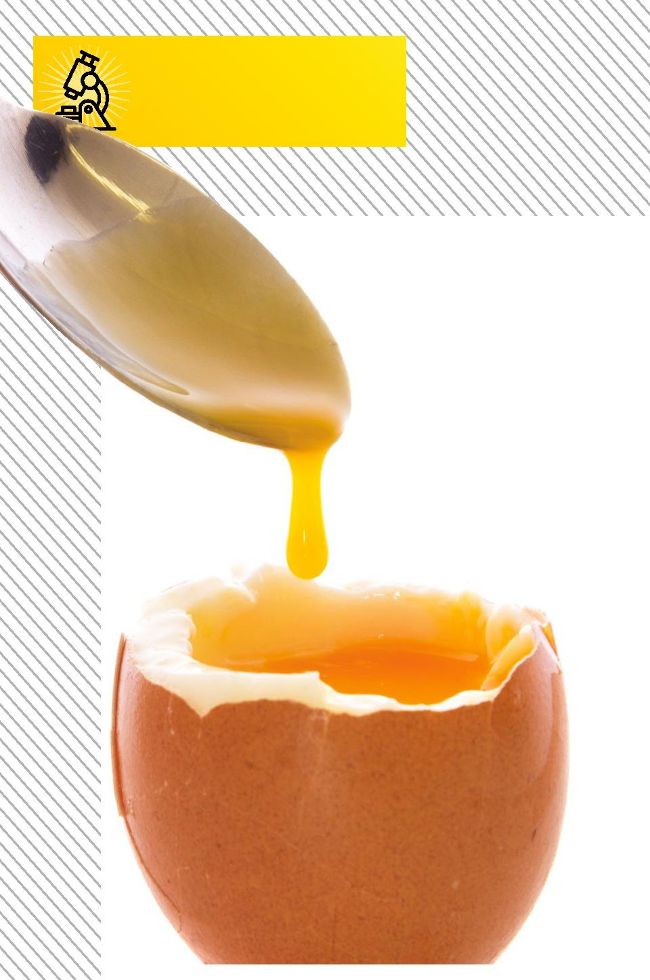
Boiling an egg isn’t quite as permanent a process as you’d think
‘UNBOILING’ EGGS
With the help of a super spinning machine called a Vortex Fluidic Device (VFD), researchers at the Australian Academy of Science discovered a way to undo the work of a pot of boiling water. During the process of boiling an egg, knot-like proteins called lysozymes that make up the egg whites break apart and form new bonds with neighbouring proteins until they ultimately gel together into solid egg whites.
Researchers chopped up a boiled egg, added a chemical called urea – found in urine – and dissolved everything in water. The urea worked to break down the protein bonds again, but the lysozymes didn’t yet reform into their previous knot-like state. Using the VFD, the eggy solution was then spun at speeds of 5,000 rotations per second in a test tube. As the solution span, the proteins were stretched and contracted until they returned to the knot-like shape they held before being boiled.
DO WOODPECKERS GET HEADACHES?
Because they spend most of their time hammering their heads against the trunks of trees, you might think that woodpeckers spend the rest of their time nursing a headache. However, scientists have discovered that their bodies are built for impact. In a 2002 study entitled ‘Cure for a Headache’, researchers at the University of California revealed that pileated woodpeckers (Dryocopus pileatus) have evolved specific anatomic features that stop their brains banging around their skull. Along with a thick skull made of spongy bone, there’s a piece of cartilage that sits in the skull’s mandible that partially cushions the impacts of repeated pecking. There are also dense muscles in the neck that contract one millisecond before impact to reduce the force applied to the skull. To prevent the acceleration of each strike tearing away at the bird’s retinae and forcing their eyes to pop out, woodpeckers have strong eyelids that act like seat belts holding everything together.
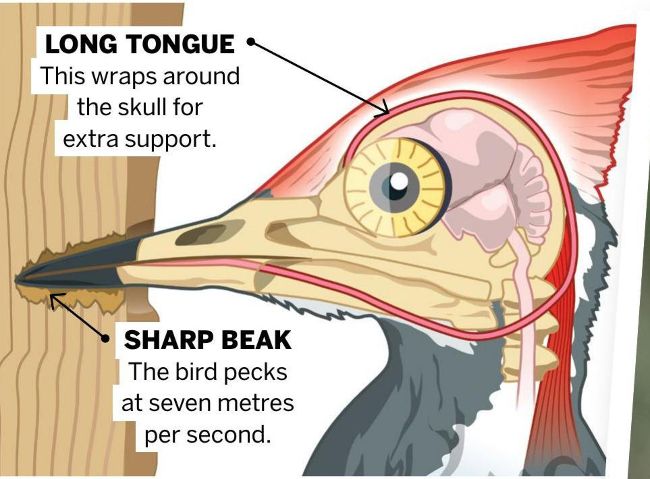
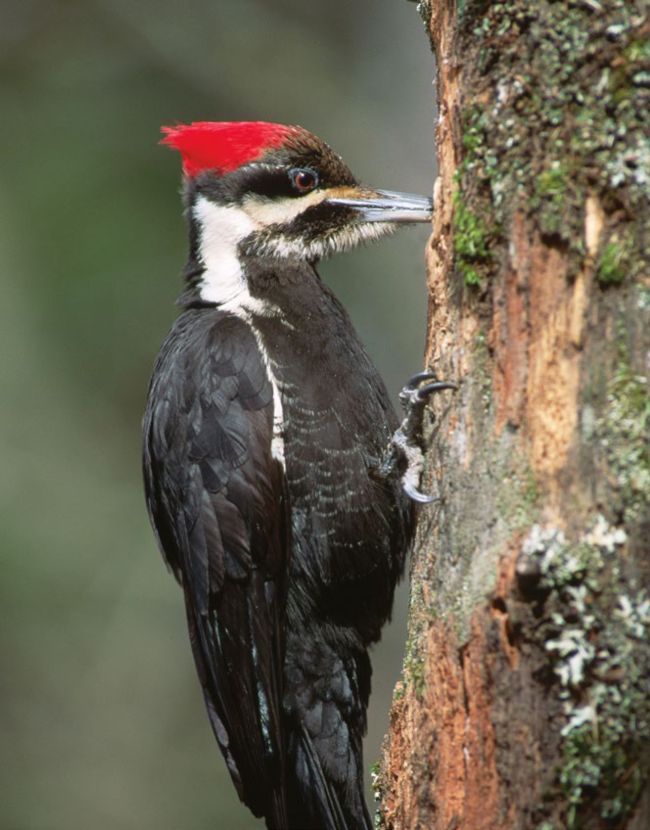
During mating season, male woodpeckers will drum on a tree up to 12,000 times a day
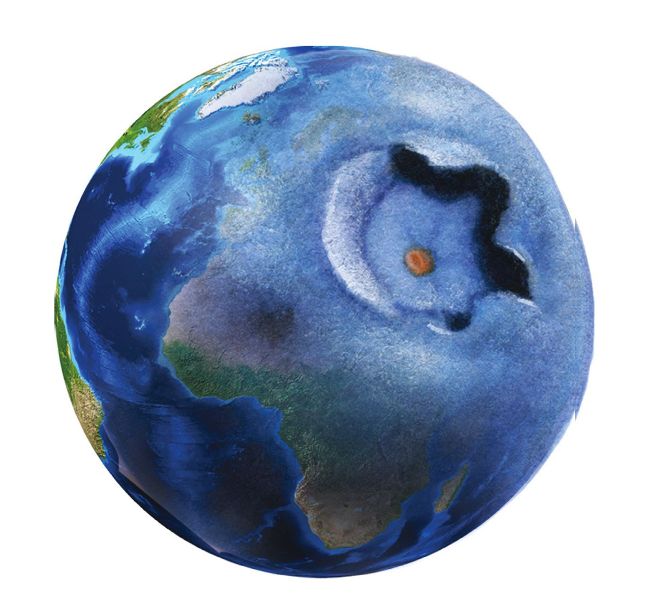
Rivers of molten jam might form a new world if Earth were made of blueberries
WHAT IF THE EARTH WAS A BLUEBERRY?
Have you ever wondered what the world would be like if it suddenly and unexpectedly transformed into a planetary pile of blueberries? Of course not, but a researcher at the University of Oxford’s Future of Humanity Institute has, and the conclusion is quite explosive. Computational neuroscientist Anders Sandberg set out to answer what would happen if the entire Earth was instantaneously replaced with an equal volume of closely packed but uncompressed blueberries. What would happen from the perspective of a person on the surface? The answer is the unravelling of Earth physics as we know it. First, gravity would drastically reduce – you’d lose about 87 per cent of your weight in this new blueberry world. However, it wouldn’t be long before the air trapped between the blueberries escaped and the berries collapsed under their own weight. The berries would eventually burst under pressure and form a planetary sphere of jam. As the blueberry-flavoured planet continued to collapse, the jam would heat up by 143 degrees Celsius. The oceans of boiling jam would lead to the creation of a fruity scented steam atmosphere, likely tinged blue. At the centre of the newly formed blueberry planet would be a compressed and extremely hot blueberry ‘pulp ice’.
DID YOU KNOW?
A finger snap takes seven milliseconds
FROZEN POOP KNIVES DON’T WORK
You might not be dumbfounded to discover that human waste isn’t the best material for creating knives. However, a team of researchers at Kent State University and the Cleveland Museum of Natural History gave this study their best shot, just to double check. The unique research topic wasn’t plucked from thin air, coming from a well known but likely apocryphal tale. In 1998 renowned anthropologist Wade Davis published Shadows in the Sun, in which he tells the story of an old Inuit man who refused to join a settlement and remained living alone on the ice. To force his hand, his family reportedly took away his tools in the hope he’d have no choice but to join the settlement. However, the man is said to have forged a knife from his own faeces that was sharp enough to kill and dissect a dog. The researchers wanted to put this story to the test by creating their own version. The resulting knife, however, was unable to cut through pig hide, muscle or tendons. Rather than cutting the flesh, the knife merely melted on contact, leaving faecal streaks behind… seems the story might have been total crap.
Did you know?
Poop is mostly water and bacteria, not digested food
MAKING A KNIFE MADE OF POOP
How
scientists
recreated
one
of
the
most
unusual
tools
in
history
1 CREATING MOULDS
Ceramic moulds were created by pushing carved stone blades into the potter’s clay. The impressions of the blades were then fired in a kiln to harden.
2 RAW MATERIALS
One of the researchers ate an Arctic diet similar to the Inuit people for eight days. After the fourth day of the diet, ‘raw materials’ were collected.
3 PACKED
This ‘raw material’ was frozen at -20 degrees Celsius and packed tightly into the ceramic moulds.
4 SHARPENING
Once the knives were completely frozen, the edges were sharpened using a metal file before being buried again in -50 degree Celsius dry ice to ensure they were frozen.
5 CUTTING
The fully formed and frozen knives were then subjected to cutting tests on pig hides.
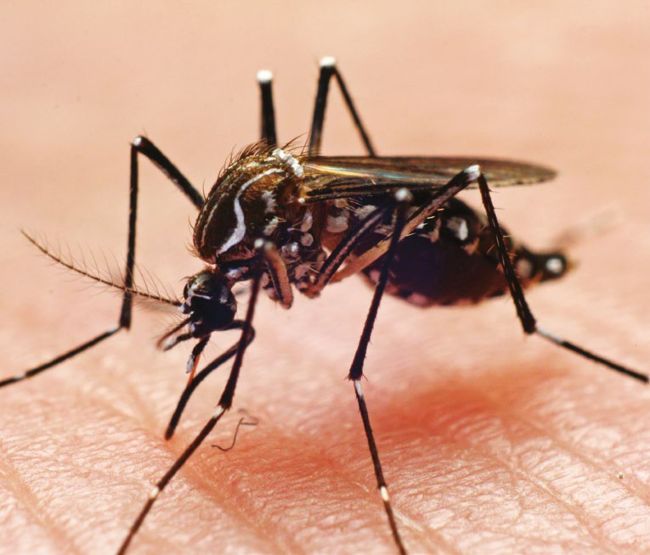
Skrillex might have won awards, but not the hearts of mosquitoes
© Alamy / Getty / Illustrations by Ed Crooks
MOSQUITOS DON’T LIKE SKRILLEX
If you’re a big fan of a certain kind of electronic dance music, there’s a chance you might not be bothered by pesky mosquitoes quite so often. As bloodthirsty insects, mosquitoes transmit deadly diseases such as malaria, yellow fever and the Zika virus. In the fight to curb their appetite for human blood, researchers in Malaysia investigated the potential role that music could play as a deterrent and management tool for yellow fever mosquitoes (Aedes aegypti). While playing Skrillex’s song Scary Monsters and Nice Sprites, researchers observed changes in how mosquitoes foraged, attacked a host and mated. What researchers discovered was that the mosquitoes that were exposed to Skrillex were less likely to feed on a host and visited a host less often when compared to a group of mosquitoes that weren’t exposed to the music. Mosquitoes also mated less often while listening to Skrillex.
EXPLORING THE BACTERIOME OF FOOTPATH CHEWING GUM
Since the late 1960s people have been regularly chewing gum. Around the same time, chewed-up gum started showing up on the streets. Researchers went around the world scraping gum off the streets to study the communities of bacteria that live on them. To estimate the bacterial populations, they collected eight different gums from the streets of five different countries: Greece, France, Spain, Turkey and Singapore. Through a process known as next-generation sequencing, they were able to identify the genetic information of a whole host of different bacteria species. The gum with the highest bacterial biodiversity was found in Singapore and boasted 427 different species. The researchers claim their work has implications in the fields of criminology, contagious disease control and waste management. Part of the study was dedicated to evaluating the biodegradable abilities of gum-bound bacteria, of which there is some evidence for.
LIVING ON GUM
Some of the bacteria that commonly make a home on pavement chewing gum
ACINETOBACTER
This group of bacteria is widespread. They are the most common causes of infections in humans.
PSEUDOMONAS
Common bacteria found in the environment, they can cause illness to those with a weakened immune system.
SPHINGOMONAS
A rod-shaped bacterium that rarely causes infection in humans and is widely found in soil and water.
DEINOCOCCUS
Found in organic material such as sewage and in meat, these hardy bacteria are remarkably resistant to a range of radiations, including ionising and ultraviolet radiation.
THE OPPOSITE-ITCH MIRROR SCRATCH

Mirrors can confuse how we locate itches on our bodies
The next time you get an itch on your arm, run to the mirror and scratch the opposite arm and you might find the itch disappears without being scratched. Researchers at the University of Luebeck in Germany injected 26 volunteers with itch-inducing chemicals into their forearms. They then placed a red dot over the injection site and a corresponding dot on the opposite arm in the same position. A mirror was then placed between the arms, obscuring the participants’ views of their itch-induced right arms. Participants were then asked to look at the reflection of the non-itchy left arm in the mirror while a researcher scratched the concealed itchy right arm. Researchers then switched arms, scratching only the non-itchy left arm, and surprising the participants with perceived relief from the itch. There are some practical uses for the discovery, including the development of treatments for chronic itching conditions.
DID YOU KNOW?
It takes 1,000 licks to reach the centre of an average-sized lollipop
VANILLA ESSENCE CAN BE EXTRACTED FROM COW PATS
Vanillin is a chemical compound used in medicines, scents and flavourings. Typically, vanillin is extracted from the vanilla bean plant. However, a small portion of the world’s vanillin comes from an alternative source, such as lignin, a wood-derived polymer. In 2008, a group of Japanese researchers found an unlikely potential source of vanillin and developed a way to extract it from livestock excrement. To extract the vanillin, the researchers combined one gram of cow pat with water, placed it into a reactor and heated the manure in intervals up to 300 degrees Celsius under high pressure for 60 minutes. During this time, the chemical compositions of the slurry were analysed using a chromatography device, a machine that separates the chemical components of a solution. At temperatures above 200 degrees Celsius, vanillin was detected, amounting to 50 micrograms per gram of cow dung.
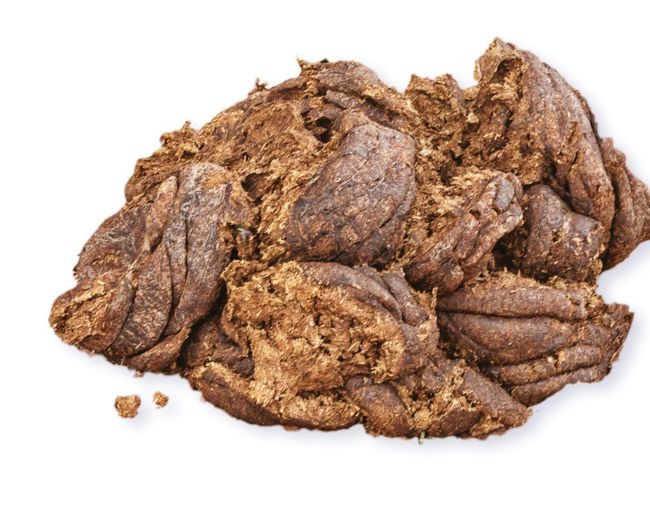
Although it’s not suitable for food products, cow-dung-derived vanillin could be used in scents
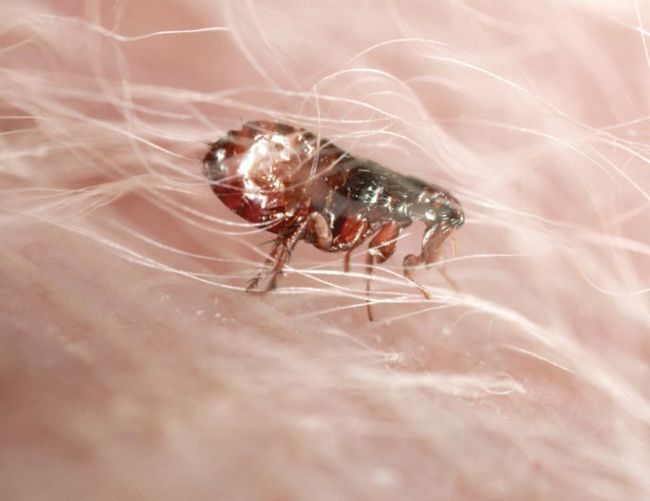
Ctenocephalides canis fleas can outjump their feline counterparts
DOG FLEAS JUMP HIGHER THAN CAT FLEAS
Two different species of fleas can live on our favourite household pets. Ctenocephalides canis live on dogs, whereas Ctenocephalides felis reside on cats. Researchers at the National Veterinary School of Toulouse, France, wondered which of the two could jump the highest. To find an answer, the researchers put ten of the species’ finest athletes to the test in a series of jumping trials that involved jumping out of tubes at different heights. The species that came out on top was the C. canis team for the mean highest jump. It was a close call, but the highest jump for C. felis was 17 centimetres, whereas the dog fleas outperformed cat fleas by leaping to a mean height of 25 centimetres.
Did you know?
Fleas can survive without food for two weeks

Godzilla stomping through San Francisco in the 2014 motion picture
© Alamy / Getty
ANXIETY MADE GODZILLA GROW
Godzilla has been stomping on cities since 1954. Over the years there have been many different versions of the giant tyrannical lizard, and each one has grown incrementally. At his inception, Godzilla was 50 metres tall. However, in the latest depiction seen in Godzilla: King of the Monsters, he has grown to be 119.8 metres tall. In 2019, researchers at Dartmouth College in New Hampshire published a paper to explain why Godzilla has evolved 30 times faster than any real organism on Earth. Researchers concluded that cultural anxiety was likely the cause of Godzilla’s rapid growth in his movies. Using US military spending as a proxy for the nation’s anxiety, researchers found strong correlations between spending and the size of Godzilla. “Whether reacting to geopolitical instability, a perceived threat from terrorists or simply fear of ‘the other,’ many democracies are electing nationalist leaders, strengthening borders and bolstering their military presence around the world,” they wrote.