COLD WAR SPY SATELLITE
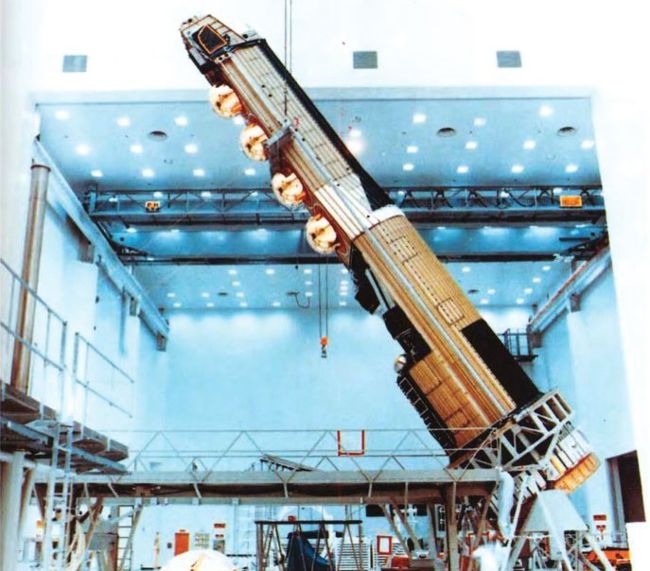
The KH-9 was 16 metres long and over 11 tonnes in mass
When spy satellites were first developed in the 1960s, their designers were faced with a serious problem due to the limited technology available at the time. In the pre-digital age, the only way to transmit images electronically was via an analogue TV signal, which had very poor spatial resolution. A typical TV system of that time employed a mere 405 scanning lines with 720 samples per line, giving an effective resolution of less than 0.3 megapixels. That’s far inferior to the 20 megapixels provided by professional photographic film of the same era. The upshot was that to obtain images of acceptable quality, spy satellites had to use a film camera, and the resulting film then had to be physically returned to Earth for processing and interpretation.