GB
  
You are currently viewing the United Kingdom version of the site.
Would you like to switch to your local site?
14 MIN READ TIME

DRIVING ELECTRIC

Get behind the wheel of an all-electric vehicle and discover how we’re beating our addiction to gasoline-fuelled cars

© Getty / Shutterstock / AdobeStock / Ariel / Jaguar

DID YOU KNOW?

The Polestar 3 holds the record for the longest trip on a single charge, covering 581.3 miles

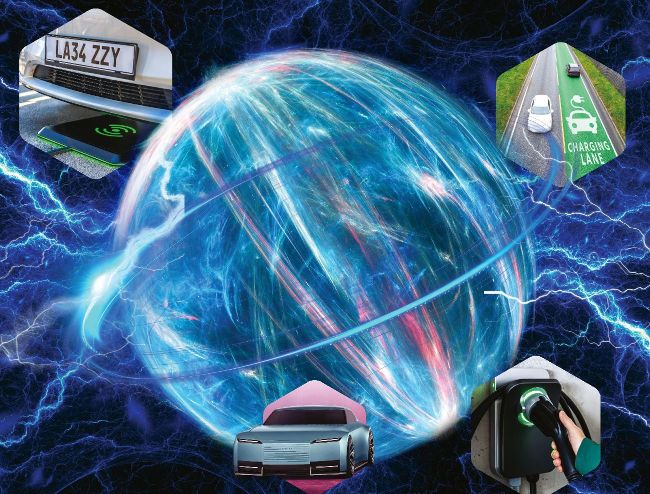
Over the last couple of decades, the world has seen a boom in the sale of all-electric vehicles (EVs). It’s estimated that by 2029 there will be 17.36 million EVs on roads worldwide. Unlike their combustion engine cousins, EVs don’t require the use of fossil fuels, such as petroleum and diesel, to function. Instead they rely on a giant rechargeable lithium-ion battery at the base of the vehicle to supply the electrical energy needed to move its wheels. It’s a simple concept that’s completely overhauling the automotive industry, but it’s taken a long time to get to where we are today in terms of commercial technology.

Although it might seem like EVs are a relatively new invention, they’ve been around since the 1800s. Inventors around the world, including in Hungary, the Netherlands and the US, have tried their hand at switching out the combustion engine for an all-electric alternative. One of the first electric vehicles capable of carrying passengers was engineered in London by Thomas Parker in 1884. What looked like a horse-drawn cart needed no such animal assistance and depended solely on a lead-acid battery for power.

Did you know?

The UK has 75,000 public EV chargers

Ever since Parker’s petrol alternative trundled down the road at up to 12 miles per hour, the world has introduced electric cars of all shapes and sizes. And there are three different types to choose from. The first is the battery electric vehicle (BEV), which is solely powered by an internal battery that’s charged by an external power source. These batteries use the exchange of positively charged ions of lithium through a liquid called an electrolyte to obtain their energy. When the car is driving around and using energy, lithium ions move from a negatively charged electrode called an anode to a positively charged electrode called a cathode. The journey between the two electrodes generates free-moving electrons in the anode, which the vehicle uses for power. When that power is spent and the dashboard is flashing red for a fuel top-up, it’s time to charge up the battery. When an electrical current is passed into the battery, it causes the positively charged lithium ions to move from the cathode to the anode. A car’s battery is full when all the lithium ions have gathered at the anode, ready to be released.

Unlock this article and much more with
You can enjoy:
Enjoy this edition in full
Instant access to 750+ titles
Thousands of back issues
No contract or commitment
Try for 99p
SUBSCRIBE NOW
30 day trial, then just £9.99 / month. Cancel anytime. New subscribers only.


Learn more
Pocketmags Plus
Pocketmags Plus

This article is from...


View Issues
How It Works
Issue 207
VIEW IN STORE

Other Articles in this Issue


How it works
WELCOME
Issue 207
REGULARS
The coral keeper
© Getty This curious coral dweller is a
Cape Canaveral’s first launch
© Alamy 2025 marks the 75th anniversary of
Seeing Saturn
© NASA/JPL-Caltech/SSI Drifting through the shadow of Saturn,
Flying wide
© Alamy Taken at Mojave Air and Space
A new brain implant can decode a person’s ‘inner monologue’
Sientists have developed a brain-computer interface that can
A new brain implant can decode a person’s ‘inner monologue’
HEALTH
Texas puma genes rescue Florida panthers from extinction
A photo of a captive Florida panther, taken
A LAKE-FILLED CRATER IN AFRICA TRANSFORMS INTO A GIANT SILVER ‘MIRROR’ VIA RARE PHENOMENON
Chad’s Lake Iro looked like a large, circular
515-mile-long lightning bolt spanning five states is the longest on record
Bolts of this size have only become fully
VIRGIN GALACTIC’S NEW SPACE PLANE COULD FLY AS SOON AS AUTUMN 2026
A 3D rendering of a Delta-class Spaceship design
A colossal black hole is one of the largest ever seen in the universe
Did you know? The nearest black hole is
BITE MARKS REVEAL GIANT TERROR BIRDS WERE POTENTIALLY PREY FOR ANOTHER APEX PREDATOR
A 3D illustration of an extinct flightless terror
A paperclip-sized spacecraft could visit a nearby black hole in the next century
An astrophysicist has made a daring proposal to send
Ancient viruses embedded in our DNA help turn genes on and off
Virus fragments are embedded inside the human genome
Warm and cool temperatures travel on completely different paths to the brain
Researchers have mapped out the neural pathway humans
Scientists transform ‘forever chemicals’ in water into fluoride
Sunlight helps speed along the breakdown of forever
COSMIC RAYS COULD HELP SUPPORT ALIEN LIFE ON WORLDS OUTSIDE THE HABITABLE ZONE
A new study suggests that cosmic rays could
WISH LIST
The latest tech for SLEEP
How were Mount Rushmore’s presidents sculpted out?
Amazing answers to your curious questions
Has a comet ever hit our planet?
Yes. On cosmic timescales, comets hit Earth frequently, but because they’re largely made of ice rather than solid rock, they tend not to leave obvious craters. A small comet is more likely than an asteroid to break up as it plunges into Earth’s atmosphere and heats up, often resulting in an explosion called an airburst that can devastate large areas of the landscape but doesn’t leave a crater. Perhaps the most famous such event happened over the Russian region of Tunguska in 1908, when an exploding comet flattened some 770 square miles of Siberian forest. A comet would have to be pretty big in order to hit the ground intact.
Why do some bees make blue honey?
When bees in the French town of Ribeauvillé started producing blue and green honey in 2012, dyes from an M&M’s waste plant were to blame. While bees produce different shades of honey depending on which flowers they collect nectar from, blue honey was previously unheard of. Beekeepers discovered their bees had switched food sources, shunning local flowers in favour of brightly coloured, sugary M&M’s shell fragments being processed at a neighbouring biogas plant. Bees then transformed these sugars – along with the dyes – into honey. The waste-processing plant has since tidied away any uncovered waste containers, spelling the end of the blue honey.
THE LIBRARY
The latest book releases for curious minds
Spot the difference
See if you can find all six changes between the images below
MAKE A COTTON BALL LAUNCHER
Practical projects to try at home
INBOX
Speak your mind
FAST FACTS
Amazing trivia that will blow your mind
TECHNOLOGY
HOW SATELLITE NAVIGATION WORKS
Whether you’re navigating the streets on your smartphone or driving long distances using a satnav device, you’re using a separate system to everyday phone calls and messages
ROLLER COASTER THRILLS EXPLAINED
Each year, people flock to theme parks for the adrenaline rush delivered by roller coasters. But how are they engineered to delight and excite?
HISTORY
THE SCIENCE OF ART
How scientific and technological advancements have expanded the possibilities of human creativity
HOW CATAPULTS WORKED
These terrifying weapons of fortress destruction could slingshot a siege to success
SPACE
A GUIDE TO EXOPLANETS
How our knowledge of these worlds beyond the Solar System has exploded in the last three decades
TRANSPORT
INSIDE AN F-16 FIGHTER JET
The F-16 Fighting Falcon is an iconic jet, and after decades of service it’s still on the front line in Ukraine. We’ve gone into the cockpit to discover why this legend still takes charge of the skies today
SCIENCE
WORLD’S MOST POWERFUL MICROSCOPE
How the scanning electron microscope takes detailed images of things too tiny for our naked eye to see
ALL ABOUT YOUR ORGANS
From the heart to the brain, our vital organs work hard to help us survive
THE SCIENCE BEHIND THE SCREAMS
Phobias are irrational by definition. So why do we have them, and can they be cured?
HOW TOOTHPASTE IS MADE
Toothpaste can prevent tooth decay and leaves your mouth feeling fresh. But do we really need it?
ENVIRONMENT
HOW NATURE RECORDS HISTORY
Not only has Earth been around for billions of years, it’s been keeping a log of its journey across time
HORNETS EXPLAINED
What makes this massive member of the wasp family such a deadly bee killer?
THE WORLD’S LARGEST
Explore the anatomy of the mighty Asian giant hornet
WASP WARRIORS
What’s the buzz about these four unique hornet species?
Chat
X
Pocketmags Support