ICE FORMATIONS EXPLAINED
Explore the variety of ice types found in nature, their properties and how they form
WORDS
AILSA HARVEY
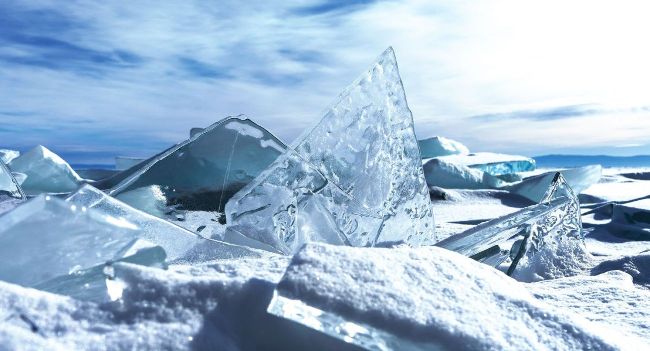
Ice over water limits the oxygen exchange that can take place between water and air
DID YOU KNOW
Antarctica doubles in size in winter
Our planet hosts masses of water ice, with ten per cent of its land area covered by glaciers and ice sheets and 70 per cent of freshwater on Earth being frozen. But not all ice is the same. The conditions in which each ice crystal forms determine its shape and physical properties. The two main types of ice are crystalline and amorphous. Crystalline ice is more common and usually has a hexagonal structure, while amorphous ice has a non-crystalline structure and is found in extreme terrestrial conditions and in outer space.