Become a concept artist
Designing Dreams
Alan Wen speaks to three concept artists about the varied and iterative processes that make up one of the most misunderstood crafts in the game industry
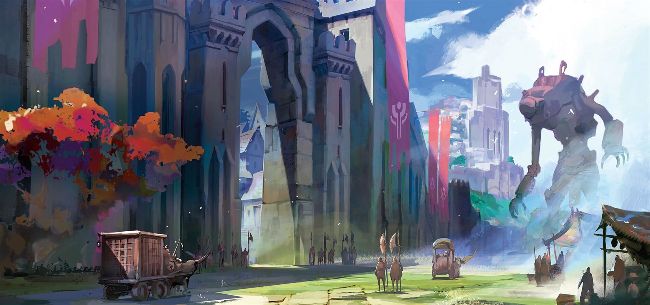
ENCLAVE WALL Eternal Strands initially took inspiration from medieval aesthetics, as you can see in Maxime’s exploration of the city and its surrounding walls.
Even whenvideo games were little more than rudimentary pixels on a black screen, art has played an important role in sparking players’ imaginations, whether it’s what decorates the side of an arcade cabinet or the illustration on a game box. While there are huge advances in technology in how games can look today, that vision still has to take shape from somewhere, which makes the concept art an essential part of game development. Yet it’s perhaps not always that well understood as a profession, especially as the very term of “concept” may have you assuming it’s primarily only a focus at the start of a development cycle.

“I think it’s probably one of the least understood jobs,” says Paul Scott Canavan, who has worn a number of hats in his career as a creative director, art director and artist, but has always been hands-on with concept art, including 2023’s narrative-based adventure A Highland Song. “Concept art encapsulates a lot of stuff. It’s like the broadest range of art styles you can basically do as an artist.”
It’s a skill set that can also cross over to other lines of work, as Maxime Desmettre, a concept artist for action RPG Eternal Strands that released earlier this year, also does occasional art in films, book illustration, collectible card games and tabletop role-playing games. But while we may associate concept art with hand-drawn sketches and illustrations, his interest in game art began with early pixel art. “I enjoyed copying backgrounds and characters from arcade games of the time like Street Fighter 2,” Maxime reflects.
"Concept art encapsulates a whole lot of stuff. It’s like the broadest range of art styles that you can do as an artist"
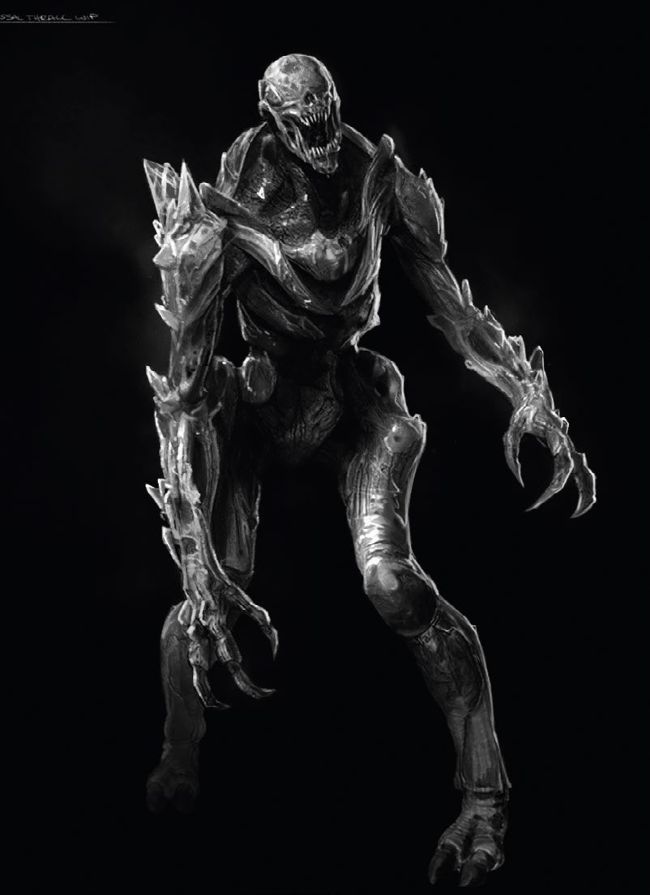
ABYSSAL THRALL Paul’s concept art for Destiny 2 included designing the look of Abyssal Thrall enemies, and distinguishing them from the game’s standard Thrall.
Even then, concept art can also be easily conflated with anything of an illustrative nature, especially if the game itself is 3D. When comparing with other mediums, Ibrahim Idris, a concept artist on the BAFTA-winning Tales of Kenzera: Zau says game concept art is much closer to industrial or product design. “For games, you have to be more detailed presenting characters or environments; you have to explain the intricacies,” he says. “If it’s a mech, you have to show the workings, how the joints combine and move, and its materials. If it’s an animated character, you have to know how they deform with different expressions.”