ROBERT PAST MASTER WRITER HOLMIES
Richard Molesworth looks back at the eventful career of prolific TV scriptwriter Robert Holmes, fondly remembered for his work on British science fiction programmes, including Doctor Who and Blake’s 7
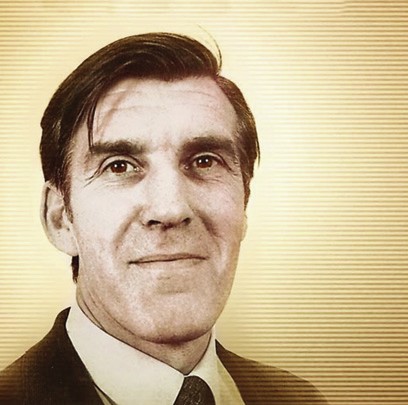
The man himself
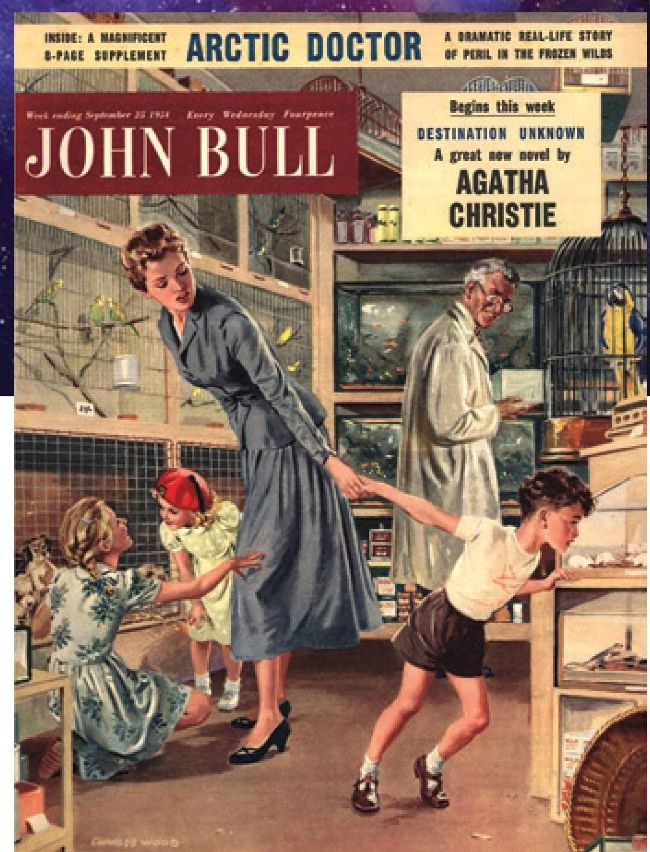
Right: Robert used to sell stories to John Bull Magazine
Robert Holmes, Bob to his friends, is perhaps one of the most significant TV writers of the late 20th century. Certainly one of the least-lauded TV writers of his generation, at least during his lifetime, his influence is still tangible today in modern Doctor Who - the programme was just one of the many genre shows and series to have benefited from Holmes’ writing skills in the 1960s, 1970s and 1980s.
Bob was born in 1926, the son of a school headmaster, and showed little early academic promise. In 1942, he headed off to serve his country in World War II, fibbing about his age in the process, to become the youngest-ever serving officer in the armed forces at that time. After being demobbed once hostilities had ceased, Bob joined the London Metropolitan Police force in 1948, but resigned barely a year later, and began trying his hand at magazine writing and journalism.
By the mid-1950s, he was working on the editorial team of John Bull Magazine, and was soon rubbing shoulders with other influential journalists and writers in trendy London coffee shops. His social circle at the time included Robert Banks Stewart (who would go on to write for Doctor Who under Bob’s stewardship, and create Shoestring and Bergerac for television), Wilfred Greatorex (The Plane Makers, 1990), Robert Holles (Armchair Theatre, Play for Today) and John Sandilands (who would become one of the creators of Tenko), all of whom were to soon depart the world of magazine publishing, and enter the new, exciting world of television scriptwriting. Bob Holmes was not far behind them.
Bob’s first break came when he was appointed as script editor on Granada’s private detective series Knight Errant Ltd, where he worked with writers such as his old chum Robert Banks Stewart, and newcomers such as Barry Letts (who would go on to produce Doctor Who in the 1970s). The series also gave Bob the first chance to write his very own television scripts. Becoming a freelance scriptwriter in the early 1960s, Bob would quickly contribute episodes of popular series such Dr Finlay’s Casebook, Emergency Ward 10 and Public Eye.
In 1965, Bob was called upon to script the final two episodes of Undermind, a lumbering fantasy mini-series originated by Robert Banks Stewart for ABC Television. He suddenly found himself writing science fiction for the first time since his days of contributing short stories to John Bull Magazine. This coincided with Bob attempting to sell his own ideas for science fiction projects to TV companies. He came up with a short story called ‘The Space Trap’, and sent it into the BBC’s Drama Department for their consideration. The BBC didn’t think the idea was suitable for a standalone series, but Bob’s story was passed to Doctor Who’s script editor, Donald Tosh, who invited Bob in for a talk. Bob re-tooled his story idea to include the first Doctor and his companions, but the idea stalled, and Bob’s storyline was filed away, forgotten for many years.
A STRONG FRIENDSHIP
Bob continued writing scripts for series such as No Hiding Place, where he built up a strong friendship with script editor Louis Marks, and also proposed a science fiction film, Invasion, which he pitched to Merton Park film studios, who readily accepted the story, but immediately turned the project over to another writer. Bob never involved himself with film production after this, and stuck pretty much to writing for television for the rest of his career. In 1967, he pitched another science fiction series idea, Schizo, to Louis Marks. The series concerned a species of human mutants who were working to overthrow their human cousins from within society, but Marks failed to get anyone interested in the idea.