RETURN TO SKULL ISLAND
Believe it or not, there’s a little Kong. What… a little Kong. How little? Mike Hankin looks back on the less successful sequel to King Kong, released just nine months after the classic original!
This spread: Robert Armstrong and Helen Mack in Son of Kong (1933). During the production of this film, the wife of Kong animator Willis H. O’Brien fatally shot their two sons and then tried to take her own life. She survived her attempted suicide, but this incident all but destroyed O’Brien. After this, he steadfastly refused to discuss this film
At the time King Kong (1933) went into production, the Radio-Keith-Orpheum (better known as RKO Radio Pictures) was in deep crisis. In 1931, studio boss David Sarnoff brought in David O. Selznick to replace William LeBaron as Production Chief and Selznick in turn brought in Merian C. Cooper as a virtual troubleshooter to evaluate every project, whether filming or in pre-production.
One of the casualties of this purge was a film that was to feature model-animated dinosaurs called Creation, a new high-adventure film from the director and special effects creator of the earlier and highly successful, The Lost World (1925), Harry O. Hoyt and Willis H. O’Brien.
As the story goes, Cooper was unimpressed with the Creation story, but saw huge potential in the several tests of animated creations, in particular to bring to the screen a story idea that had been brewing in his mind for some time.
The writer and proposed director of Creation, Harry Hoyt, was paid off, while Willis O’Brien was put to work on what would become the giant ape story, King Kong. The film would mean a costly and timeconsuming investment for the studio, but Selznick had confidence in Cooper, enough to back the project all the way.
Selznick had left RKO in January 1933 for a new position at MGM, a few months before the release of King Kong, thereby missing part of the phenomenon that the film would become, in effect, a film that saved RKO from bankruptcy. Inevitably, Merian Cooper’s mind turned to a sequel, that even the RKO hierarchy were keen to do, with the instructions to make it bigger and better (if that were even possible). They added one caveat, still mindful of their precarious financial position, that it had to be brought in at half the cost of the original feature and be in the cinemas by Christmas to capture the holiday crowds.
Cooper, who was now in charge at RKO, had a mountain of other responsibilities, so was already thinking about taking a step back from personal participation in production. The technical crew, so important to create the effects for a sequel, were all in place and, after Kong, were well versed in the processes required. However, the $250,000 on offer for the whole production, plus the time allotted (barely nine months), would leave very little room to produce a polished script, let alone a spectacular film.
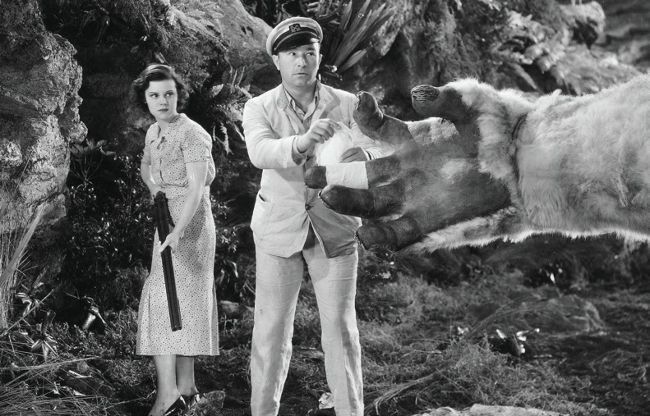
One major blow was the loss of the jungle sets, that had been built on the Pathé lot for Kong, but a facility that had been recently sold. Therefore, any plans to film extended scenes with the natives of Skull Island were immediately forgotten. It is not recorded when the decision was made to make The Son of Kong follow a lighter tone, but when Kong and now the sequel screenwriter Ruth Rose was told of the lack of budget, she reportedly said, “If you can’t make it bigger, make it funnier.”