Cape Wrath
The Turning Point
by Vivien Martin
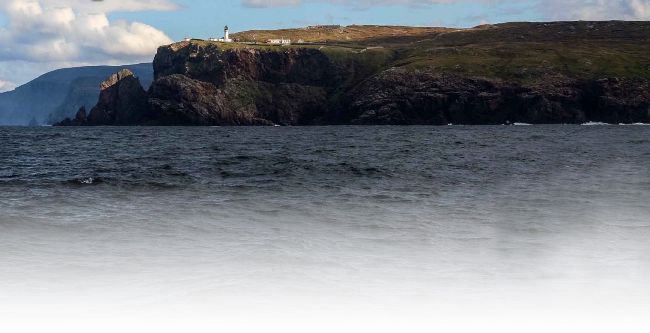
The ‘Sons of Death’ had come to kill, enslave and destroy
IT WOULD have been a sight to make your blood run cold. Viking dreki, dragon ships, appearing round the headland making for shore. Your shore. Nowhere to run. Nowhere to hide. And no mercy shown. In 794 the first wave of Viking raids hit Scotland. The ‘Sons of Death’ had come to kill, enslave and destroy.
In time these Norsemen returned as settlers and gave Norse names to much of the north of Scotland: including Cape Wrath. To the Vikings the Cape was a navigational signpost: a maritime crossroads where the north and west coasts of Scotland met.
Whether on their way south-west to ransack the Outer Hebrides and the west coast of Scotland, or heading north-east and for home, Cape Wrath told them it was time to turn. Given the ferocity of the Atlantic breakers that batter this remote coastline, you could be forgiven for believing the name Wrath to be an apt elemental description of this far-flung corner of Sutherland. But in fact, it comes from the Old Norse word hvarf, meaning ‘turning point’, with the Gaelic name for this area, Am Parbh, coming from the same Norse source. And the arrival of the Vikings was certainly a turning point in the lives of the people of this land.
It’s never been an easy place to reach and even today you have to make a determined effort to get out to the Cape. Not only is it the most north-westerly point of the mainland, but weather, time-of-year, difficult terrain and MOD bombs, all have to be taken into consideration before you can reach the rocky headland. But once there you’ll find both the Lighthouse and Ozone Cafe, probably the most remote and unlikely spot you’d expect to be able to get a cup of tea! The nearest settlement of any size is Durness on the north coast. Two miles to the south of Durness is Keoldale Pier on the eastern shore of the Kyle of Durness. Here the little Cape Wrath passenger ferry waits to take you across the Kyle into this wild and empty landscape of moorland, cliffs and ocean.