John Steinbeck
by John MacKenzie
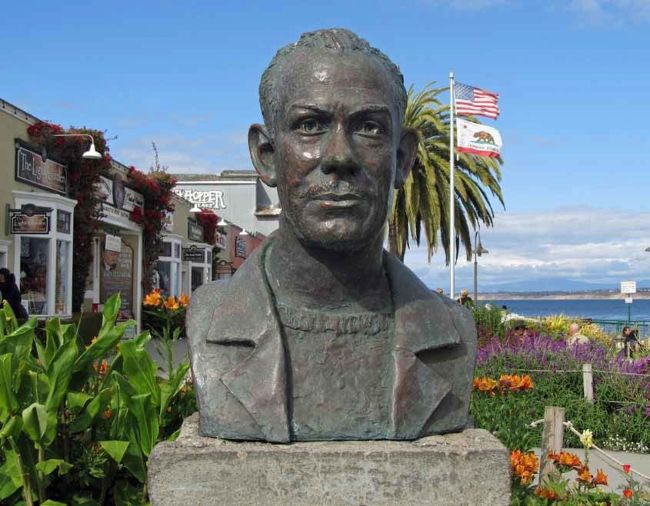
Hints of Scotland’s strong radical working class tradition are evident in many of his bestloved characters
AN INTRIGUING, and oft-quoted, mention of Scotland by the great American novelist John Steinbeck. Alex Salmond referred to it in 2011 in his Taking Scotland Forward statement. But where does the quote come from, and what were Steinbeck’s feelings in general about Scotland?
Salmond goes on to say, “But every society is an ‘unwon cause’ - the struggle for fairness, equality, tolerance, rights of free speech and thought - these are struggles which are never won - they require constant vigilance and courage.”
These are all recurring themes of Steinbeck’s novels. This is an updated version of an article I published in 2012, and, indeed, it is a long-held view of mine that many of the themes revisited by Steinbeck again and again in his body of work relate to the Scots experience. Furthermore, hints of Scotland’s strong radical working class tradition are evident in many of his best-loved characters. Among the most memorable are Tom Joad in The Grapes of Wrath, Jim Nolan - the protagonist of In Dubious Battle - and the young labour organiser who takes a beating in The Raid, a short story which sees the main characters sacrifice themselves for the good of their social cause. In their willingness to suffer for their beliefs, these protagonists clearly reflect the qualities of Scotland’s radical past. They evoke memories of John Maclean and the Red Clydesiders and of radical communist Dundee of the 1930s.