700 Years?
And the rest… it’s time to finally declare!
by Gordon Craigie
For generations we Scots have been denied our history at the most fundamental level, our schooling
SCOTLAND ’S celebrations of the 700th anniversary of the signing of the Declaration of Arbroath in April 1320 may have been a wee bit muted due to the COVID-19 pandemic, but the significance of that document should not be underestimated. Similarly, the same month saw not-too-much attention paid, in mainstream circles anyway, to the 200th anniversary of the 1820 Radical Rising. Maybe it’s just me, or maybe it’s the effects of having too much time on my hands during lockdown, but I can see a thread connecting these and other events in Scottish history that are very relevant to exactly where we are today…
The eminent Scottish historian, Professor Geoffrey Barrow, who wrote what is widely acknowledged to be the definitive book on the life and times of Robert the Bruce, Robert Bruce and the Community of the Realm of Scotland, succinctly defines the problem that continues to haunt Scotland to this day: “To make a nation conscious of its identity you must first give it a history.” In that statement he was referring to the situation Scotland found itself in in the thirteenth century but, if anything, it rings even more true today. For generations we Scots have been denied our history at the most fundamental level, our schooling. We were taught about Henry VIII, the Norman Conquest, the Pilgrim Fathers – a whole range of totally meaningless and irrelevant people and events – but nothing about the Picts and Scots coming together under the first King of Scots, Kenneth I MacAlpin, to establish the Kingdom of Scotland in 843AD, or the struggles through the years of Wallace and Bruce to maintain our independence in the face of England’s expansionism, or the brutal occupation of Scotland by the British military after 1746, or the Clearances, or… the list is virtually endless. In his book Scots, The Mither Tongue, Billy Kay tells the story of a Labour minister, probably sometime in the 1990s, on being asked why Scottish history still wasn’t being taught in schools, responding, “I do not see my role as educating a generation of young nationalists”. To make a nation conscious of its identity you must indeed first give it a history!
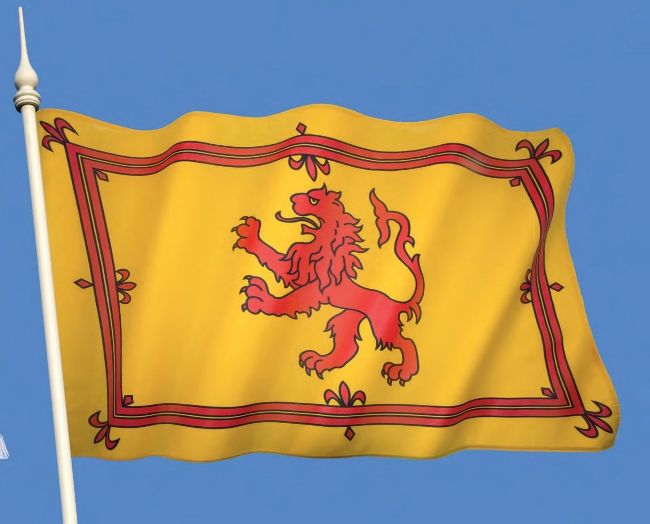
To make a nation conscious of its identity you must indeed first give it a history!
One misconception that has been repeated in a few articles I’ve read recently is that the Declaration of Arbroath is Scotland’s Declaration of Independence – it’s emphatically not, as clearly there was no need for an already long-established, sovereign, independent nation to declare its independence. Scotland is, arguably, the oldest nation in Europe - by the time of the signing of the Declaration in 1320, the Kingdom of Scotland had already been established for almost 500 years! No, the Declaration of Arbroath was an appeal to the papacy, the United Nations of medieval times if you like, to recognise Scotland’s continuing right to independence and to ask for protection from English aggression. In the thirteenth century, according to Barrow, Scots “might be of Pictish, British, Gaelic, Scandinavian, English, Flemish or Norman descent. However inappropriate, however ironical it might seem, they all took a pride in the Celtic past of their country.” Not for the first time in researching Scottish history, I have a feeling of déjà vu – this time in how much that statement resonates with the concepts of ‘New Scots’ and our present-day sense of ‘civic nationalism’.