It’s Never too Late!
“Creativity is intelligence having fun” Albert Einstein
by Vivien Martin
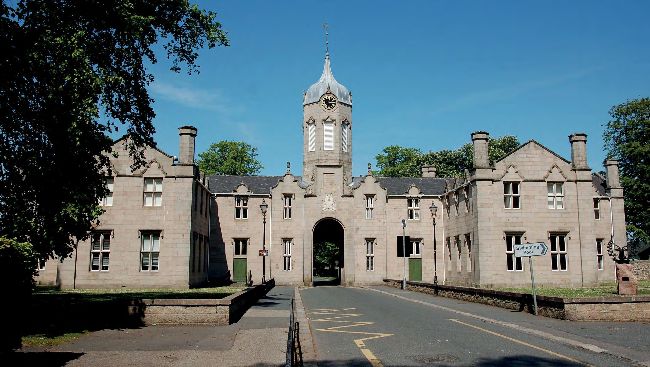
The Gordon School, Huntly (image credit Bill Harrison)
I
SPOKE TO a friend today (from a safe distance) who started to complain bitterly about the restrictions we’re facing due to the Covid pandemic.
“Why,” she asked, “does everything have to be closed down like this. After all it’s only old people who are dying!” The comment took my breath away, but sadly she was only saying something that a number of people agree with: that is, if you’re old and, even worse, have underlying health issues, aren’t the rest of us in fact better off without you, after all, aren’t you simply a drain on resources?
It’s a chilling attitude and shows how easy it is to dehumanise people. Stick a label on - “They’re only old people” - and it’s so much easier to dismiss them. In our society it’s not uncommon for ‘old people’ to be looked on as being of little value, certainly not as assets to our communities, or treasure troves of experience and wisdom as they are in some cultures. Instead they’re often regarded as a burden.
As our bodies start their slow decline, we inevitably face a multitude of new challenges, both physical and mental
When ‘old people’ are mentioned (and I suspect the definition of ‘old’ depends on your own age), it’s often in the context of the problems, and cost, of their physical care. Where can we put ‘them’ so that they don’t get in the way and where they can be looked after by someone else? Understandably that’s not an attitude that helps anyone.
It becomes a vicious circle. If you’re aware that you’re seen as nothing more than a problem, an unwelcome encumbrance, as having outlived your usefulness, it’s not going to encourage you to feel confident in your value as a human being, whether in your own right, or in the community around you.
“Old age ain’t for cissies!” Bette Davies once said. And it’s true. As our bodies start their slow decline, we inevitably face a multitude of new challenges, both physical and mental. But fortunately what we mean by ‘old’ is changing. Particularly noticeable is how we look when we grow older. Previous generations aged more quickly and died younger. Life was harder, food scarcer, homes colder, daily chores more draining, families larger, health care more limited. But now we live longer and we have the means, and the freedom, to look and dress very differently.