Practical guide to wetrooms
Rebecca Foster unveils the key factors to bear in mind when planning your dwelling’s new showering zone
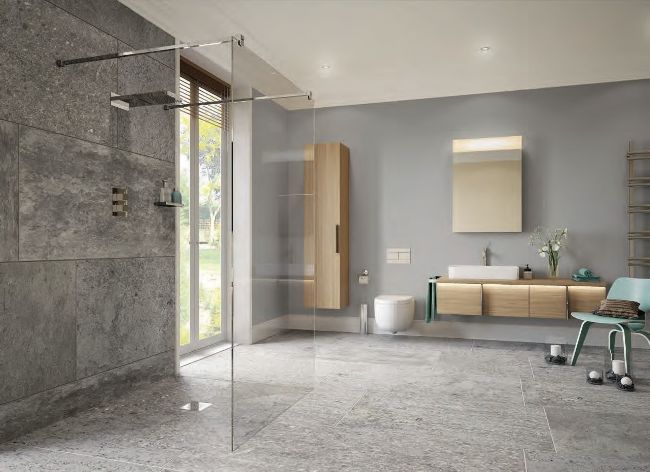
Wall-hung storage units and sanitaryware in this wetroom, designed by On The Level, enhance the feeling of spaciousness
Creating a sleek, spa-like bathing zone is a top priority for many self-builders and renovators, with plenty of us craving the luxurious, minimal feel a wetroom brings. Essentially, this kind of bathroom blurs the division between the showering space and the rest of the room. Walls and floors are waterproofed to ensure they’re splash-resistant, which means a traditional cubicle or step-in shower tray isn’t needed, and continuous flooring is laid throughout. “Wetrooms with walk-in showers combine convenience of use with the uncluttered aesthetic that an increasing number of homeowners aspire to,” says Roland Boal, lead industrial designer at Mira Showers. “Creating an accessible zone like this works particularly well for multigenerational families because of the ease of access, and can boost the value of the property, too.” But there’s a number of practical elements to bear in mind before you splash out on the rainfall showerhead you want to form the focal point of your scheme. First, you’ll need to get the waterproofing and drainage right to avoid potentially costly leaks. Thought also needs to be given to how you zone the space, and ventilation is a key factor, too. So, what’s the best way to go about planning your new wetroom?
First steps
If you’re self-building, you have the luxury of working with a blank canvas, so it’s worth factoring a wetroom into the early design stages of the house. “When it comes to siting this zone on the floorplan, it’s all down to personal preference,” says Mark Crabtree, sales director at On The Level. If you’re still in the planning phase, you can tailor elements such as waste pipe positions fairly easily and affordably. “Avoid running conduits under the floor for long distances to minimise the risk of blockages,” says Mark. Typically, renovators are more limited in terms of where the new shower room can be positioned. However, there’s rarely a space that’s too tight to accommodate this kind of zone, and even converting a downstairs WC could be a viable solution. “The average bathroom size in the UK is 2.5m x 2m, but a basic wetroom can be squeezed into an even smaller area of about 1.5m x 1m, which leaves enough room for a toilet and a basin in addition to the shower,” says Jane Gilchriest, director of Alternative Bathrooms. “You could even convert the space under the stairs. But as with all bathroom design, establishing a zone that performs well all comes down to clever planning.” If you’re renovating, bear in mind that converting an existing bathroom into a wetroom can be a significant job. “It can be fairly disruptive as the room needs to be completely stripped back and the sanitaryware removed to allow for the installation of the waterproofing setup and the new fittings,” says Chris Holt, managing director of CDI Innovative Construction Materials, which provides the Lewis Deck composite floor system to help simplify this kind of undertaking.