AFTER THE BEATLES
AND IN THE END...
BRICKS THROUGH WINDOWS! NOT BEING ABLE TO GET OUT OF BED! REACHING FOR THE WHISKY! WRITS! HITS! TIRESOME FORMER BANDMATES! ALL THESE, AND MORE, MADE UP A TYPICAL DAY IN THE LIFE OF PAUL MCCARTNEY AFTER THE BEATLES SPLIT…
IAN RAVENDALE

© Eric Watson
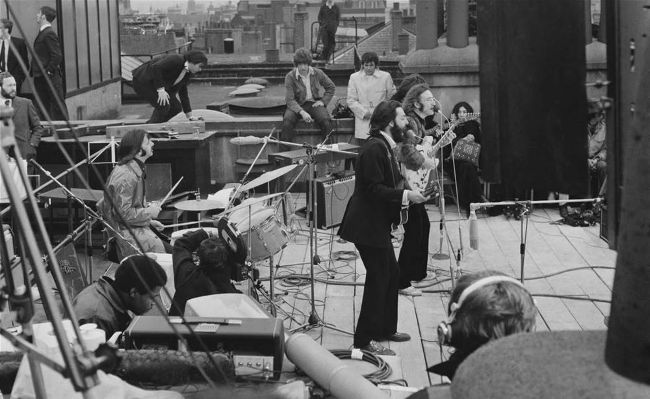
The Beatles make their last live appearance on the roof of the Apple Corps building at 3 Savile Row, 30 January 1969
© Getty Images
PAUL McCARTNEY, one of the four most famous pop musicians in the world, was close to a nervous breakdown. “I suppose the hurt of it all and the disappointment and the sorrow of losing this great band, these great friends. I was going crazy,” he told daughter Mary as part of the 2001 documentary Wingspan that she co-produced, continuing; “I wouldn’t get up in the morning and when I did get up I wouldn’t shave or bother with anything, and reach for the whisky.”
After months of messing round with (and then temporarily shelving) the Let It Be album and film, the Beatles reunited for what became their final album. Abbey Road saw the band do their best to put differences behind them and make one final great record. John Lennon wanted all his songs on one side and all of Paul’s on the other, but was eventually talked out of it. Knowing the album was probably going to be their swansong, The Beatles were determined to go out on a high. Abbey Road was released on 26 September 1969 to universal acclaim.
Following the disintegration of the Fab Four in early 1970, the usually very sure McCartney was at a loss as to what to do next, as he subsequently related to the Canadian Music Express magazine: “The nearest I came ever to feeling unemployed was when the Beatles split up and it became like a deep kind of emptiness in my soul. It really made me very frightened. I thought, ‘Oh God, it’s gone, it’s slipping from underneath me!’ I felt like the bottom was falling out. And it did make me think, ‘I bet this is the way it feels like to be unemployed.’“
Initially, the Beatles agreed amongst themselves not to announce the split for fear of damaging sales of the forthcoming Let It Be album. McCartney in particular became more and more guilty about denying that the band had broken up. He was releasing his first solo album, the eponymous McCartney, and rather than submit to dozens of interviews he got Apple’s Peter Brown to draft a series of questions and answers, print them on a pamphlet and include them with the press copies of the album.