BACK TO LIFE
Amanda Robinson visits the tiny hilltop hamlet of Borgo Pignano in Tuscany, which has been lovingly restored as a sustainable and eco-conscious boutique retreat
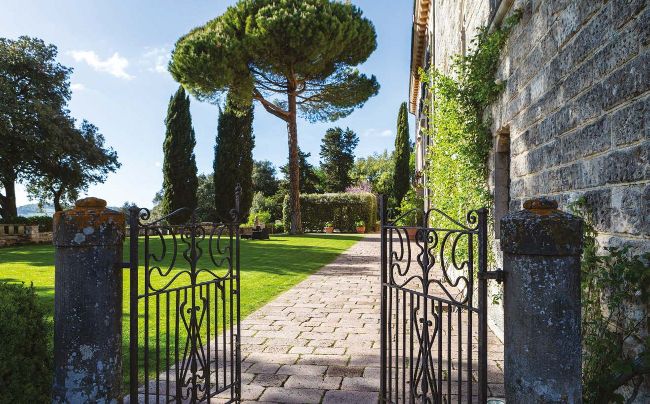
Borgo Pignano terrace
Images on this page courtesy of Borgo Pignano unless otherwise stated
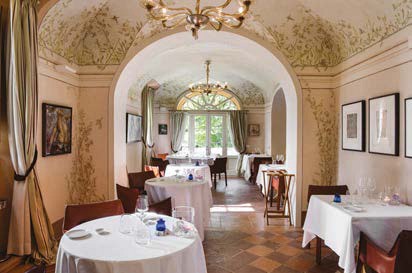
La Villa restaurant
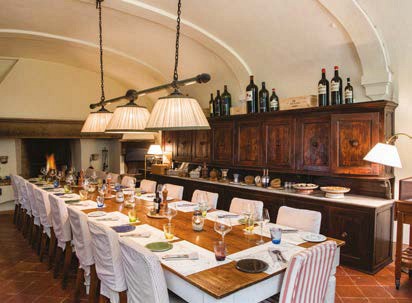
The convivial Social Table
Both images © Stefano Scatà
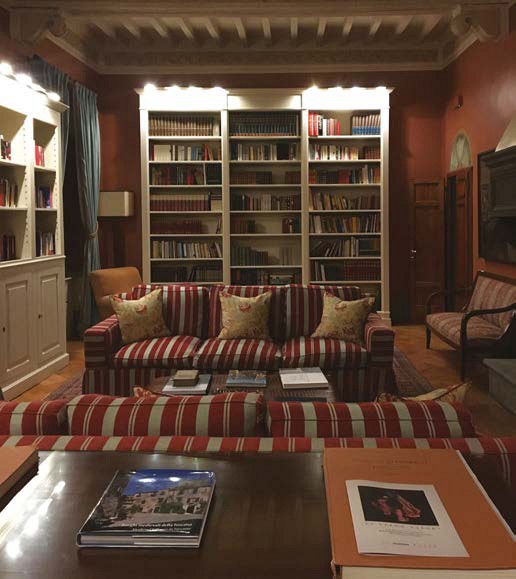
The relaxing reading room for guests
Image by Amanda Robinson
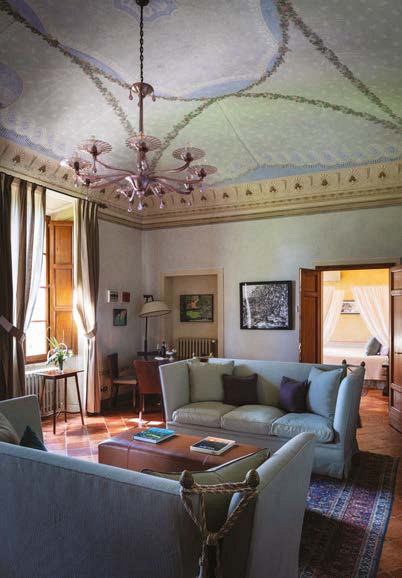
The sumptuous Marchese suite
This image and top © Mark Bolton Photography
The straight lines of the motorway from Pisa airport take a more sinuous turn and, leaving the asphalt greys behind, the colour palette softens to a patchwork of restful greens punctuated by sentry-like cypresses. We climb higher into Tuscan hills that ripple away as far as the eye can see, and arrive at our bolthole for a few precious days: Borgo Pignano, an estate and working farm of some 750 acres nestled on verdant slopes between Volterra and San Gimignano.
There is a real sense of permanence in this beautiful place, and indeed the site has been inhabited since Etruscan times. The original church was built in the 12th century, while the manor house and farm dwellings came along a few centuries later and the hamlet grew to support a population of well over 100 estate workers and residents, with a school, bakery and church. But as villagers moved away in search of a better life in the cities during the 19th and 20th centuries, Borgo Pignano slowly but surely fell into disrepair.