Trieste
Amy McPherson enjoys a long weekend getaway to Trieste and discovers the fascinating history of this unique city and its historic café culture
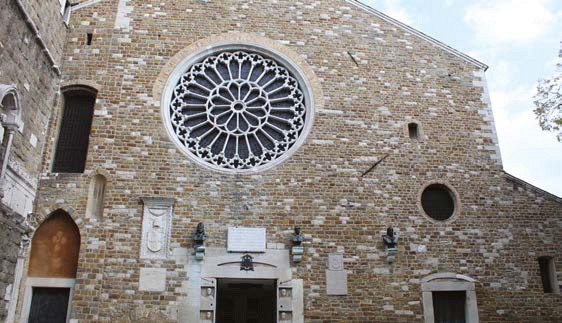
Image © Lautaro Dagorret
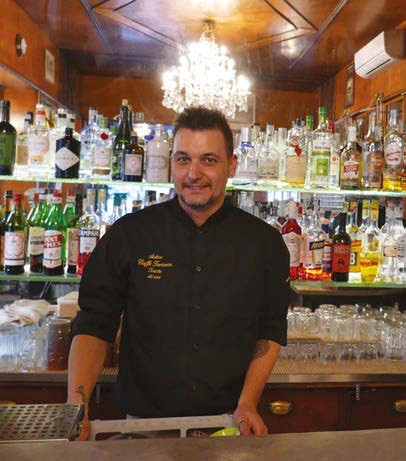
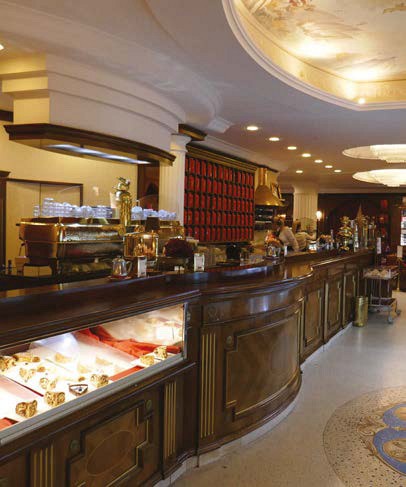
Clockwise from top left: Statue of the Irish novelist James Joyce, who spent 15 years here; the Grand Canal fl ows through reclaimed salt marshes; the City Hall on Piazza Unità d’Italia; Caffè Torinese; Caffè degli Specchi; daytime view of the Grand Canal; a mix of architectural styles on Corso Italia; sunset over the harbour; San Giusto cathedral; a leafy pedestrian street
Images by Amy McPherson unless otherwise stated
Located at the eastern edge of the northern Italian region of Friuli- Venezia Giulia, on ancient trade routes that crossed land and sea, Trieste has always been a fairly prosperous place and a melting pot of cultures and traditions. It was there before Roman times, though only became important during that era. The Romans knew it as Tergeste, a name that is believed to have been derived from an old Venetic word, terg, which may have meant ‘market’, while the -este may have meant ‘place’, or may simply refer to its geographical location. Unsurprisingly, given the strategic importance of its location, the city has changed hands numerous times over the centuries since the fall of the Roman Empire, and Latin, Slavic and Germanic cultures have since written its history pages. It became part of Italy in 1920.
L
There is something about border cities that has always intrigued me and I was looking forward to my visit. I arrived by train early in the morning from my previous destination Venice, stepping into Trieste in the same way James Joyce had in 1904. He stayed until 1920 and produced numerous works here, including his most famous novel, Ulysses. I checked in at the Modernist Hotel on the main road artery through the city, conveniently located for reaching all the major sights of Trieste on foot. After a quick introduction to the city from the hotel’s reception, I set out to join the dots of Trieste’s history by starting at the top.
WHAT TO SEE AND DO
SAN GIUSTO CASTLE AND CATHEDRAL •1
Piazza della Cattedrale, 34121 Trieste
On the hill where Trieste began as a planned city, the San Giusto Castle and Cathedral gives visitors a perspective of the city’s history. The modern exterior dates back to the 14th century but Roman ruins can be seen wedged between the stone walls of the castle and the cathedral.
ROMAN THEATRE •
Via del Teatro Romano, 34121 Trieste Dating back to the Augustan age, the Roman Theatre is on a side road just off the main street of Corso Italia, at the foot of San Giusto Hill. When the theatre was in use, it had an estimated capacity of 6,000 people, and had faced the sea at the time.