Step out
Part 1 Be inspired by urban sketching as Tony Underhill explains the basics, benefits and sharing aspects of this popular sketching movement
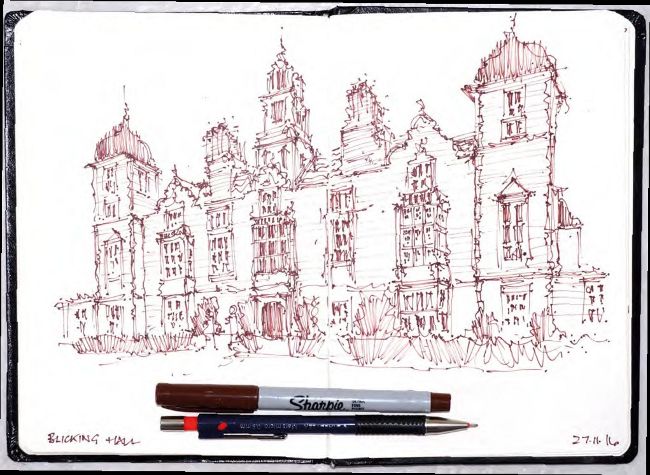
No special kit An A5 sketchbook which opens to 81⁄2x11in. (22x28cm) as a double-page spread, a pencil and fibre-tipped pen, and you’re good to go!
LEARNING OBJECTIVES
An introduction to urban sketching
Sketching just for the pleasure of it
Sharing with and learning from others
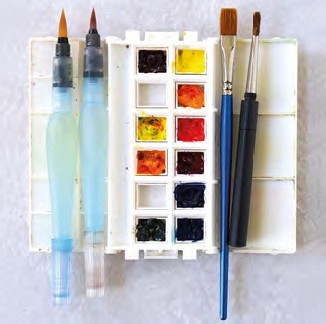
Tony’s watercolour kit A small lightweight watercolour travel palette and two brushes, large and medium (or, for added convenience, waterbrushes with built-in reservoirs).
If you’ve ever drawn or painted something you’ve seen in front of you – perhaps the view from the living room window or maybe people in the coffee shop – you’re already halfway to being an urban sketcher. The other half involves ‘sharing’; more of that later.
So what exactly is urban sketching? Borrowing and paraphrasing from the urban sketcher’s website www.urbansketchers.orgit’s drawing on location (not from photographs, memory or imagination), indoors or out, capturing what you see from direct observation, using any medium, in your own individual style and sharing your drawings online.
Here are my top six reasons for suggesting you give it a go, if you haven’t already, together with my photograph of Cotswold Cottages at the end of this article to use as a stepping stone to going outside and trying it for real.
1 No special kit
One of the biggest advantages of urban sketching is that you don’t need special equipment. More often than not, I use just a small A5 sketchbook, a pencil and a fibre-tipped pen (above). If I want to add colour I take a small watercolour set and two brushes or waterbrushes (left). Others prefer to work larger, sometimes with an easel; or to use marker pens, coloured pencils, or