OUTER SPACE
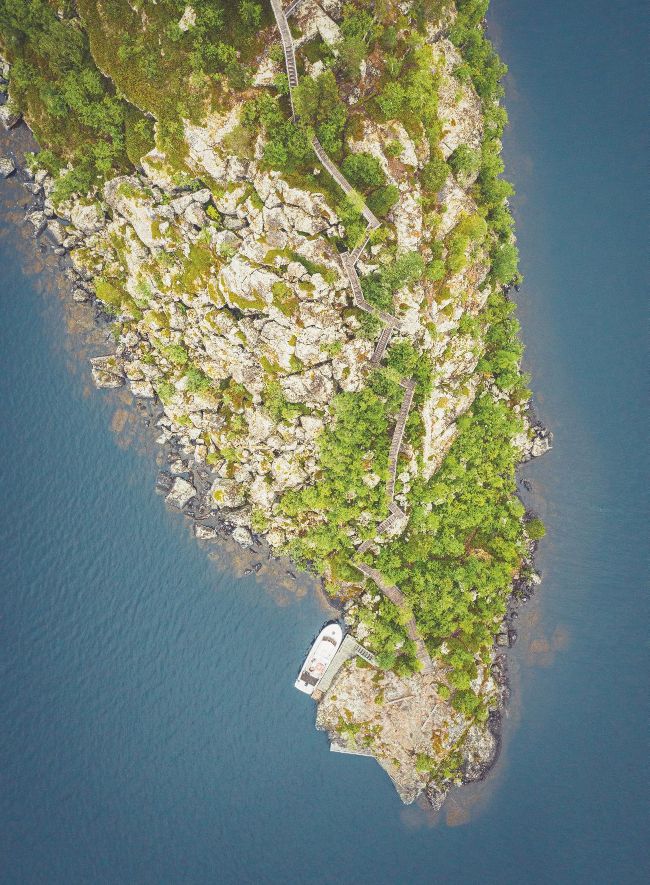
Opposite: One of 3,318 islands on Lake Inari
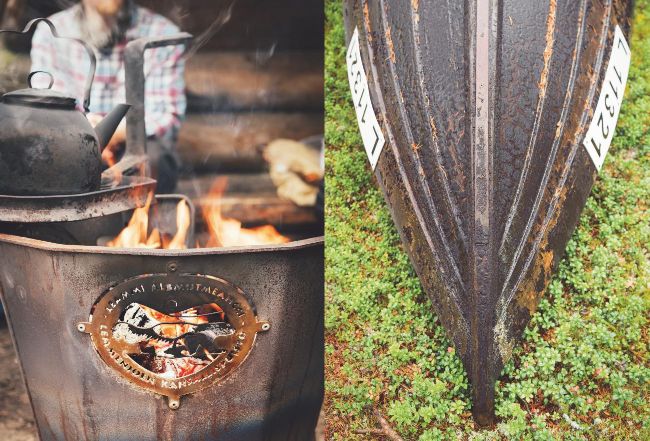
Clockwise from top: Coffee brewing on the fire; a boat by Lemmenjoki River;
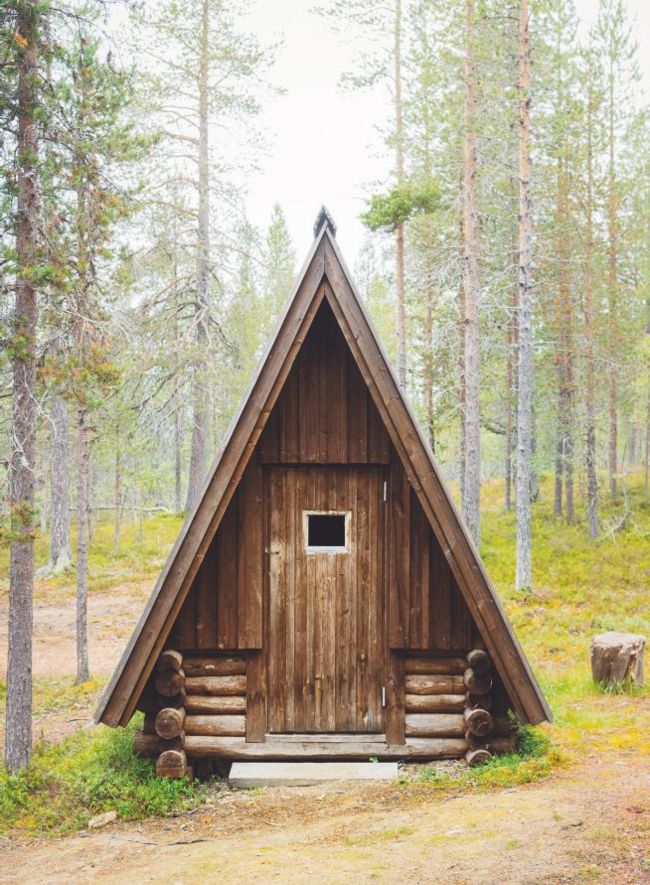
a cabin in Urho Kekkonnen National Park.
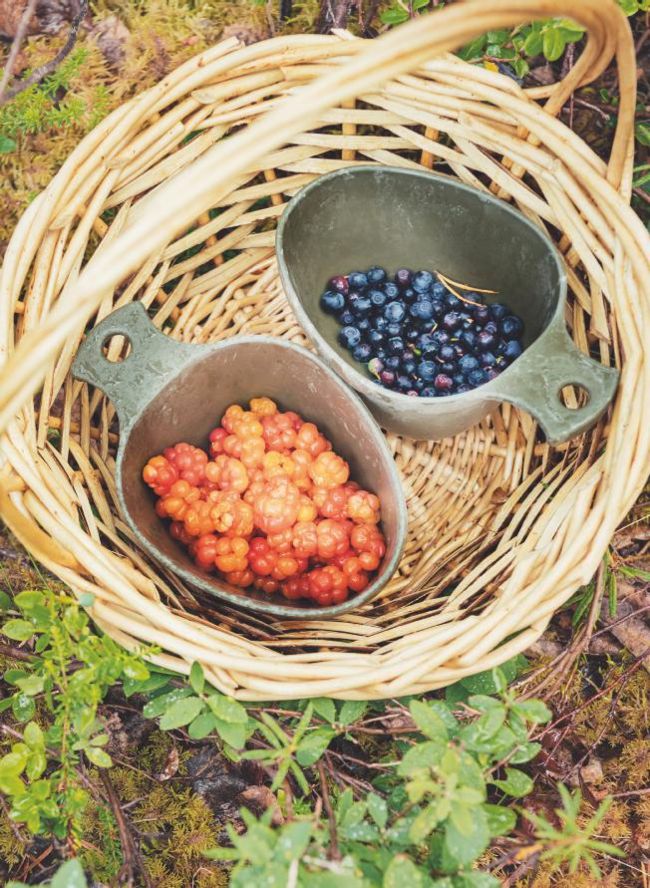
blueberries and cloudberries;
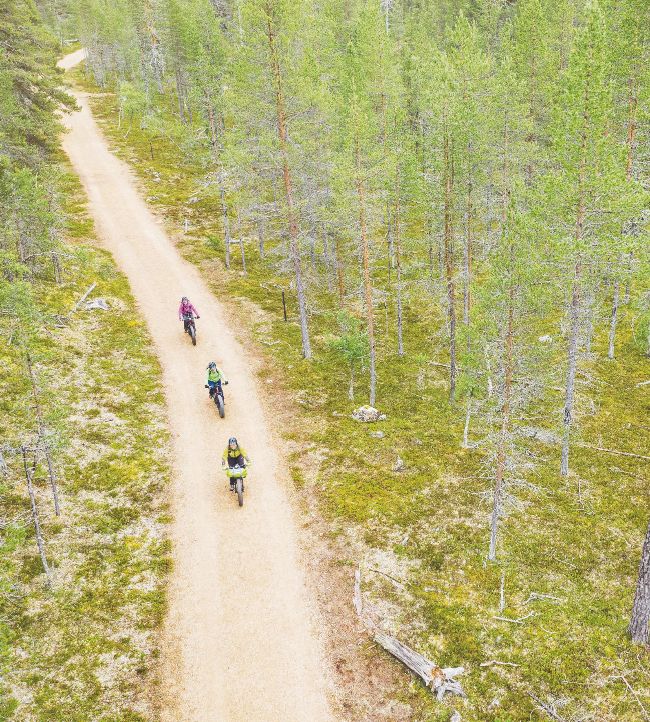
Cycling on electric fat bikes through Urho Kekkonen National Park. Right: Guide Vappu Brännare; moss and lichen
Father Christmas doesn’t set much store by tradition in the town of Saariselkä. It’s August, and his smiling face, hacked out of wood, welcomes people into the town’s supermarket. Two paces inside and there he is again, wielding an axe and lantern, cheeks ruddy and beard fulsome above a red velvet suit. In his defence, we are above the Arctic Circle and he is said to live in the nearby forest – why wouldn’t he use his downtime to pop to the shops for a bottle of blueberry shampoo and a string of elk sausages?
That he is a permanent fixture on the main street of Saariselkä points to the Finnish town’s principal appeal: winter, in all its frosty, twinkling glory. Tourists, hundreds of thousands each year, come to ski through the snow, gaze at the northern lights, and to shuffle up to Santa in a fire-warmed cabin. What they don’t do much is come in summer. If you subscribe to the belief that hell is other people, you’ll find heaven here, out of season.
It’s nudging 8°C when I meet Vappu Brännare at the entrance to Urho Kekkonen National Park, a forested wilderness that stretches all the way to Russia. She is the only guide currently at Lapland Safaris, her colleagues having dispersed across the country for the summer. ‘This is the reality of August in the Arctic,’ she says as I pull on gloves and a scarf. ‘We had six days of hot weather earlier in the year and everyone is still talking about it! Heatwaves are nice for us but they’re bad for nature.’
The nature of northern Finland is what keeps Vappu here. She arrived from Helsinki in 2015 to work for six months, and never went back. ‘That happens a lot,’ she says as we climb onto mountain bikes. ‘People come for the winter and never leave. If you’re a nature person, this part of the world is perfect.’ It doesn’t take long to see the appeal. We zip through a forest of old-growth pines, the ground mobbed with bracken, black crowberry and Alpine azalea. From within the trees come the calls of bramblings. We climb to an exposed plateau, our tyres bouncing over the rocky ground, and the trees disappear altogether. The forest below, squashed by low cloud, extends to infinity in all directions. The murk, with raindrops plopping from our cycle helmets into our faces, does nothing to diminish the wonder of a sight entirely unspoiled by humans.
We are not the first to be captivated by the landscape, as I discover when we return to the forest -even if its earliest visitors were more interested in what lay beneath the ground than on top of it. Up a narrow track lies a scattering of wooden huts, constructed by the gold miners who arrived 50 years ago. I shine a torch down a shaft they shovelled out by hand, and the beam is swallowed by the darkness before it can reach the bottom. Luck was not on the miners’ side: at best, they left emptyhanded; at worst, ill and bankrupt. ‘Really, you can say the miners were the first tourists here,’ says Vappu. ‘A lot of them were running away from something, and Lapland is a good place to run to – it is very far away from everywhere else.’ Modern tourism, which took hold here in the 1960s when the region featured in a couple of Finnish movies, shares the same impulse: for a lot of people, being very far away from everywhere else is all the attraction needed. Some of the miners’ cabins in the park have been turned into wilderness huts, free for all to use. We park our bikes by one, a sturdy log cabin with smoke drifting from the chimney. It’s dark inside, with wood crackling in the stove. Three young men sit at wooden benches, their wet coats hanging from the ceiling. ‘This is very Finnish,’ says Vappu, pouring hot lingonberry juice into wooden cups. ‘You come into a hut, the fire is lit, clothes are drying, there are other people, and we all pretend we are sociable.’