A BRIEF HISTORY OF
CURTAIN CALL
Mitch talks us through the history of theatre costumes through the ages
WORDS: MITCHELL BRIDGEWATER

Mitchell
In a previous life, long before I was a contestant on The Great British Sewing Bee and textiles became such a key part of my life, I worked in theatre directing productions and managing venues. I’ve always been fascinated with the grandeur of theatre shows, not just the lavishness of Elizabethanera productions but equally the innovative design of modern shows.
It is impossible for me to separate the production craft and the acting and directing – for me, a show is only a show when the lights, performance, staging, sound and costume come together to create the full spectacle that is theatre. The history of making costumes for theatre is as rich and varied as the plays themselves. In the immortal words of Maria in The Sound of Music, “Let’s start at the very beginning, a very good place to start…”
ANCIENT ORIGINS
When I say start at the beginning, I mean BC, ancient Greece and Rome, to be precise. The theatre family tree traces its origins back to ancient Greece, born out of religious festivals often in honour of Dionysus, the god of wine and fertility. The evidence we have of the era doesn’t talk much about costume as we think of it, but a focus on masks that depicted different characters, emotions and social status. They were crucial because the plays of ancient Greece were often performed in large open-air theatres with the audience often seated quite a distance from the stage.
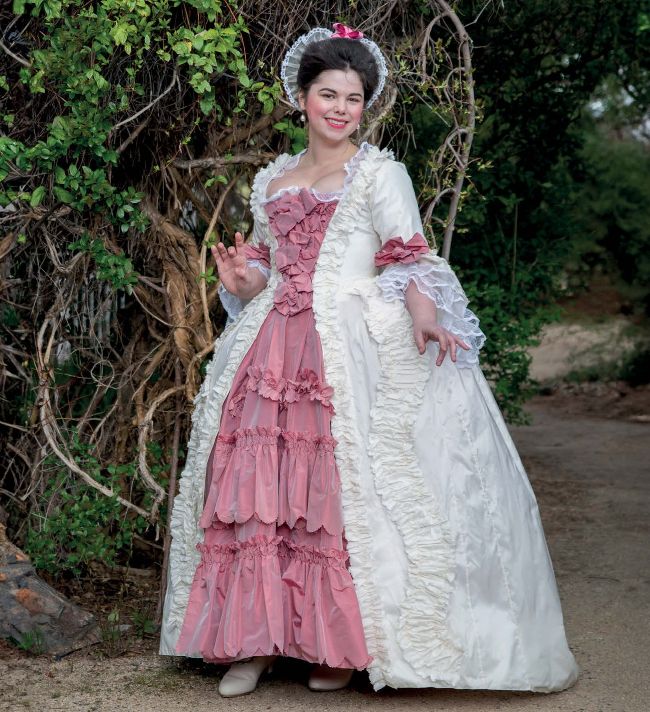
S8578
It was the Romans, who inherited much of their theatrical traditions from the Greeks, who really expanded on the ideas set before. Clothing during this period was simple – typically a chiton (a type of tunic) or himation (a cloak). However, the costumes were often elaborately decorated with colours and patterns to signify the character’s role or status. The Romans began to use colour more symbolically in their costumes: white for old men, purple for the wealthy and red for soldiers. They introduced more detailed costumes and added wigs, which were often used to signify different ethnicities or ages.