Apple, silicon & beyond
The world is set to make a quantum leap as it moves beyond traditional silicon-based microchips
WRITTEN BY DAVID CROOKES
Silicon chips have been part of the technological landscape ever since Robert Noyce invented an integrated circuit capable of mass production in 1959. Some 12 years later, the world began to enjoy the first commercially available microprocessor, Intel’s 4-bit 4004 which used silicon gate tech, and we’ve seen an incredible number of improvements since.
But while silicon has stood us in great stead for such a long period of time (powering all of the devices that we’ve ever enjoyed from Apple, for example), good things inevitably come to an end. For some time, it has become acutely apparent that current chip processes would soon begin to limit our ever-increasing wants and desires in a world where artificial intelligence (AI) looks set to revolutionise pretty much everything we do.
By pushing the industry to think long and hard about how the world should cope with the technological challenges of the future – both those we know about and those that may be lurking around the corner as new ideas spring forth – we now appear to be on the cusp of a whole new era of computing. We’re entering waters that hadn’t even been considered in the 1970s because they weren’t even deemed possible and things may never be the same again.
Over the next few pages, we’re going to be considering just where we are currently at and the problems that are being faced by the computing industry right here, right now and in the immediate future.
Then, we’ll be examining just where we are going looking further ahead and the potential challenges that will need to be faced along the way.
Notably, we’ll be looking at the new technologies waiting in the wings with an emphasis on one in particular that looks set to dominate: the very futuristic-sounding quantum computing that is actually much, much closer to becoming everyday reality than you may think. It has the potential to turn life as we know it on its head, helping to make breakthroughs in areas of science and health that current chips would struggle to achieve.
Silicon tech today
Silicon chips have increased speeds but sustainability is an issue
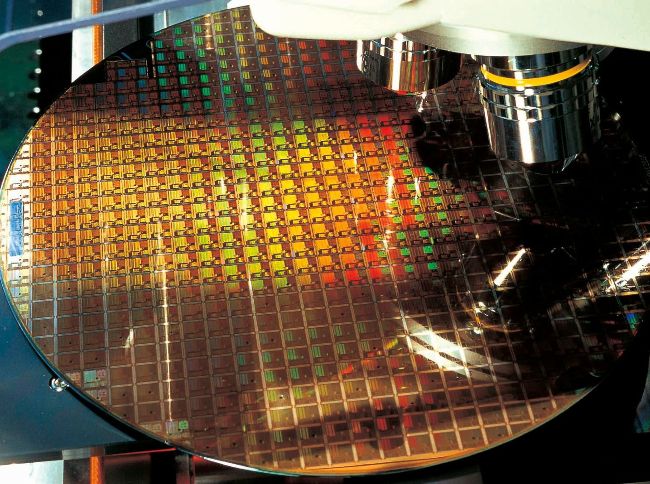
TSMC, based in Taiwan, is the world’s largest chip maker and it’s working with Apple on 2nm chip technology.
Image credit: Apple Inc, Intel Corp, Taiwan Semiconductor Manufacturing Co Ltd
Traditional silicon chips are reaching their physical and technological limits and that poses a future problem. Since our computing demands continue to grow, there is a danger that our expectations will one day be frustrated by stagnating chip production and, without significant progress, computing performance would suffer and innovation would slow.