IT WILL TAKE
10 minutes
YOU WILL LEARN
How to get the most from Sleep Focus and sleep tracking
YOU’LL NEED
watchOS 9
Genius tip!
Unfortunately, you can’t keep track of your sleep and charge your watch at the same time. Make sure you’ve got a fair bit of charge on your watch before you settle down to sleep.
Sleep matters, but there’s much more to it than simply how long you spend in bed. The quality of your sleep is what really counts, and your Apple Watch can help you work on that.
There are two key ways in which your Apple Watch can help you sleep more soundly. The first is Sleep Focus, which enables you to set a bedtime schedule and customise what your watch does through the night (or day, if you’re on shifts) – so, for example, you can decide what your watch should display and whether you want a blanket Do Not Disturb or if you want certain apps to notify you through the night.
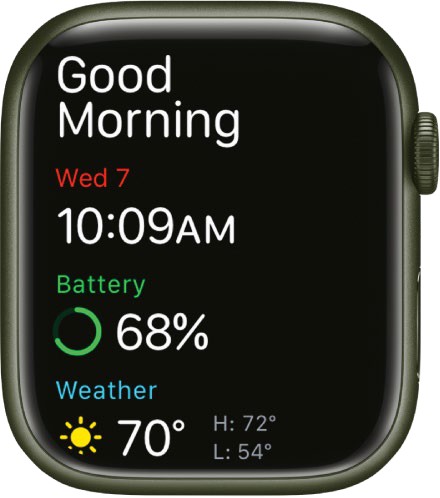
Your Apple Watch knows when you’re awake; you get this cheery ‘Good Morning’ greeting when you get up.
The second is sleep tracking. Every night your Apple Watch uses its microphone, its accelerometer and its heart rate monitor to record how you sleep and how long you are in each of the key sleep modes: Awake; REM, which is when your eyeballs are moving around and you’re often having dreams; Core sleep, also known as light sleep; and Deep sleep. It then shows the results on a daily graph on your watch; you can see weekly, monthly and annual data in the Health app on your iPhone.
Identify patterns
You can then use that collected data to identify patterns, especially if you also look at other data in your Health or related apps. For example, you might sleep really badly at the weekends because of your social whirl or noisy neighbours, or you might sleep better on days that you exercise.
Carrie
Marshall
HOW TO Monitor your sleep with apple Watch
1 Set up Sleep
The first place to visit is the Watch app on your paired iPhone. Scroll down to Sleep, tap on it, and you should see the screen shown here. Make sure the option ‘Track Sleep with Apple Watch’ is selected if you want to use sleep tracking.
2 Set Sleep Focus
Tap on Manage Sleep Focus in Settings to edit the Focus Mode for when you go to bed. By default, no apps or people can contact or notify you, but you can change this if you prefer – for example, because you’re on call.
3 Pick a face
You can set specific lock screens for your iPhone and Apple Watch while Sleep Focus is active, which is useful if you’re likely to take a bleary-eyed look at your Apple Watch in the middle of the night. This option only shows installed faces.
4 Use the Sleep Screen
If you prefer, you can click on Sleep Focus > Options and select the default Sleep Screen, which removes almost everything but the time from your Apple Watch display when Sleep Focus is active. You can also turn off the time display.
5 Set your schedule
If you haven’t already, you can create a sleep schedule in the iPhone’s Health app. This will automatically activate Sleep Focus at the time(s) you specify, and you can use it to set regular alarms to get you out of bed.
6 See your sleep
All you need to do now is wear your watch to bed. In the morning, you’ll be able to see your sleep data in the Health app as well as on your Apple Watch. The tracking records four different sleep states: Awake, REM, Core and Deep.
7 Get more info
The Health app records more than just your sleep cycles. It also tracks your heart rate and your respiratory rate throughout your sleep, enabling you to get a better picture of your body’s activity when you’re in different stages.
8 Add your own
Don’t worry if you forget to wear your watch to bed; your iPhone can still record the overall time you spent in bed, albeit without information about your different sleep stages. You can also add your own data manually in Health.
9 Try other options
Apple’s own Sleep app isn’t the only sleep-related option for your Apple Watch, and if you scroll down in the Health app you’ll see a selection of Health-compatible apps with links to the appropriate page in the App Store.