Return of the MacBook
It’s nearly 10 years since Apple revolutionised portable Macs. Is it time for a comeback?
Written by Carrie Marshall
Image credit: Apple Inc
Back in March 2015, Apple made Mac history all over again. It launched the MacBook, the thinnest and lightest Mac that Apple had ever made.
The new Retina display was thinner. The new keyboard was thinner. It was so incredibly thin that it made the MacBook Air look positively porky. There were no moving parts, no fans, no vents. It was everything that made the iPhone amazing, but in notebook form.
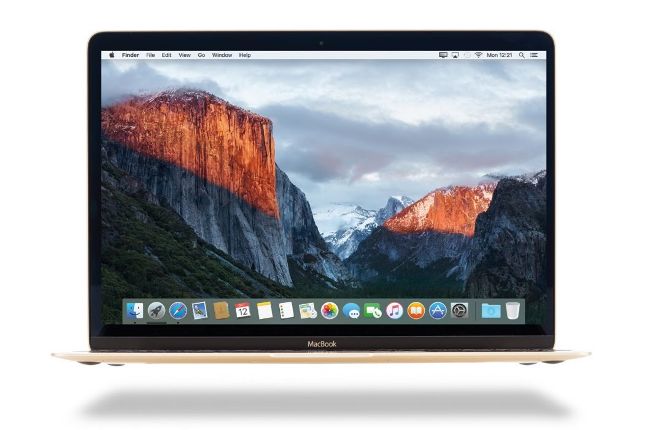
When Apple launched the MacBook in 2015, it was pretty revolutionary, being über thin and with no moving parts.
Image credit: Apple Inc
According to Apple’s Phil Schiller, Apple had “reinvented the notebook”. The 12-inch MacBook was just 13.1mm at its thickest point, 24% thinner than the 11in MacBook Air. It had a precision-milled unibody enclosure, a new Force Touch trackpad, and a brand-new, ultra-thin keyboard, which was 34% thinner than other mobile Macs with keys 40% thinner than traditional scissor keys. The new Retina display was just 0.88mm thin, making it the thinnest ever Mac display. And inside was Apple’s smallest ever logic board, some 67% smaller than the one in the MacBook Air.
If the MacBook were still on sale today, it would be approaching its 10th birthday – and some pundits say that Apple is seriously thinking about bringing it back with today’s even more impressive technology. We’re taking a look at what made the MacBook so special, and where it might now fit among today’s M2, M3 and M4 Macs.
Apple does it better (again)
When Apple launched the MacBook in early 2015, it claimed that the new MacBook wasn’t just incredibly thin, it was also the world’s most energy-efficient laptop. That was down to the new Core M processor from Intel, a chip designed specifically for ultra-thin notebooks rather than adapted from desktop processors. That’s important because Intel’s desktop processors run very hot and need extensive cooling as a result. The Core M was designed differently, with thermal and energy efficiency a priority over sheer horsepower. That fanless chip definitely delivered on the thinness front. But it was significantly slower than the processors in the MacBook Air and MacBook Pro, and its integrated Intel HD graphics weren’t as powerful.