MacBook Pro 13-inch (2022)
Legendary laptop gets updated innards, but still feels out of time
£1,949 FROM Apple, apple.com/uk FEATURES Apple M2 chip (8-core CPU, 10-core GPU, 1TB storage, 16GB of unified memory, 13.3-inch Retina display (2560x1600 pixels resolution), 2x Thunderbolt/USB 4 ports, 3.5mm headphone jack, Wi-Fi 6 (aka 802.11ax Wi-Fi), Bluetooth 5.0, Touch Bar
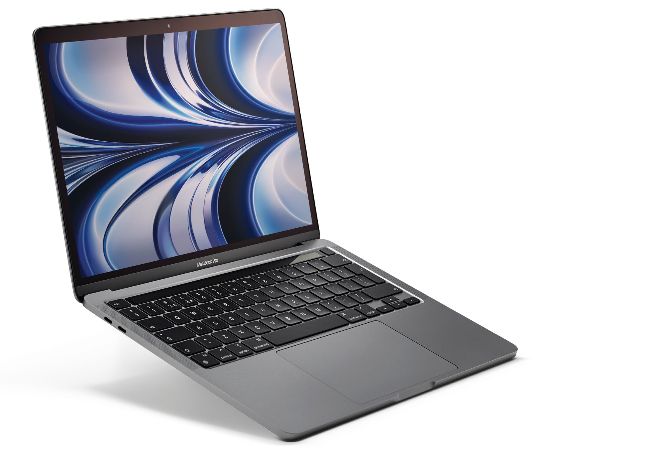
The 2022 MacBook Pro 13-inch retains the dated design of the previous generation right down to its controversial Touch Bar. Ho-hum.
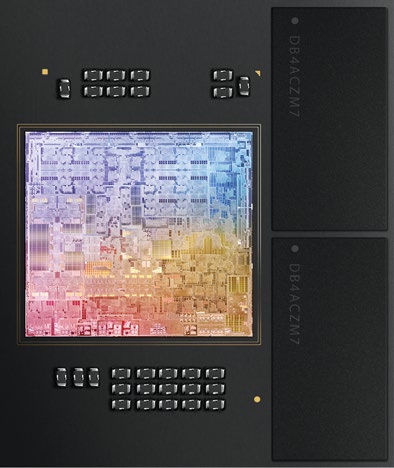
The Apple silicon M2 chip has four performance cores and four efficiency cores.
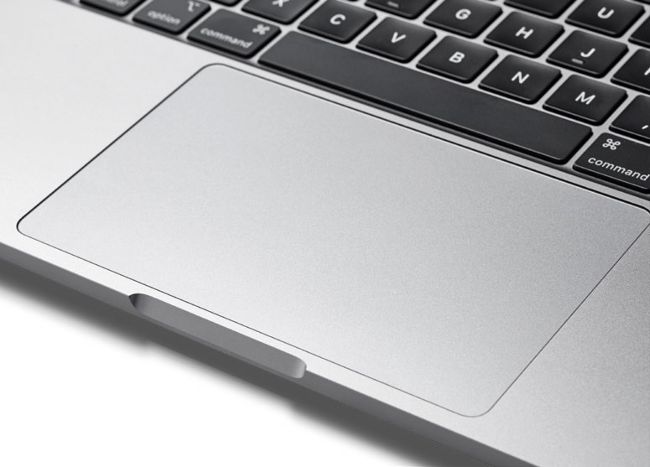
The extra large glass trackpad is still a joy to use with Force Touch for easy access to contextual menus.
T here’s a lot to love about the new 13-inch MacBook Pro. It’s the first laptop of the Apple silicon era to come with the company’s new M2 chip (our in-depth review of the new M2 MacBook Air will follow next issue) while retaining the same long battery life as before (up to 20 hours) thanks in part to the M2’s incredible energy efficiency. And yet. And yet…
Let’s get the good stuff out of the way. Firstly, the MacBook Pro 13-inch is the latest in a long line of laptop Macs that successfully teams powerhouse features with ultimate portability that started with the 12-inch PowerBook G4 in 2003 (see MF380’s ‘Evolution of the MacBook’ feature) and continues today. Almost everything you could want in an ultra-portable Mac is here: a 13.3-inch LED-backlit Retina display offering True Tone (for ambient backlight colour adjustment) and 500 nits brightness, up to 2TB of SSD storage, and the M2 – the next-gen successor to 2020’s Apple silicon M1 chip – which sports 8 CPU cores, 10 graphics cores, a 16-core Neural Engine and support for up to 24GB of unified memory. Plus the aforementioned 20-hour battery life. None of which are to be sniffed at. Throw in improved memory bandwidth of 100GB/sec (50% more than the M1) and this next-gen slice of Apple silicon feels even more futureproof than before – Apple says the M2 MacBook Pro 13-inch is 1.4x faster than the previous-gen M1 and up to 6x times faster than the old Intel model – and we believe it. You’ll able to see some of the evidence for that in our benchmarks over the page.