EXPERT ADVICE
TECH SUPPORT & TECHSPLANATIONS
Our resident genius solves your Mac and iOS problems
Email Mac|Life at ask@maclife.com
Get official documentation at support.apple.com | Get help with hardware at support.apple.com/repair
macOS malware scans
UNTIL THE RELEASE of Monterey 12.3 last March, macOS had only limited tools to tackle malware. Its Malware Removal Tool (MRT) scans your Mac shortly after startup, and XProtect checks apps for signatures of known malware when they’re first run.
Over the last six months this has changed dramatically with the arrival of XProtect Remediator, posing as a new XProtect app in the Core Services folder on your Mac’s Data volume. Several times a day this scans for telltale signs of the troublesome and versatile Trojan known as DubRobber or XCSSET, and checks daily for others including Adload, Pirrit, Trovi and CloudMensis.
This new protection is only available for Catalina and later — proof once again that running the current, or more recent, versions of macOS brings the best security.
> No ARM Boot Camp
Why don’t Apple silicon Macs support Windows for ARM in Boot Camp?
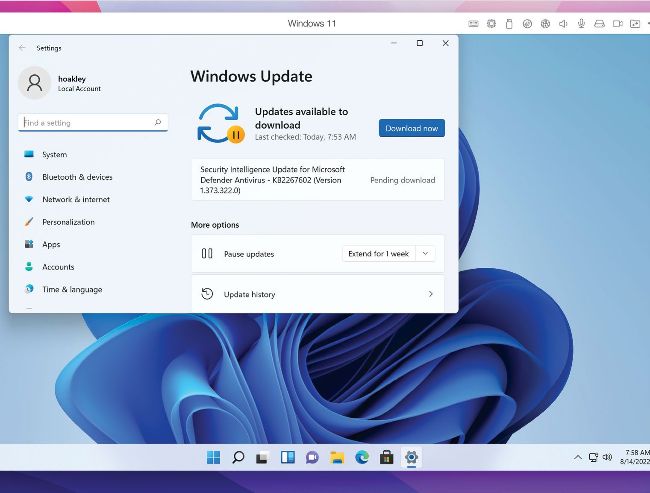
Image rights: The Asahi Linux Contributors.
In terms of hardware, Intel Macs are only really a special build of PC, and getting them to start in and run Microsoft Windows was relatively straightforward. Although made a bit more complicated with the addition of the T2 chip, they have remained highly compatible with other PCs.
Not only do Apple silicon Macs have a completely different processor, but all the supporting electronics in their chips are different too. While the special versions of Windows made for Microsoft’s ARM–based Surface touchscreen systems are built to run on ARM processors, they’re designed for completely different firmware and supporting hardware systems.
Apple silicon Macs have to start up from their internal SSD, from which they prepare to run macOS. There is a point in that process that can be used to run another operating system, like Asahi Linux, but for that to work with Windows on ARM it would require a lot of changes. Unless Microsoft decides to build in support for Apple’s hardware, the only way to run Windows on Apple silicon is in a virtual machine, as that can provide Windows and Linux with virtual devices in software.
Unless Microsoft decides to port Windows for ARM to Apple silicon, a virtual machine is the only option.