Spot phishing emails
–NATE DRAKE
YOU’LL NEED THIS
UBLOCK ORIGIN (optional)
ACCORDING TO NETWORK SECURITY company SlashNext’s 2024 Phishing Intelligence Report, in the second half of 2024, there was a 202 percent overall rise in phishing messages.
One of the most common attack vectors is email. Often, this takes the form of legitimate-looking messages. Recipients are encouraged to click a link or open an attachment. Sometimes, the aim is simply to steal personal information like credit card details.
The best way to stay safe is never to believe anything you read in an email or open any links/ files in your inbox. However, this isn’t very practical in 2025, as many legitimate organizations communicate with customers in this way.
This guide focuses on how to analyze emails to find telltale signs of phishing activity.
1
A
PPLY OCCAM’S RAZOR
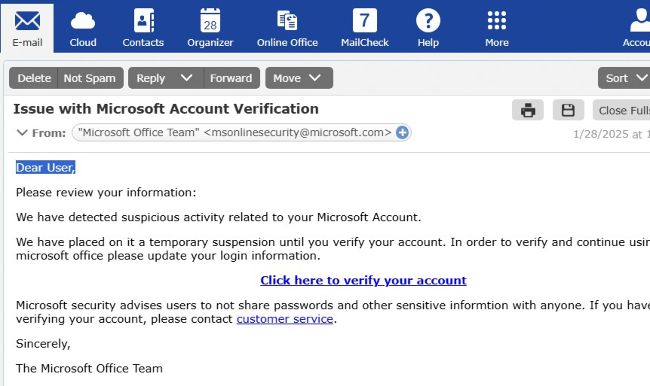
While some phishing emails are carefully crafted and targeted at individuals in ‘spear phishing’ attacks, most of them use boilerplate wording to try to fool people en masse.
A
» This is why if you’re trying to verify if an email is legitimate, you should always ] check that it greets you by name. If a message begins with ‘Dear Customer’ or ‘Dear User’, this is an automatic red flag. [Image A]