THE WORLD MOST ICONIC PCs
What do we mean by iconic? Here, we’re talking about the influencers. The computers that changed perceptions of what computers could be, or inspired a new type of design
CONTRIBUTORS: Barry Collins, Tim Danton
XEROX ALTO
The cabinet-sized Alto may have stretched the definition of personal computer (only its screen and keyboard are shown here), but it defined many of the things we take for granted today. It ran the first GUI-based OS controlled by a mouse, it hosted the first WYSIWYG document system, the first email client, and the first network-based games. When Steve Jobs was shown its latest features in 1979, he said it was a “veil being lifted from my eyes”.
APPLE II
Compare and contrast the Apple II with the MITS Altair 8800 below. Only three years separated them, yet the Apple II looked stylish— by contemporary standards, at least—and still included all the expansion slots demanded by the enthusiasts expected to buy it. Plus, astonishingly for the time, it could output in color. What was a trickle of sales in the Apple II’s first year (a few thousand) soon turned into a flood of millions, helped by the arrival of VisiCalc, the first spreadsheet program, and numerous iterative improvements to the hardware.
COMMODORE PET
A computer so iconic that it can be recognized by its silhouette, the PET was Commodore’s first computer—built to take advantage of the company’s own 6502 processor (also used in the Apple II). At that point, Commodore was famous for its calculators and typewriters, and its legendary boss Jack Tramiel took some persuading that newfangled computers were worth a gamble. But thanks to Chuck Peddle, the chip’s lead designer, Tramiel rolled the dice—and a long line of Commodore computers was born.
© GETTY IMAGES, WIKIMEDIA
MITS ALTAIR 8800
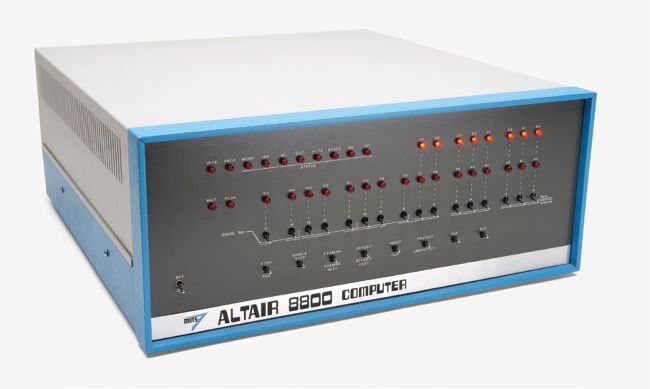
Although it looks more like a prop from a bad 1970s sci-fi movie, the Altair 8800 was the first minicomputer kit. It came in various configurations, but the base spec included a 1,024- byte memory board and Intel’s 8080 processor. Fripperies such as a keyboard or display weren’t included. It caught the eye of a keen Harvard student called Bill Gates, who wanted to create a BASIC interpreter for the 8800 and worked part-time for the company, before starting a small firm of his own…
SINCLAIR ZX80
On May 2nd, 1979, Alan Mayne wrote in The Financial Times
that personal computers “could drop to around £100 within
five years”. He was only out by a factor of 10 or so, with Clive
Sinclair announcing the ZX80 in January 1980. You could buy
it fully assembled for £100 ($200), or build it yourself from
a cheaper kit form. While the membrane keyboard had its
issues and the 1K of memory was positively tiny, this cheap
computer paved the way for computers in homes.