In the Detail
BUFFER STOPS
One of the must humble items of railway infrastruc ture holds an endless amount of modelling potential. Paul A. Lunn takes a look at the real thing and improves a pair of venerable Hornby bufferstops.
TRACK DYSERT ENCING FOOT CROSSINGS ROUNDED GOODS PLATFO OUND FRAMES AND POIN ADCODES NAMED TRAINS NCLINES LEVEL CROSSING METAL BEAMS MISHAPS PLATFORMS RETAININ STATION DETAIL WAL VEGETATION
Found wherever a railway line comes to an end, whether that be at a terminal station or siding, bufferstops are a ubiquitous piece of railway infrastructure. And yet their design has varied endlessly over the years, dictated by various factors such as period, location and traffic types. A lonely wayside siding may only require the most basic of facilities, but a terminal or bay platform demands greater protection for passengers and surrounding structures.
In this feature, we’ll look at a range of prototypes and I’ll explain how I modified a pair of Hornby bufferstops, with which many modellers will be familiar, as both products have been around for donkeys’ years!
KEEP IT SIMPLE
Before we look at more traditional types of bufferstop structures, here’s an idea for a very simple alternative.
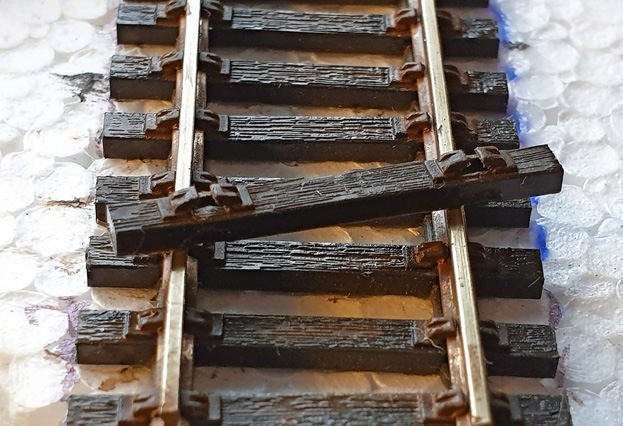
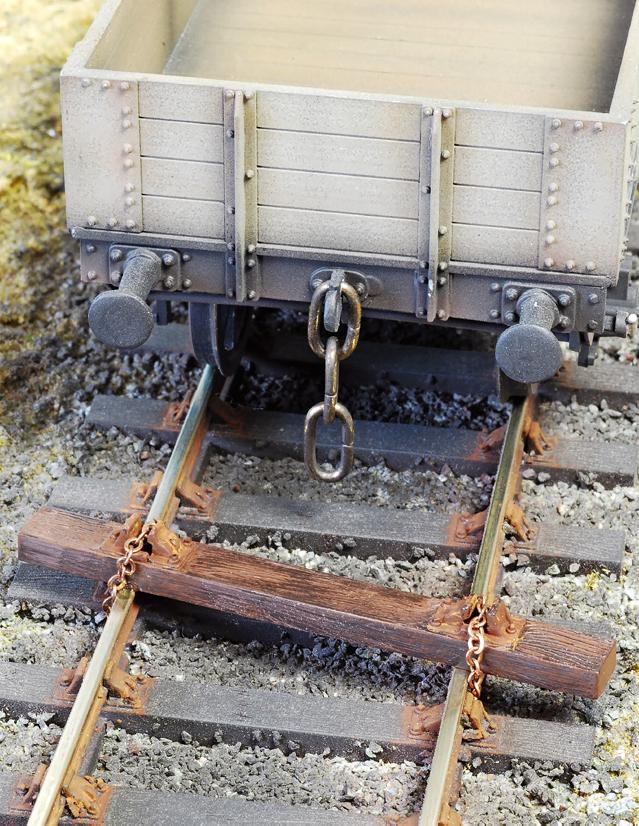
Truncated lines or rarely used sidings could often be seen with sleepers placed across the rails. They may be secured by chains or, if rail chairs are fitted, the sleeper would be upturned and secured to the rails with wooden wedges, or ‘keys’. Multiple sleepers could be bolted together to add greater height and this is a very simple feature to replicate, using sleepers recovered from track offcuts.
IMAGES AND ARTWORK: PAUL A. LUNN
GEORGE DENT
A CHIP OFF THE OLD BLOCK
How many of us have used these plastic stop blocks on our layouts over the years? This one-piece moulding has been in the Hornby catalogue for decades and remains a cheap and cheerful option for ‘OO’ gauge. It’s also very effective, as it fits onto straight or curved track and, in part, looks reasonably good.
The bufferbeam appears out of proportion to the rest of the structure but, with a little work with a razor saw, knife and files – plus a new wood cross beam – it can be greatly enhanced.