HOW TO BUY
Ravi Shankar
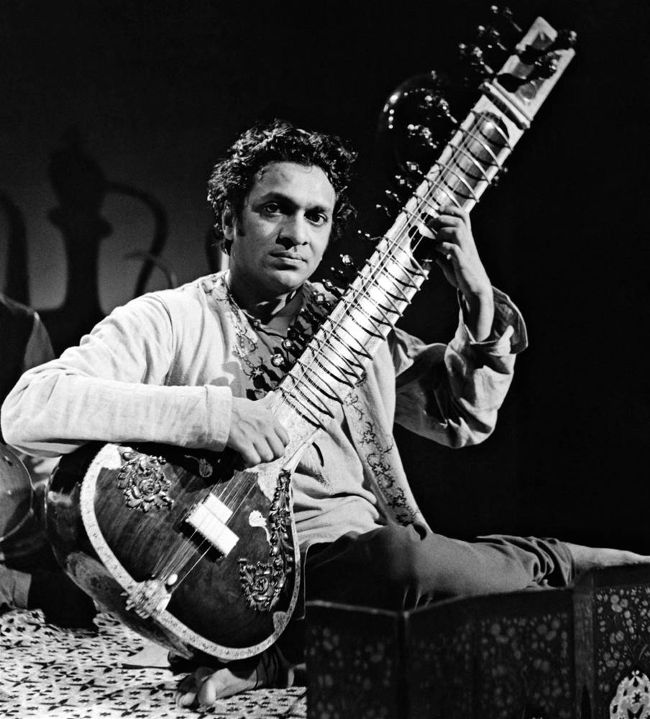
Raga superstar: sitar virtuoso Ravi Shankar with the instrument he made his name with.
10
Ravi Shankar Chants Of India
ANGEL, 1997
You say: “I absolutely love Chants Of India, from Harrison’s production to the song selection to Anoushka’s conducting.”
Ana Leorne, via Twitter
“One of the most difficult challenges in my life,” confessed Shankar, “as a composer and arranger.”
He would later claim this collection of sacred prayers set to music as one of the best albums of his career. It’s certainly his most accessible, and if all you know of Indian music was released by The Beatles, start here. Recorded in Madras and producer George Harrison’s home in Oxfordshire as one of several projects to mark Shankar’s 75th birthday (though released two years later), there’s not a huge amount of sitar, but the tanpura drones, flute and Indian choruses (plus Harrison’s autoharp) make it an immersive joy, thoroughly purifying.
Sitar hero to most. By David Hutcheon.
I NOVEMBER, it will be a decade since Ravi Shankar’s final performance; when he first toured Europe – as a dancer with his brother Uday’s troupe – Hindenburg was German chancellor and the swastika was everywhere, which must have seemed welcoming to a young Hindu from Varanasi. If Shankar’s 92 years on this planet covered most of the 20th century, the span of his music is no less impressive – Indian classical music, of course, but also its Western equivalent, and jazz, ambient and folk, plus his inf luence on, and presence at, some of the most significant developments in rock.
Born in 1920 to a well-to-do political family, Shankar gave up dancing to study the sitar, an instrument that puts great physical strain on the player, not least because of the contortions required to sit hunched over it for lengthy periods. In the 1940s, he moved to Delhi, then a “green and unpolluted place”, to work for All India Radio, which brought him into contact with the film director Satyajit Ray and the virtuoso violinist Yehudi Menuhin, two men responsible for boosting his profile beyond India – the former by asking him to compose soundtracks, the latter by putting in motion a tour of the US. Fifteen years later, he was hanging with The Beatles and part of Monterey and Woodstock lore.