REAL GONE
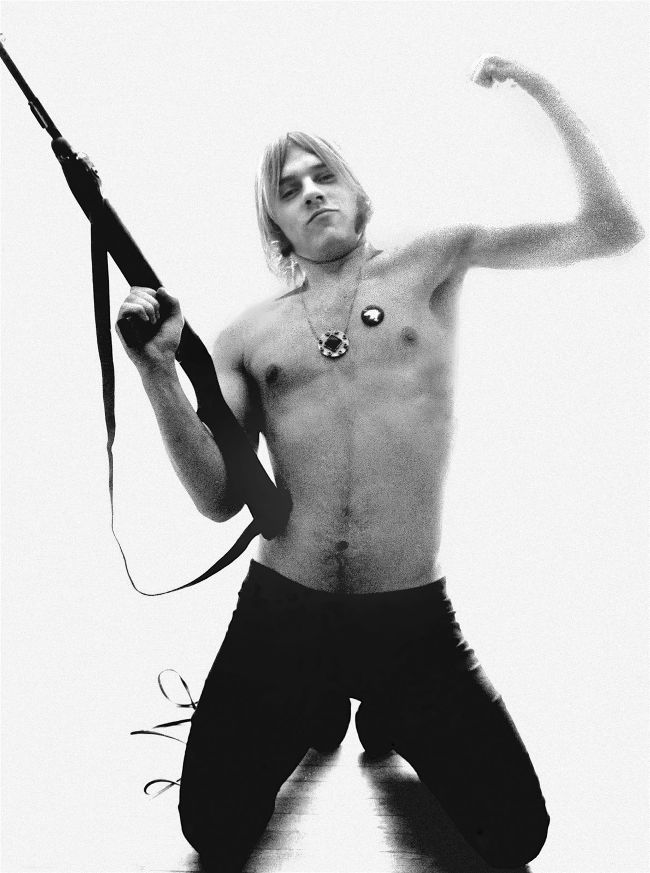
Shooting star:
Dennis Thompson prepares to get into the groove, 1969.
Leni Sinclair/Michael Ochs Archive/Getty Images
The Smoking Gun
Last MC5 man standing, Dennis ‘Machine Gun’ Thompson joined his brothers on May 8.
RENOWNED FOR the extraordinary blend of brutal power and pin-sharp precision that propelled the MC5 and earned his ‘Machine Gun’ nickname, Dennis Thompson maintained that his hugely influential style came from the band being unable to afford a microphone for his drum kit. Drowned out by their Vox Superbeetle amps cranked to 10, he said, “I started hitting the drums harder and harder to get heard, breaking 1 5 to 20 sticks per show.”
Resilient to the end, Thompson was the last surviving member of the band that defined Detroit-style high energy rock’n’roll and gave punk core blueprints on their three albums released between 1969 and ’72. The Detroit native born Dennis Tomich, on September 7, 1948, started playing drums at the age of four. His older brother’s bar band rehearsed in the basement, leaving their drums for Thompson to practise on. At 10 he was playing weddings and joined his brother’s band at 13.
Attending Linkin Park High School, Thompson met Wayne Kramer in 1963, their garage band the Bounty Hunters leading to his joining the nascent MC5 instead of studying mechanical engineering at Wayne State University.
“I started hitting the drums harder and harder…”
DENNIS THOMPSON
THE LEGACY
The Album: Kick Out The Jams (Elektra, 1969)
The Sound: The band agitated in vain for another crack at capturing their riotous live onslaught, but here the excitement is overwhelming and tangible. Thompson drives Ramblin’ Rose, Come Together and the title track with pressure cooker dynamics, complex fills and ram-raiding energy, his beats rooted in Motown rhythms. “We just accelerated it,” he said.
Naming Elvin Jones, Mitch Mitchell, Keith Moon and Motown as influences, Thompson insisted, “You had to have the groove. You had to have propulsion and a smattering of explosive trick licks. You had to create what many called ‘drive’.” This further consolidated his ‘Machine Gun’ soubriquet as the MC5 honed their full-bore stage show. The band’s amped-up Motor City blues became charged with free jazz liberation, provocation and insurrection after manager John Sinclair made them house band at Detroit’s Grande Ballroom in 1966.
Against escalating notoriety and police harassment, the band recorded incendiary live debut Kick Out The Jams at the Grande, before ditching their soon-to-beincarcerated manager for an easier life with Atlantic.