SOMETHING FOR THE WEEKEND
The Heart Of Saturday Night, released 50 years ago, lit a path for TOM WAITS’ next decade of music-making. Beat poetry and noir jazz entwined and his roots in rough-andtumble San Diego showed through in his first truly Waitsian oeuvre. “All the elements were there,” discovers SYLVIE SIMMONS, “ready to be drawn out.”
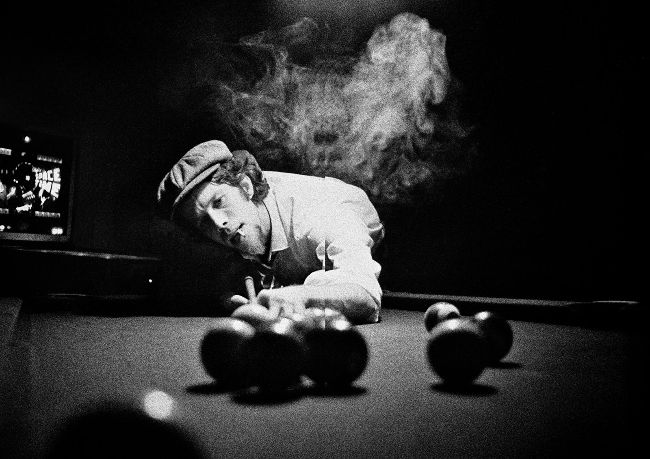
Swimming with sharks:
Tom Waits gives it his best shot, San Diego, 1974.
Photograph: SCOTT SMITH
Scott Smith (courtesy Chris Murray/Govinda Gallery)
LOS ANGELES, 1974
IN A TINY BUNGALOW AT THE BACK OF AN OLD house in Silver Lake, Los Angeles, Tom Waits is perched on a corner of a cluttered couch, cigarette in mouth, writing. The room is strewn with newspapers, magazines, full ashtrays, empty bottles, books, stacks of jazz LPs and, everywhere you look, notepads and paper scribbled with poems, potential song titles and overheard conversations. At Asylum Records’ directive, Waits is writing a bio/press release for his second album, The Heart Of Saturday Night.
“Born December 7, 1949, in Pomona, California,” he writes. “I drink heavily on occasion and shoot a decent game of pool. I like smog, traffic, kinky people, noisy neighbours and crowded bars.” His idea of “a good time”, he adds, “is a Tuesday evening at the Manhattan Club in Tijuana” – that is, the 1920s lounge bar across the US/Mexico border from San Diego, the city the Waits family moved to when Tom was around 10. From his late teens on, Waits had sung and played guitar at just about every small venue San Diego had to offer. Folk clubs mostly, like Folk Arts, then the Heritage, where for a while he worked as doorman.
Which was all well and good, but Waits wanted more. Every Monday at the crack of dawn he’d take an early Greyhound bus to LA to try for a spot at the Troubadour’s weekly hoot nights for new artists. This involved standing in a long line of musicians outside the club all day, waiting for an audition or rejection, followed by the 130-mile bus ride home.
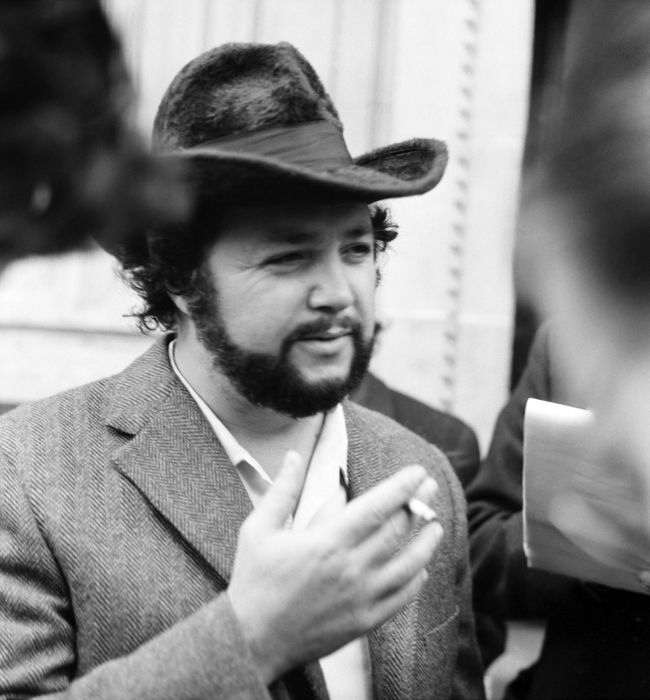
Waits’ manager Herb Cohen, 1971;
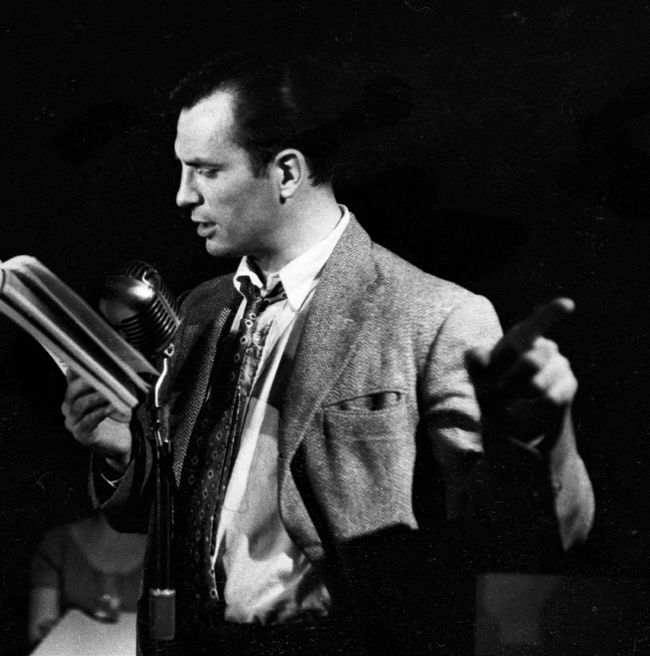
reading his short story Neal And The Three Stooges.
Scott Smith ( courtesy Chris Murray/Govinda Gallery), Getty, Alamy, Ed Caraeff/Iconicimages
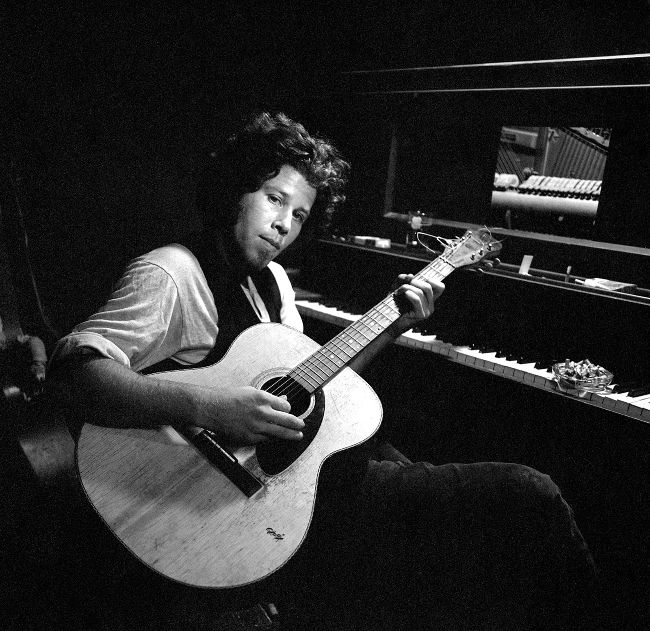
Jack Kerouac in New York, 1958,
Waits’ West Coast travels, the interplay of San Diego and Los Angeles, would be encoded in the grooves of The Heart Of Saturday Night – his first essentially Waitsian album. Getting there wouldn’t be straightforward, but he was starting in the right place. The Troubadour teemed with promoters, music journalists, record companies and managers, including Herb Cohen, a music biz impresario with a roster including Lenny Bruce, Tim Buckley, Linda Ronstadt, Lord Buckley and Frank Zappa, with whom he’d launched the Straight/Bizarre record label. It was at a hoot in 1971 that Cohen heard Waits, started managing him and gave him a publishing contract.
He was signed as a songwriter, not a singer-songwriter, but upon moving to LA Waits seemed happy to be a one-man California Brill Building. He wrote country songs, comedy tunes and ballads, the kind he’d imagine Ray Charles singing. He continued to play Monday nights at the Troubadour and in 1972, when David Geffen, cofounder of the new label Asylum Records, heard him sing his song Grapefruit Moon, he offered him a recording contract.
A Tom Waits fan who’d only heard 1983’s Swordfishtrombones and the banging, clattering, shamanistic music that followed, might be surprised hearing his first album, 1973’s Closing Time. Waits’ voice wasn’t gravel yet and some songs could have worked on a Sinatra record as well as on a laid-back California country rock album. The opener, Ol’ ’55 – a mellow beauty, giddy with joy, about driving down the freeway in the early hours of morning after a glorious night before – was covered, at Geffen’s suggestion, by the Eagles on their 1974 double-platinum On The Border and sounded entirely at home. But Waits felt no kinship with his labelmates and had no interest in Laurel Canyon. His California was more the dark, smoky dive bar in an imaginary ’50s noir movie. It was broken people and broken lives. He liked his “hovel” in Silver Lake – then a sketchy, low rent neighbourhood – its characters, and its proximity to LA’s decidedly ungentrified Downtown with all its insanity and promise.