HOW TO BUY
Electric Light Orchestra
It’s a string-driven thing.
By Tom Doyle.
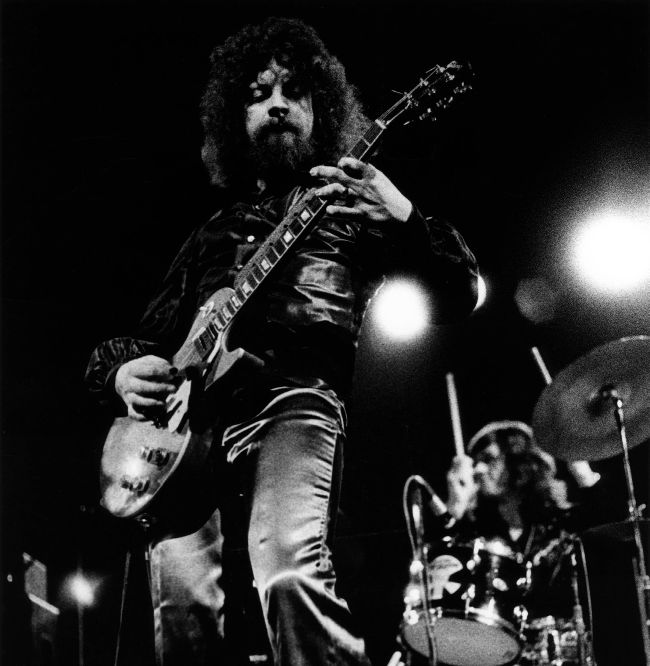
Strange magic: ELO’s Jeff Lynne and (right) Bev Bevan, on-stage at the Finsbury Park Rainbow, London, March 23, 1973.
FOR JEFF LYNNE, in those analogue recording days of the ’70s and ’80s, there was nothing more excit-ing than a blank reel of multi-track master tape waiting to be filled up. “Music’s the best,” he enthused to MOJO in 2019. “There’s no doubt about it. It’s just the most fun you can have.”
Initially a 1970 spin-off project from The Move, the Electric Light Orchestra reached unimagined commer-cial heights, both in the UK and the US. Taking the ’67 Fabs’ blend of rock and orchestration as their blueprint, Lynne and Roy Wood had determined to pick up “where The Beatles had left off ”, before frustrations (particu-larly live, where the string players’ contributions were often lost to poor miking) caused Wood, in the summer of ’72, to wander off to Wizzard.
Peaking chart-wise from the mid-to-late ’70s and into the ’80s, ELO built their reputation with gold standard pop and audio adventurism, in the age of the stereo hi-fi and FM radio. The masses still mourning The Beatles found much to love: balladry as reverie, thumping art rock, sonic texturing and stirring orchestrations. If it was the British who first bought into ELO as a singles act (10538 Over- ture, Number 9 in ’72, Showdown starting with the Billboard Number 16 placing of ’74’s Eldorado.
Even though their influences were sometimes overt, ELO were always unmistakably ELO, to the point where, when the likes of World Party or Jellyfish referenced them in the early ’90s, it never sounded like anyone other than the Electric Light Orchestra, all trace ele-ments gone. Later, Daft Punk sampled Evil Woman (on 2001’s Face To Face), and The Flaming Lips and Super Furry Animals declared themselves fans.