FILTER ALBUMS
Lux Interior
Californian Natalie Mering’s fifth album seeks close encounters in a world of alienation.
By Victoria Segal.
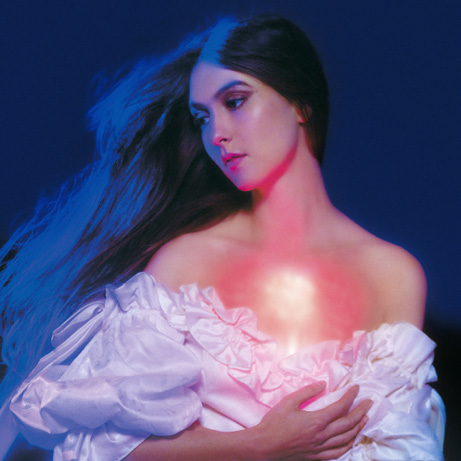
Illustration by Bill McConkey.
“She’s built a monument to all those small, lonely, cold emotions, making sure they can be seen from space.”
Weyes Blood
★★★★
And In The Darkness, Hearts Aglow
SUB POP. CD/DL/LP
HAIR FLOWING, heart glowing, wrapped in an old white wedding dress once worn as a Halloween costume, Natalie Mering seems to be hitting the religious imagery hard on her latest album’s artwork. It initially makes sense – especially when the record opens with It’s Not Just Me, It’s Everybody, a blast of heavenly empathy that glides in on lustrous harps and pearly choral swells. “Has a time ever been more revealing/That the people are hurt-ing?” Mering sings, envisaging the pandemic as a giant global blacklight, illuminating all the hidden misery and grief humans carry with them. “Yes, we all bleed the same way.”
Yet Mering’s original photo concept, she tells MOJO, was that the red light shining from her chest would look “more alien” – less sacred, more sci-fi. That heart becomes a kind of transmitter, emitting a faint pulse from the wreckage of a spaceship, look-ing for a kindred spirit to pick up its signal and carry it home. It’s not just Mering’s burnished Karen Carpenter timbre, then, that brings Calling Occupants Of Interplanetary Craft to mind: all these songs are, to differ-ing degrees, pleas for a World Contact Day, expressing a desire for connection after the debilitating, damaging isolation for the past three years. spa
Following 2019’s superb Titanic Rising, a record that edged its inevitable late-twenties angst with glimpses of climate change, decay-ing late capitalism and “the end of monoga-my”, And In The Darkness, Hearts Aglow has been conceived as the second part of a trilogy, a bulletin from the eye of the post-pandemic storm. She states her position with surprising baldness. “I should’ve stayed/With my fam-ily,” she sings on the pessimistic The Worst Is Done, “I shouldn’t have stayed/In my little place/In the world’s loneliest city.” On Hearts Aglow, she admits: “I’ve been without friends/ I’ve just been working for years/And I stopped having fun.” Underneath the blissful vintage pop instrumentation, these songs vibrate with anxiety, with loneliness, with the fear of having no direction. Children Of The Empire – as close as she comes to the golden perfec-tion of Titanic Rising’s Everyday – is about the strain of living in the final days of a waning superpower. “We don’t know where we’re going,” she sings on Hearts Aglow, a seasick Everybody Hurts steeped in teen-movie im-agery of lovers on a pleasure-pier ferris wheel, the stakes dangerously high as they spin over dark water.
It could easily become overwrought, yet while Mering’s music is often lavishly beautiful, it is never ingratiating. Even at its most desperate, there is often a slight distance, a peripheral chill. That’s partly down to her inscrutably lovely voice, almost deadpan in its purity – the uncanny clarity of Carpenter or Judee Sill. Yet it’s no surprise a musician who started her career in noise bands – not least a stint in Portland’s Jackie-O Motherfucker – can’t quite play these songs at full FM radio stretch. 2011’s The Outside Room and 2014’s The Innocents – her first albums as Weyes Blood (sometimes ‘Bluhd’ depending on how darkly ambient her mood) – were bell-book-and-candle psych-folk, very different to the luscious adult-pop reinventions that began to stream out from 2016’s Front Row Seat To Earth, yet there’s a slight disturbance that still courses underneath. With Daniel Lopatin of Oneohtrix Point Never on synth, God Turn Me Into A Flower knowingly remodels the myth of Narcissus for the dissatisfied internet native, dissolving into the artificial birdsong hothousing of Björk’s Biophilia. The Worst Is Done’s opulent Laura Nyro-does-Across-The-Universe balladry is destabilised by the space-race synthesizer wobbling underneath; It’s Not Just Me, It’s Everybody is almost too perfect, orchestral pop that could just keep spinning out into lush AI-generated fractals. It’s no wonder that Lana Del Rey – someone else never quite what she seems – asked Mering to contribute to Chemtrails Over The Country Club, her genuinely otherworldly Joni Mitchell ventriloquism appearing on the closing cover of For Free.
For all the music’s grandeur, though, these songs often come down to simple things: work-life balance, home, love hiding or disappeared (as on the Avalon elegance of Twin Flame, a cold blue butane jet of a song, all light but little warmth). Grapevine, which starts as an acoustic road trip before going off-grid in a tubular bell-induced rapture, cruises past Del Rey-like signifiers of doomed California romance: highways, ghost towns, the intersection where “they got James Dean”. At its heart, though, is just another missed connection, Mering wondering if a former lover is driving past her on the interstate’s opposite lane, another ship, another night. The closing A Given Thing, with its rising Sill-like piano mysticism and final “love everlasting” looks like a signpost to the “hope” Mering has promised for the trilogy’s final part, but it’s still full of imagery of fire and war.
As with Arctic Monkeys’ recent single There’d Better Be A Mirrorball, there’s a sense with Mering’s music that if things are going to be unpleasant, emotions are going to hurt, then they at least need to be properly curated, surrounded by high drama, designed to be beautiful. “No one’s ever going to give you a trophy for all the pain/And the things you’ve been through,” sang Mering on Titanic Rising’s Mirror Forever, but with these songs, she’s forging her own reward, a consoling benefit she’s prepared to hand on to the listener. “Sitting at this party/Wondering if anyone knows me/ Really sees who I am,” she sings as the album opens, “Oh it’s been so long since I felt really known.” She needn’t worry. Here, Mering has built a monument to all those small, lonely, cold emotions, making sure they can be seen from space. It might not be interplanetary – it’s too firmly rooted in the earthly, the human, for that – but And In The Darkness, Hearts Aglow again shows Mering’s most extraordinary craft.
NATALIE SPEAKS!MD EAN AND WEIRD PLACES TO EAT. ERING ON ROXY MUSIC, JAMES
Arctic Monkeys ★★★★
The Car
DOMINO. CD/DL/LP
Soul, strings and grandstand balladry, more wee small hours than AM.
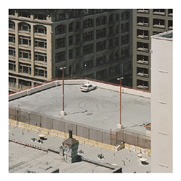
The seventh Arctic Monkeys album continues the band’s increasingly divergent path initiated by 2018’s Tranquility Base Hotel & Casino: brawny riffs in the arenas; something altogether more recherché in the studio. Indeed, The Car doesn’t even have anything as anthemic as Four Out Of Five among its 10 elegantly wrought tracks, where Alex Turner’s pensées mostly come framed by wah wah flecks and string arrangements redolent of Al Green, Curtis Mayfield, plastic soul Bowie and, most strikingly, Scott Walker. Turner’s been in this neighbourhood before with The Last Shadow Puppets, but The Car and Perfect Sense inhabit the zone with far more conviction than pastiche. And for all the cinematographer tropes, self-reflexive narrative tics and droll references – presumably “Don’t let the sun catch you crying” is a Gerry & The Pacemakers nod? – this is a more soulful, less arch record than Tranquility Base. Not quite as detached from Monkeys past as it first appears, either: There’d Better Be A Mirrorball and Body Paint, especially, double down on the grand, elegiac balladry the band have been finessing since 2007’s 505.
John Mulvey
First Aid Kit ★★★★
Palomino
COLUMBIA. CD/DL/LP
Klara and Johanna Söderberg’s fifth full-length album: once heard, wild horses won’t drag you away.
Recorded at producer Daniel Bengtson’s Stockholm studio, Palomino sees First Aid Kit record in their native Sweden for the first time in a decade. Home turf has proved fertile, mid-period Fleetwood Mac influences pervading the driving rhythms of Out Of My Head and Angel, and something of Robin Pecknold’s earnest wonder driving the Söderbergs’ crystalline harmonies on Nobody Knows, wherein cinematic strings entrance. Citing a galloping instance of the LP’s titular horse as a metaphor for freedom, the sisters sound more self-assured these days, the protagonist of Ready To Run (“You thought I was some kinda rock star/I was a nervous little kid”) just a rearview spectre, and that of The Last One (“I wasted my time before you”) buoyant with certitude. Palomino is a wholly convincing bid for wider recognition.
James
McNair
Gabriels ★★★★
Angels & Queens – Part I
ATLAS ARTISTS/PARLOPHONE. CD/DL/LP
Debut album – or at least the first part of it – from lauded US/UK trio.
The rise of Gabriels – Compton-born singer Jacob Lusk with LA/ Sunderland producers Ari Balouzian and Ryan Hope – has been so swift (winning fans including Paul Weller, David Byrne and Elton John) that they’ve been busy trying to catch up. Hence, perhaps, the decision to release their debut album in two parts (the second to follow in March next year). Of the seven tracks, one, the clanging gospel of The Blind, has been previously released, in 2020, as the opener to their debut EP. But any sense that the listener is being short-changed is blown away by the sheer quality of the writing and production on offer. There are traces of Prince’s Sign O’ The Times in the rolling, funky title track opener, an act of sad projection as Lusk tries to imagine the thoughts of his late godsister in If You Only Knew and howling at the moon, over Tricky-ish contours, in Taboo.