Adrian Sherwood
The Godfather of UK bass culture’s finest productions.
By Simon McEwen.
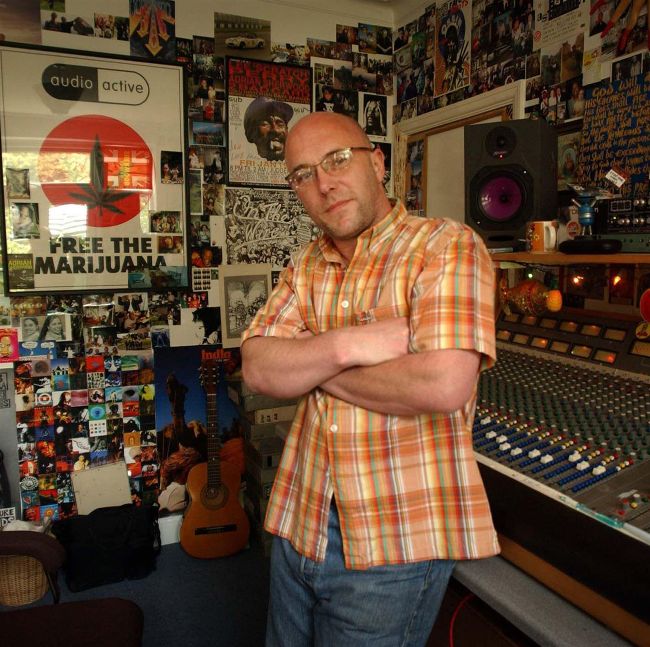
Sherwood at the controls: On-U Sound’s dub maestro turns mixology into an art form.
Alamy, RR Creamer
WHERE TO START?! So vast and unwieldy is Adrian Sherwood’s back catalogue of productions and remixes, spanning 40-plus years, that any attempt to distil it down for the purposes of this month’s How To Buy can only scratch the surface of such an extensive, innovative body of work. With the uncompromisingly independent On-U Sound label he started in 1981, aged 23, Sherwood has explored the outer reaches of dub, reggae and beyond with an array of talent including such On-U stalwarts as Lee ‘Scratch’ Perry, Bim Sherman, Prince Far I, Mark Stewart, Tackhead, African Head Charge, Creation Rebel, Dub Syndicate and New Age Steppers (featuring The Slits’ Ari Up). This inter-racial family of singers and players has always operated within its own universe – most often with a healthy disregard for genre boundaries, Sherwood deconstructing post-punk, roots reggae, industrial, electro and blues, then filtering it through the prism of dub.
“Right from the beginning, I was trying to find my own sound,” he told me in 2021, “because there was no point copying the Jamaicans – we couldn’t anyway, because we didn’t have their studios or musicianship. I just always want the sonic to be interesting, something people haven’t heard before.” Sherwood’s trademark sonic – cavernous bass, syncopated rhythms, mind-melting effects, sampled voices, electronic textures – evolved from studying the mixingdesk wizardry of his dub pioneering heroes Scratch and King Tubby. But by the mid-’80s, Sherwood had found his “own sound” and become a professor of echo chamber science in his own right. This led to a slew of remix duties for such diverse acts as Sinéad O’Connor, Depeche Mode, Simply Red, Einstürzende Neubauten and Coldcut, while fellow sonic adventurers Trevor Jackson (Playgroup), Paul Epworth (Adele, Florence + The Machine) and the late DJ Andrew Weatherall have all cited Sherwood as a key influence.