THE GOOD NOISE BIBLE
THURSTON MOORE'S NEW BOOK IS AS MUCH ABOUT THE WILD AND GNARLY ARTISTS WHO INSIRED HIM AS IT IS ABOUT SONIC YOUTH. THE BAND THAT MADE HIS NAME WHAT YOU WON'T FIND IS THE SKINNY ON HIS MARRIAGE TO KIM GORDON. "I DID'T WANT TO BE HAVING THIS NARRATNE BATTLE." HE TELLS ANDREW MALE.

Getty
OLYMPIC SOUND STUDIOS, BARNES, LONDON. June 1968. The slow, roving camera of Anthony B Richmond pans past a series of orange, mustard and ochre room-dividers, gradually picking out the individual members of The Rolling Stones as they lay down a broken, elemental, organ-heavy demo of Sympathy For The Devil. Richmond is filming the group for the French New Wave director Jean-Luc Godard, who is in London making the film One Plus One, a damaged mix of in-thestudio incantation, formal improvisation and rudimentar y agitprop; rock’n’roll repurposed as a bewildering May ’68 call to arms.
Flash for ward 55 years and Thurston Moore – gangly, 65-year-old former vocalist and guitarist with noise-rock innovators, improvisors and revolutionaries Sonic Youth – is giving MOJO a guided tour of said studios, currently operating as a cinema and restaurant but with plans to reinvest in a recording space.
“I was ver y curious about the Godard thing,” says Moore in an amiable drawl that resides somewhere between the Connecticut of his youth, the New York of Sonic Youth’s heyday and an adopted London in which he has resided for the past decade. “The car graveyard scenes of One Plus One were filmed in Battersea. He was also filming around Hammersmith, Kensington, Wandsworth, Lambeth, Hyde Park, and through the wetlands near Barnes. He just went out with his camera packs and improvised.”
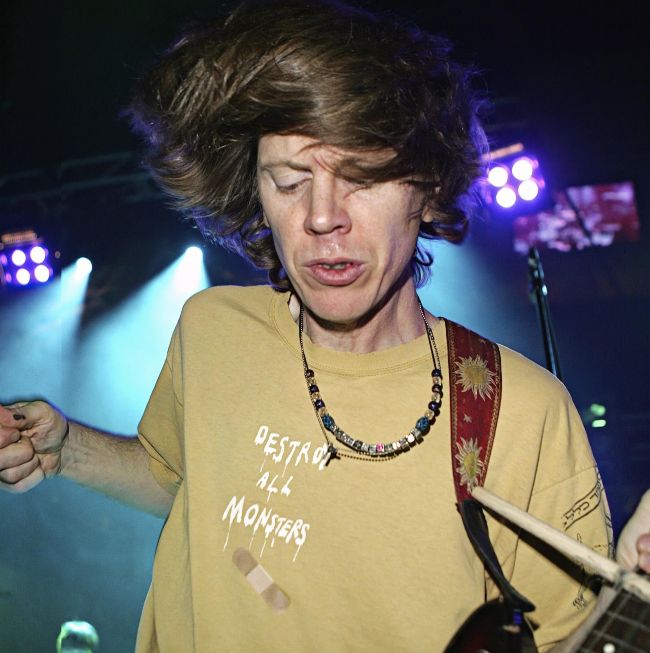
Rocket man: Thurston Moore on-stage with Sonic Youth at the Ramones Beat On Cancer Fundraiser, Spirit Club, New York, October 8, 2004.
PHOTO BY JAMES DEVANEY
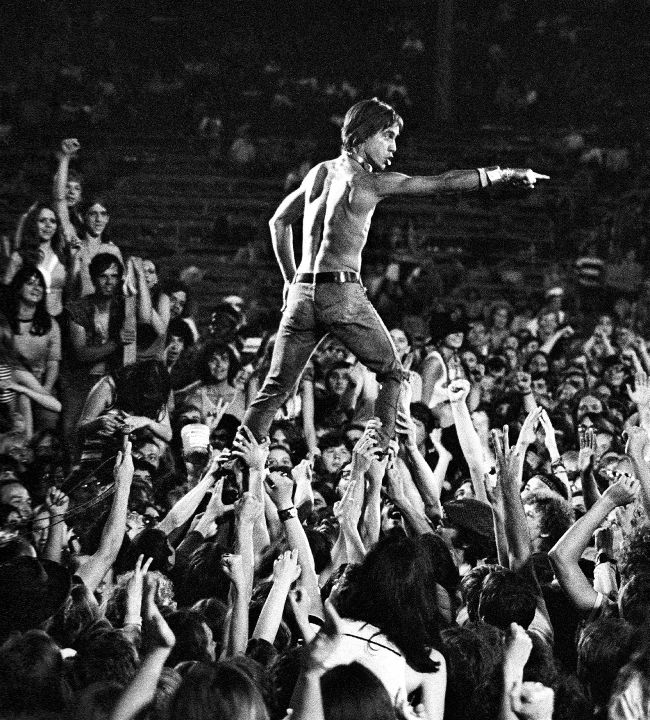
Dog days: (from left) Iggy Stooge, Cincinnati Pop Festival, June 13, 1970; Moore brings the noise on-stage in 1982;
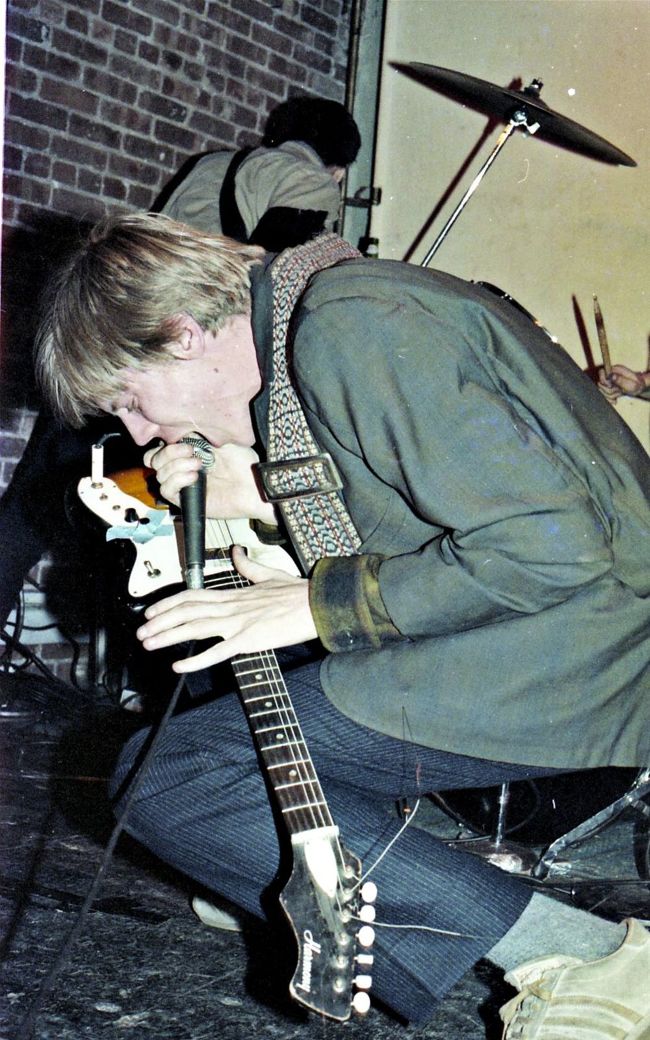
Lester Bangs, 1976;
From the author's collection, Catherine Ceresole, Getty (3)
We’re here to talk about Moore’s new book, Sonic Life, a mix of autobiography and music histor y in which our protagonist inhabits the multiple roles of obser ver, cultural historian, music journalist, leading man and bystander, moving between these various guises with a fluid grace. From his teenage epiphany watching Kiss live in 1974 (he and his best friend Harold wired on prescription-grade ‘White Cross’ Dexedrine), to his immersion in New York’s post-no wave noise/art rock scene with his band Sonic Youth, Sonic Life is, in part, a love letter to the power of music, and the totems – the 7-inchers, the LPs, the fanzines – that informed Moore’s own cultural education.
But it’s also a document of the fier y creative lives that intersected with his own during his band’s 30-year existence: artists and musicians including Rhys Chatham, Richard Hell, Lydia Lunch, Glenn Branca, Black Flag, Neil Young and, significantly, Kurt Cobain, whose band, life and death indelibly influenced Moore’s own trajectory.
Begun during the pandemic with touring curtailed, and nurtured while he taught a poetr y workshop at Naropa University in Boulder, Colorado, it’s a book as unconventional as Moore’s music, rejecting the prosaic tropes of the ghost-written rock biog and the tell-all memoir. Instead, it’s a deeply researched invocation of time, place and self as invigorating as anything penned by his own literar y rock’n’roll heroes: Patti Smith and Lester Bangs.