PRIMITIVE COOL
PRE-EMPTING PUNK IN A MUSICAL WILDERNESS ON THE OTHER SIDE OF THE GLOBE, THE SAINTS MADE MUSIC THAT WAS SAVAGE AND EXHILARATING. BAD LUCK, BAD VIBES AND WUTHERING HEIGHTS SPELT THEIR DEMISE, BUT AS A NEW BOX SET UNDERLINES, THEY'VE REMAINED A BEACON FOR ARTISTS INCLUDING NICK CAVE, MUDHONEY, EVEN SPRINGSTEEN. "IT WAS A QUEST TO MAKE OUR OWN CULTURE," THEY TELL ANDREW PERRY.
ON A MUGGY EVENING IN SUBTROPICAL BRISBANE IN JUNE 1976, A surly band of late-teenagers collectively known as The Saints entered a local studio, in a despairing effort to make their roar of frustration heard.
Even within Australia, their home city was regarded as a backwards country town by the more sophisticated folks in Sydney and Melbourne, and its state government under Queensland’s right-wing premier Joh Bjelke-Petersen was notoriously repressive, using state-of-emergency measures to quash trades union and anti-war demonstrations.
After convening at Corinda State High School in 1971, singer Chris Bailey, guitarist Ed Kuepper and drummer Ivor Hay had already been chiselling at a fierce aural response to the geo-political situation for five years, their dissatisfaction further exacerbated by Brisbane’s moribund music scene. Lame boogie-rock covers combos prevailed, and venue bookers shunned The Saints for not playing ball.
“In Australia generally, nobody took native bands or the potential of music here seriously,” says Mick Harvey, who, along with Nick Cave, saw a life-changing Saints gig at Melbourne’s Tiger Room in April ’77, which directly influenced their band, The Birthday Party. “It was all Olivia Newton-John, and Howzat by Sherbet. The Saints were really in the vanguard of changing all that.”
Forced to cut their teeth live via rowdy parties at the city centre shopfront they’d occupied on Petrie Terrace, they routinely played to 20 or 30 mates who all agreed they’d got one song which channelled the youthful anger they felt in Brisbane – isolated, disenfranchised, hopeless. For them, (I’m) Stranded nailed it.
With zero prospects of reaching more people even locally, Kuepper, who’d left school at 16 to work in the distribution warehouse at Astor Records, struck upon the idea of recording and releasing the song themselves.
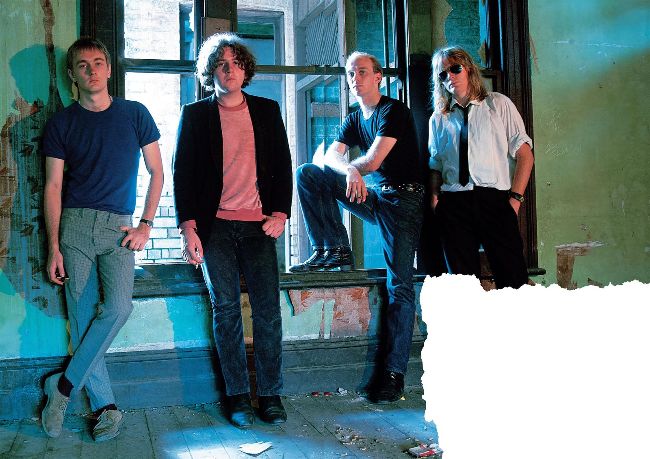
Nowhere to run to:
The Saints in Brisbane, Australia, 1976 (from left)
Ed Kuepper, Chris Bailey, Ivor Hay, Kym Bradshaw.
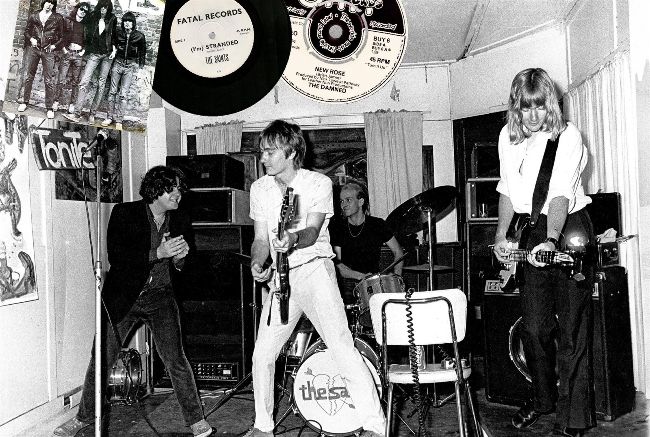
Angelic upstarts: The Saints rocking Club 76, their live-in venue at 4 Petrie Terrace, Brisbane, (from left) Bailey, Kuepper, Hay, Bradshaw; (insets) 1976 original punk blueprints (from left) Ramones, The Saints’ self-released 45, The Damned’s New Rose.
Jennifer Fay Gow, Richard Bellia/Dalle/IconicPix, George Bodnar Archive/IconcPix, Bleddyn Butcher
“Making a record was a world of mystery to us,” says Kuepper today, “until I noticed these people coming into Astor to have custom pressings done – usually country & western or folk singers. It was amazing, you could bring in a tape, and later go out with a whole pile of records.”
So, in September ’76 they collectively stumped up 500 dollars for studio hire and another 500 for manufacture of a single, blasted out (I’m) Stranded and B-side No Time in a few hours, and eagerly awaited the end product of this magical process.