FILTER ALBUMS
Lost In Space
The Midwest farmer’s daughter finds spiritual release and a new direction in gently psychedelic country. Making a brew, Tom Doyle. Illustration by Janelle Barone.
Margo Price ★★★★
Strays
LOMA VISTA. CD/DL/LP
IN THE video for Been To The Mountain, the driving, hypnotic rocker that opens her fourth album, Margo Price tips back mushroom tea, throws up, and trips out, seeing visions of herself in the desert. It’s a scenario that was in some respects mirrored in real life when many of the songs for Strays were written, by Price and her husband/guitarist Jeremy Ivey, during six days spent in South Carolina, imbibing mushrooms and searching for new creative directions.
The result isn’t an overtly psychedelic record from Price, but it’s still quite a leap from the Sun Studiorecorded, Jack White-endorsed, bruised country sweetheart of 2016’s Midwest Farmer’s Daughter, with its shades of Tammy Wynette and Loretta Lynn. Far less country, way more alt, Price has now arrived in a sonic world that sometimes swirls with rock guitars and Farfisa organ, backwards reverb and echoes of echoes.
Over Been To The Mountain’s trancey three-chord riff, the singer assumes various identities, real or imagined (“I’ve been a dancer, a saint, an assassin/I’ve been a nobody, a truck driver shaman”), hoping for some kind of epiphany or communion with the “high priest”, but succumbing, in a dizzying Patti Smith-ish rant, to paranoia. “Do you ever walk down the street,” she wonders, “and do you think to yourself, ‘Am I being watched, man?’”
It’s easy to see why Price would be seeking spiritual release. Even by the time of her 2016 debut, released three weeks shy of her 33rd birthday, she’d lived a tough life, involving years of low-level touring, drinking and drugging, jail and the tragic death of one of her and Ivey’s twin sons – all bravely documented in her recently published memoir, Maybe We’ll Make It (see Back Story). Recent years, post-success, have been smoother but still challenging. Price was forced to postpone the release of her third album, 2020’s That’s How Rumors Get Started, when Ivey was floored by Covid-19 and the couple were forced to isolate for two months.
At key points, Strays is bursting with a desire for freedom and wide-open spaces. Light Me Up, aided by one-time Heartbreaker Mike Campbell on guitar, sprints through multiple passages, from delicate acoustic guitar picking, to a headlong Love-shaped rush, into a country-rock stomp and on to a coda that slowly increases in tempo and intensity, as Price sees “Rivers quake/Levees break”. The thrilling band-speeding-up trick – musicians cut free to run – is later reprised to maximum effect at the end of the battered and brooding Hell In The Heartland.
“At key points, Strays is bursting with a desire for freedom and wide-open spaces.”
Initially made at various studios in the Illinois-born Price’s adopted hometown of Nashville, the singer and her band The Pricetags then decamped to Topanga Canyon and co-producer Jonathan Wilson’s offthe-beaten-track facility, Fivestar Studios, for an intensive week of recording that in many ways defines the album. In parts, this is very much Price’s gold dust Californian record, further pursuing the ’75-77 Fleetwood Mac vibes of the lovely, reflective (if coolly vengeful) title track of That’s How Rumors Get Started.
County Road takes Nicks Sings Springsteen as its imagined starting point – part Dreams, part Racing In The Street – and ventures somewhere beautiful. Employing Price’s pure, aching country voice (as opposed to its gutsier counterpart showcased elsewhere), it relates the tale of someone left behind in a “prison town”, seeing the spectre of their former lover or co-conspirator everywhere. If the narrator is already suffering from a shifting sense of reality (“Maybe I’m lucky, I’m already dead and I don’t even know”), then in grand country tradition there’s a twist in the final verse: the “kid” she’s writing to has long since left this earthly realm.
Elsewhere, Price twists her traditionalist songwriting talents into new and interesting shapes. There’s the Sharon Van Etten-assisted synth-pop/rock of Radio, a concise two-minute, 49-second ditty that bets its chips on the theory that DJs love playing songs with the word “radio” in the title. Listen closer, though, and it reveals Price to be turning up the volume in order to drown out the white noise of our scary modern world. Another brazen effort to be commercial is fluffier: Time Machine sounds like Jenny Lewis and is pretty but throwaway. There’s more grit to the acid blues of Change Of Heart, which alchemises embittered feelings into resigned positivity, and still has the hooks.
If there’s always been a novelistic approach to Price’s writing, her songs populated by outcasts, and the strays of this album’s title, then it’s brought into sharp focus in places here. Standout track Lydia is as much of a grim character study as one of Price’s other landmark songs, 2017’s All American Made (also the title of her second album), but altogether more impressionistic and shapeshifting.
Price wrote Lydia in Vancouver when she was on tour, feeling tired and low, and watching lost souls wander in and out of neighbouring women’s health and methadone clinics. Tapping into this dark urban energy, she recorded a demo in her hotel room in “this meditative state”, addressing the verses to the near-broken figure of the title, with her “mascara bleeding”, “living off tips and meth”. Six minutes long and featuring just Price’s guitar and knowing, empathic vocal delivery, sympathetically supported by a string quartet directed by Father John Misty/Lana Del Rey arranger Drew Erickson, it’s haunting and moving, and may just be her greatest song yet.
Since her breakthrough six years ago, shaped by its preceding decade of obscurity, the authenticity of Price’s storytelling has made her stand apart. Strays maintains that, but further spotlights her melodic gifts and deeply soulful singing, while variously moving her both closer to the mainstream and further into the outer reaches.
It ends in a mood of clear-eyed nostalgia. Landfill depicts Price viewing the thwarted ambitions of her lost years as garbage strewn over a dumping ground, but with any traces of sadness or regret replaced by a sense of contemplative calm. Muted, syncopated beats, ghostly pedal steel and icy Solina string machine conspire to create the effect of a slow-motion scene: unwanted debris blowing away in the wind, with our stronger and more resolved singer standing at the centre of the wreckage. Even amid the ashes of her past, it seems, Margo Price keeps burning ever more brightly.
MARGO SPEAKS!
PRICE ON NOVEL-WRITING, GOING FERAL AND REACHING OUTER SPACE.
Gaz Coombes
★★★★
Turn The Car Around
HOT FRUIT/VIRGIN. CD/DL/LP
Coombes’s fourth solo record, riven by a mature dad’s worries.
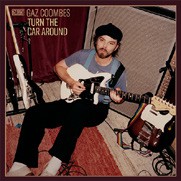
Fans may feel a touch deflated that Turn The Car Around isn’t a Supergrass record after that band’s scintillating 2020s reunion shows. Externally decreed postponements to those tours, however, naturally led to their chief tunesmith writing in isolation, and mining deeper into the crisp, keyboard-enhanced sound of 2018’s World’s Strongest Man, only this time augmented by his live solo band for added zip. Second track, Don’t Say It’s Over establishes the album’s central concern, shared lately with Noel Gallagher and Guy Garvey, of keeping a marriage alive and averting mid-life crisis. In the music, there’s still plenty of vigour: Feel Loop (Lizard Dream) busts a wriggly funk-rock groove worthy of Queens Of The Stone Age, topped by Robert Quine-ish solo tangles, while Long Live The Strange turns the outsiderism of Supergrass’s Strange Ones into an anthem, with bonus chorale. The rest is more soul-searching, but with instrumental structuring and melodic grace of satisfying excellence.
Andrew
Perry
Native Harrow
★★★★
Old Kind Of Magic
LOOSE. CD/DL/LP
Transplanted US folk duo find their inner soul voice.
Pennsylvania husband and wife duo Devin Tuel and Stephen Harms are the very definition of getting it together in the country. After moving to Brighton in the UK two years ago, they’ve now forgone city life completely for the rolling bucolic splendour of the Sussex countryside. Expanding on the countrytinged folk of their previous four albums, the duo again recruited Alex Hall on drums and piano, along with pedal steel from Joe Harvey-Whyte and strings by Georgina Leach, to create a richly diverse album that stretches from dusty Western swing to deep soul ballads. Twisted and tangled love (the title track), longing for lost days (Heart Of Love) and wondering where it all went wrong (Used To Be Free) variously occupy Tuel’s lyrics, creating a sometimes world-weary album that still manages to find the positives in a world of wickedness and disappointment.