FILTER BOOKS
Ram Packed
Heavyweight, meticulously researched examination of a newly solo ex-Beatle throws up new findings.
By Tom Doyle.
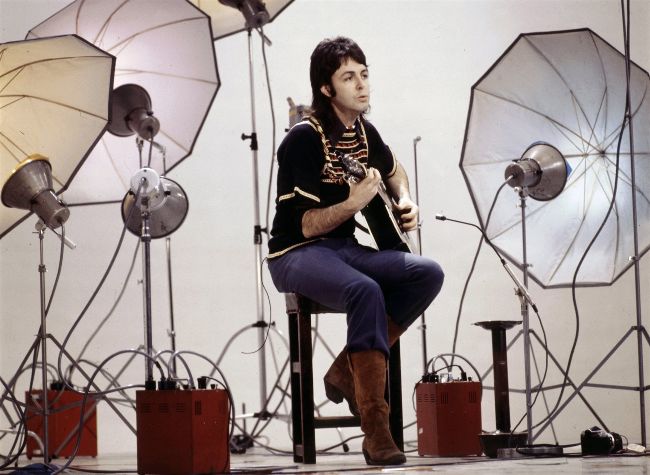
Winging it: Paul McCartney performing on the ABC TV special, 1973.
Getty
The McCartney Legacy: Volume 1 1969-73
★★★★
Allan Kozinn and Adrian Sinclair
HARPER COLLINS. £30
IN SEPTEMBER of 1973, Paul McCartney was in Nigeria, struggling to record Band On The Run with a depleted Wings (both guitarist Henry McCullough and drummer Denny Seiwell having quit the band ahead of the sessions), in a ramshackle EMI studio, while local musicians – led by Fela Kuti – were accusing him of cultural appropriation. “What is former Beatle Paul McCartney doing hiding out in Ikeja?” wondered Lagos Evening Times columnist A.B. Attah in an unhinged rant. “And I mean Paul Mc-Cartney… author of Mean Mr Mustard. The same one [who] called a press conference some years back to announce his own death.
“Step carefully,” Attah warned Macca. “This town kills big stars.” It’s one of the more brilliant and bizarre artefacts unearthed by former New York Times writer Kozinn and British researcher Sinclair in this exhaustive 712-page examination of McCartney’s initial struggles to forge a career in the messy aftermath of The Beatles’ breakup. Employing the same attention to “granular detail” as Mark Lewisohn with his still-in-progress All These Years trilogy, the authors display an incredible feat of dedication with The McCartney Legacy (particularly since there are more volumes to follow).
Often though (a bit like Lewisohn), their detailing of McCartney’s late-’60s and early-’70s adventures values research over zippy narrative, resulting in a dry, newspaperstyle reporting of the facts, with no detail considered too trivial. If you want to know the exact snare drum Denny Seiwell played on Another Day, the precise info is here. Similarly, there’s forensic analysis of tracks that even McCartney considers throwaway, such as the garbled jam Mumbo that opened Wings’ 1971 debut album, Wild Life.
For all of that, fresh facts and anecdotes are thrown up in every chapter, such as Mc-Cartney being inspired to form Wings after seeing Eric Clapton and Carl Perkins guesting with the host on The Johnny Cash Show, playing a version of Perkins’ Matchbox, an old Beatles cover fave. Frequently, the writers’ insights are thought-provoking too. When it comes to Wings’ freewheeling UK university tour of ’72, they perceptively note how different these hippy crowds must have seemed to the singer only six years after the screams of Beatlemania had died away: “Frenzy was replaced by hipsterish deliberation.” Equally, Macca’s fallout with Glyn Johns at the start of the sessions for ’73’s Red Rose Speedway, due to the latter feeling that Wings were indulging in dreary stoned jams, is thrown into sharp relief by the reminder that he had just produced the Eagles’ slick self-titled debut in a mere fortnight.