FILTER ALBUMS
Soul Asylum
The Boss finds spiritual nourishment in 15 covers, most from the golden age of Motown, Stax and Atlantic. By David Fricke. Illustration by Borja.
Bruce Springsteen
★★★★
Only The Strong Survive
COLUMBIA. CD/DL/LP
IN THE EARLY chapters of his 2016 memoir Born To Run, writing about the Jersey boy on a rock’n’roll mission, Bruce Springsteen hits a new R&B crossroads – and revelation – every day. He delights in the “great, narrative clowning records” of the late ’50s – The Olympics’ Western Movies; The Coasters’ Along Came Jones – and recalls an uphill fight with his first guitar to master the licks in Bill Doggett’s 1956 “two-string blues concerto” Honky Tonk. And there’s the night Springsteen’s garage band The Castiles were the only white faces at the Matawan-Keyport Roller Drome for the Tri-Soul Revue: backing The Exciters (Tell Him, 1962); playing their own set of “soul, soul and more soul”; and going home with a “notch in our belts for a job decently done” in front of “a tough audience that could’ve gone either way.”
Named after and opening with Jerry Butler’s silken 1968 battle hymn, Only The Strong Survive is steeped in that boot camp and exultation: 15 covers from a golden age of African-American confession and party, mostly drawn from the Motown, Stax and Atlantic libraries but curated with a connoisseur’s twist and, in a few instances, a long reach into the ’80s and beyond. The E Street Band did not get the call here. Spring-steen made his 21st studio album at home, in his New Jersey studio with Ron Aniello – the co-producer and instrumental fulcrum on 2014’s High Hopes and 2019’s Western Stars – playing virtually everything but strings and horns. “I wanted to make an album where I just sang,” Springsteen said, announcing the record, and that’s all he does – for the sheer pleasure and homage.
BACK STORY: SUPREME LEADER
Alamy
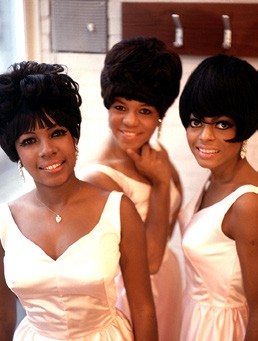
● First cut by Johnny and Jackey – singer-writers Johnny Bristol and Jackey Beavers – for Detroit’s Tri-Phi label in 1961, Someday We’ll Be Together went through Motown’s cut-throat A&R grind on its way to Diana Ross & The Supremes. In 1969, Bristol – by then a staff writer and producer there – was preparing a remake for Junior Walker & The All Stars when his boss, Berry Gordy, decided the song should go to Ross for her debut solo single. Hedging that bet, Gordy changed the billing to the group – even though Mary Wilson and Cindy Birdsong were not on the session. Topping Billboard’s Hot 100 on December 27, 1969, the single was Motown’s last Number 1 hit of the 1960s.
Yet this album is, in effect, one that Springsteen has never stopped making, in front of every audience: the raw, saloon-com-bo reading of Chris Kenner’s Something You Got on Houston radio, 1974; the jubilant detonation of The Chiffons’ A Love So Fine at my first Springsteen show, that November at Philadelphia’s Tower Theater (I was an usher); the Eddie Floyd, Isley Brothers and Gary U.S. Bonds oldies that were reliable encore dynamite into the stadium era. For Springsteen, as with Bob Dylan and the public-domain ghosts that perpetually haunt his songwriting, soul music has been an education for which there is no final exam or degree. Because class is always in session. Springsteen cut his last covers project,
2006’s We Shall Overcome: The Seeger Sessions, in the same spirit but with a lot more license, adapting America’s bedrock folk songs for an arena-scale barn dance. Here, he and Aniello adhere to the original sermons and love letters with almost monk-ish rigour: the symphonic gallop-with-glockenspiel of Frank Wilson’s 1966 Northern soul holy grail Do I Love You (Indeed I Do); the Gothic eccentricity of The Four Tops’ 1967 noir 7 Rooms Of Gloom; the slinky conga-driven funk in The Com-modores’ 1985 Marvin Gaye eulogy Nightshift. The singer instead leaves his mark in distinctive inflections – like that Jersey-barroom preacher’s laugh tucked into the spoken intro of the title song – and the pure, pilgrim’s rapture of a voice that, in wear and range, has travelled far in its own right.
“15 covers from a golden age of African-American confession and party, curated with a connoisseur’s tw ist.”
In The Sun Ain’t Gonna Shine Anymore, Springs-teen quotes the opening frames of The Walker Broth-ers’ 1966 melodrama to the letter – until he comes through those Mexican-cantina doors, bruised but unbeaten, illuminating the reverb and holding the long notes with rough, plaintive grace. Springsteen takes Levi Stubbs’ soliloquy at the front of the Tops’ record in a higher register and fire, wearing the weight of sor-row like a boxer’s robe. And he goes back to the mag-isterial pleading in Butler’s Hey Western Union Man with more funk and an impatience in his vocal stride. If Butler epitomised the cool of desire on The Ice Man Cometh – his ’68 Philly-soul collaboration with Kenny Gamble and Leon Huff, producing the two singles revived here – Springsteen is a heat-seeking missile, radiant and direct in desperation.
Nostalgia, inevitably, comes with age; Springsteen, 73, is no excep-tion. The most recent song on this album, Soul Days, comes from a 2000 CD by Dobie Gray. Written by a white country songwriter, Jonnie Barnett, it sounded there like one of Springsteen’s ’70s out-takes donated to Southside Johnny & The Asbury Jukes. The yearning remains clear-cut and unrepentant (“Cruising in my Chevrolet/I held my baby in my arms/But my first love was always the songs”). And Springsteen’s take lays it on with a smile, adding a guitar lick descended from Gray’s 1973 smash Drift Away and a guest-vocal turn from Sam Moore of Sam & Dave.
Springsteen’s choice of songs, especially in the deep tracks and left turns, also underscores a deeper retrospect and aspiration. Turn Back The Hands Of Time, a slice of Chicago grit and sparkle that went Number 1 R&B and Top 5 Pop for Tyrone Davis in 1970, is the kind of hard lesson learned – with a faith in second chances – that Springs-teen was already striving to write as a young man via Dylan and The Animals. The pop-R&B bounce of When She Was My Girl, a 1981 single from The Four Tops’ short spell at Casablanca Records, echoes Springsteen’s ’80s stabs at the dancefloor in Hungry Heart and Dancing In The Dark. There is a poignant evocation too – in the low-end street-corner hum of backing singers Fonzi Thornton, Dennis Collins and Curtis King Jr. – of his late sax-and-vocal wing man Clarence Clemons.
Someday We’ll Be Together seems, at first, like a soft landing at the end, cushioned in strings and chorale. It is, in fact, the most ironic song here. Diana Ross’s 1969 finale with The Supremes was nothing of the sort, a cynical ploy to launch her solo career (see Back Story). Springsteen dumps that baggage and sings what’s left like he got it from Pete Seeger by way of David Ruffin – anational anthem for the stateless; the same promise of hope and glory he’s always found in his favourite storytellers and jukebox 45s. Springsteen will preside over his nightly communions again when he takes The E Street Band back on the road next year. And if the leader doesn’t pull out any of this soul power for the encores, it’s because, by now, he’s written plenty of his own.
Nathan Salsburg
★★★★
Landwerk III
NO QUARTER. LP
Kentucky-based archivist-guitarist communes with phonograph ghosts once more.
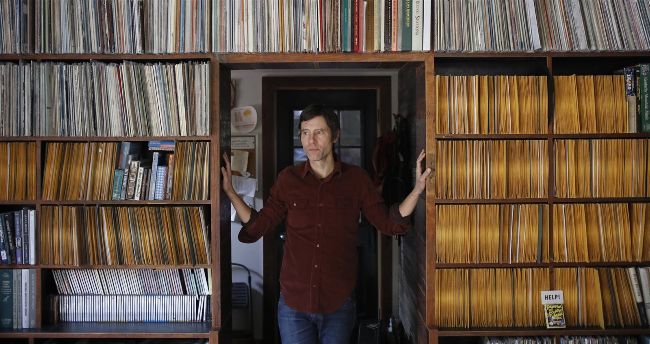
Check his record: Nathan Salsburg on the shelves.
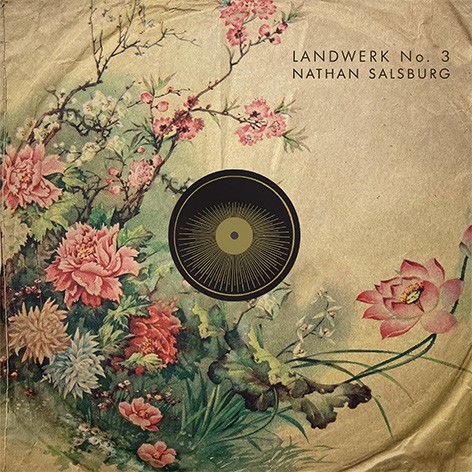
NATHAN SALSBURG’S previ-ous brace of Landwerk long-players found him improvising mellifluously against crackling, corroded loops plucked from antediluvian 78s of Jewish cantors and Turkish dance bands. The six lengthy medita-tions here refine the formula, with spectral, dust-laden samples and crystal-line guitar arabesques alloyed into a near-Proustian conduit between past and present. Typically, IX wreathes susurrating hymnal murmurs from a 1914 Meyer Kanewsky recording in a lattice of sinuous fretboard figures that suggest a summit between Loren Connors and Tom Verlaine, while the gauzy, funereal piano of XI is allowed to linger hypnotically before Sals-burg unleashes further spangles of arpeggiated quicksilver. Like much here, the closing XIV’s slow accretion of organ, guitar and piano, daubed over a primordial percussion loop (lifted from a 1940 Abe Ellstein Orchestra reading of Mazel Tov, no less) is at once ineffably moving and a paradigm of ascetic restraint.